What Makes SS Tube Mills Last Longer?
If you’ve ever watched a stainless steel tube mill grind to a halt because of a weld defect or a worn-out forming roll, you know the sting of unplanned downtime. The question “What makes SS tube mills last longer?” isn’t just academic—it’s a daily concern for production managers who need reliable output without sacrificing quality. In this blog, we’ll cut through the noise and give you the technical answers, backed by real-world experience from Foshan Jopar Machinery Co.,Ltd, a specialist in high-precision tube mill machinery.
Let’s start with a quick scene: It’s 2 a.m., and your line has stopped for the third time this week due to a pinhole leak in the weld zone. The scrap bin is filling up, and the night shift is scrambling. You’re not alone—many stainless steel tube producers face similar headaches. But the good news is that modern SS tube mills are engineered to overcome these challenges. By the end of this article, you’ll understand the key factors that extend mill life and how to apply them to your operation.

Pain Point 1: Weld Quality Inconsistency Erodes Profits
In stainless steel tube production, the weld seam is the most critical area. Inconsistent weld quality leads to leaks, weak joints, and costly rework. A typical scenario: a mill running at 60 m/min suddenly produces a section with incomplete fusion, forcing a line stop and scrapping several meters of tube. The impact? Each defect can cost $500–$1,000 in lost material and downtime, not to mention the risk of customer rejects. Over a year, this can add up to tens of thousands of dollars.
The root cause often lies in inadequate weld control systems—outdated power supplies, poor gas shielding, or inconsistent roll pressure. Without precise control, even minor variations in strip thickness or speed can cause weld defects.
Pain Point 2: Changeover Downtime Kills Productivity
Changing from one tube size to another is a necessary evil, but many mills take hours to complete the switch. Imagine a job shop that runs five different diameters per week. If each changeover takes 4 hours, that’s 20 hours of lost production—equivalent to two and a half shifts. The cost? At a typical hourly rate of $200, that’s $4,000 per week in lost revenue. Plus, frequent changeovers increase the risk of setup errors, leading to more scrap.
Traditional mills require manual adjustment of forming rolls, welding guides, and cut-off dies, which is time-consuming and relies heavily on operator skill. The result is inconsistent changeover times and higher labor costs.
Pain Point 3: Premature Wear and Tear Drives Up Maintenance Costs
Stainless steel is abrasive, and the forming rolls, bearings, and drive components take a beating. A common issue: after 6–12 months of operation, mills experience excessive vibration, poor tube roundness, or even roll breakage. The cost of replacement parts and labor can exceed $10,000 per year, and the downtime during repairs further erodes profitability.
Often, this premature wear is due to suboptimal material selection, inadequate lubrication, or poor alignment of the mill stands. Without proper maintenance schedules and high-quality components, mills age quickly.
Solution: Advanced Weld Control for Consistent Quality
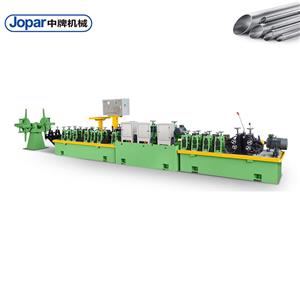
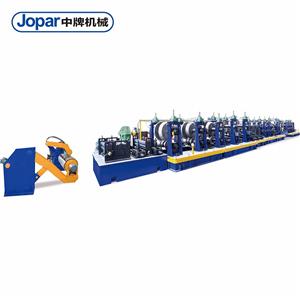
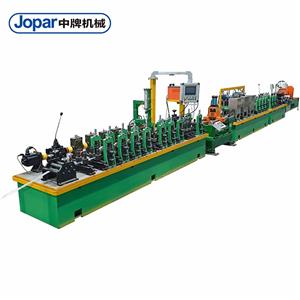
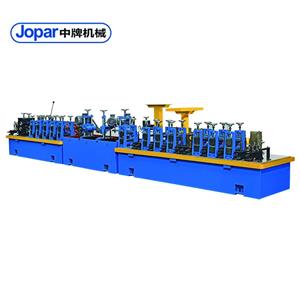
To address weld inconsistency, modern SS tube mills employ high-frequency welding with closed-loop feedback. For example, Foshan Jopar Machinery Co.,Ltd integrates solid-state HF welders with real-time monitoring of weld temperature and speed. This ensures that the weld zone remains within ±1% of the optimal parameters, virtually eliminating defects. Additionally, advanced gas shielding systems maintain consistent argon flow, preventing oxidation.
The result is a weld seam that meets ASTM A269/A249 standards consistently, with a reduction in scrap rate by up to 30%.
Solution: Quick-Change Systems Slash Downtime
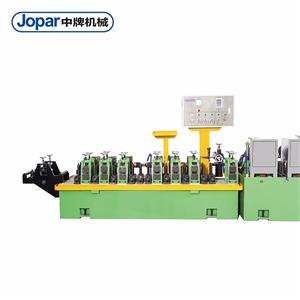
To minimize changeover time, Jopar’s mills feature modular forming sections with quick-release clamps and digital position indicators. Operators can switch from one size to another in under 30 minutes, with repeatable accuracy. This is achieved through:
- Pre-set roll clusters: Each size has a dedicated set of rolls that can be swapped as a unit.
- Motorized adjustments: Roll gaps and welding guides are adjusted via servo motors, with settings stored in the PLC.
- Tool-less design: No need for special tools; changeovers are intuitive.
This reduces changeover time by 70% compared to conventional mills, boosting productivity and flexibility.
Solution: Material Engineering and Maintenance Protocols for Longevity
To combat premature wear, Jopar uses high-grade tool steels (e.g., D2 or M2) for forming rolls, with hardened surfaces (HRC 60–62) and precision grinding. Bearings are selected from top-tier brands like SKF or NSK, and drive systems use heavy-duty gearboxes. Additionally, the mills are designed with centralized lubrication and easy-access inspection points.
Jopar also provides a predictive maintenance program based on vibration analysis and thermal monitoring, helping customers schedule maintenance before failures occur. This extends the mill’s lifespan by 30–50% and reduces unplanned downtime by up to 60%.
Customer Success Stories
Case 1: Precision Tube Inc., Houston, USA
This oil and gas tube manufacturer struggled with weld defects that caused 15% scrap rate. After installing a Jopar SS tube mill with advanced weld control, scrap dropped to 3%, saving $120,000 annually. “The consistency of the weld seam has been a game-changer for our API 5CT production,” said Production Manager Mark Reynolds.
Case 2: Müller Edelstahl GmbH, Düsseldorf, Germany
Facing frequent changeovers for small batch orders, Müller’s old mill took 5 hours per changeover. With Jopar’s quick-change system, changeover time fell to 45 minutes, increasing capacity by 25%. “We can now take on more custom orders without worrying about downtime,” noted Operations Director Klaus Weber.
Case 3: Nippon Stainless Tubes, Osaka, Japan
Premature roll wear was causing $15,000 in annual replacement costs. Jopar’s hardened rolls and predictive maintenance reduced wear by 40%, and the mill has been running for 3 years without major overhaul. “The durability of the rolls is impressive; we’ve seen a significant drop in maintenance expenses,” said Maintenance Chief Hiroshi Tanaka.
Case 4: Southern Cross Tube, Melbourne, Australia
This architectural tube producer needed high surface finish. Jopar’s mill with precision forming and polishing achieved Ra 0.4 μm, meeting stringent aesthetic requirements. Scrap due to surface defects fell from 8% to 1%. “Our customers love the flawless finish, and our profitability has improved,” commented Managing Director Sarah Mitchell.
Case 5: Emirates Steel Tubes, Dubai, UAE
In a demanding environment, the mill’s components were failing due to heat and dust. Jopar customized the mill with enhanced cooling and sealed bearings, extending component life by 50%. “The mill now runs reliably even in summer, with minimal downtime,” said Plant Manager Ahmed Al-Farsi.
Applications and Partnerships
SS tube mills from Jopar are used in diverse applications, including:
- Oil and gas: Instrumentation tubing, heat exchangers.
- Architecture: Handrails, structural tubes.
- Food and beverage: Hygienic tubing.
- Automotive: Exhaust systems, fuel lines.
Jopar has established partnerships with leading stainless steel suppliers such as Outokumpu and Acerinox, ensuring access to high-quality strip material. Additionally, Jopar collaborates with distributors like TubeTech Machinery in Europe and SteelPro Equipment in North America to provide local support and spare parts. These partnerships ensure that customers receive fully integrated solutions, from material selection to mill optimization.
FAQ
Q1: What are the key factors affecting weld quality in SS tube mills?
A: Weld quality depends on precise control of welding power, frequency, gas shielding, and roll pressure. Jopar’s mills use closed-loop HF welders with real-time monitoring to maintain optimal parameters, ensuring consistent penetration and preventing oxidation.
Q2: How can I reduce changeover time without sacrificing accuracy?
A: Implement quick-change systems with pre-set roll clusters and digital position indicators. Jopar’s design allows changeovers in under 30 minutes with repeatable accuracy, reducing downtime by up to 70%.
Q3: What maintenance practices extend the life of a tube mill?
A: Regular lubrication, vibration analysis, and thermal monitoring are essential. Jopar recommends a predictive maintenance schedule and uses high-grade materials for rolls and bearings to minimize wear.
Q4: Can SS tube mills handle thin-wall tubes without deformation?
A: Yes, with proper roll design and tension control. Jopar’s mills feature precision forming rolls and servo-driven tension systems that prevent buckling and ensure roundness, even for wall thicknesses down to 0.5 mm.
Q5: What standards should a tube mill meet for stainless steel applications?
A: Depending on the industry, mills should comply with ASTM A269/A249 (general), ASTM A312 (high-temp), or EN 10217-7. Jopar’s mills are designed to meet these standards, with weld seams that consistently pass hydrostatic and eddy current tests.
Conclusion: Invest in Durability for Long-Term Savings
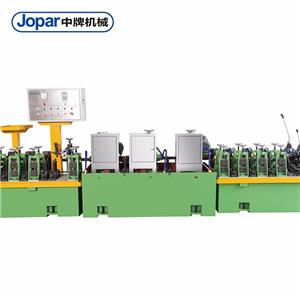
In stainless steel tube production, the longevity of your mill directly impacts your bottom line. By choosing a mill with advanced weld control, quick-change systems, and robust materials, you can reduce downtime, scrap, and maintenance costs. Foshan Jopar Machinery Co.,Ltd has helped manufacturers worldwide achieve these benefits, with a track record of reliable performance and customer satisfaction.
Ready to learn more? Contact our sales engineers for a detailed technical white paper on SS tube mill design and maintenance, or to discuss your specific application. Don’t let a short-lived mill eat into your profits—invest in a solution that lasts.