What Makes a Great Exhaust Pipe Machine?
Picture this: It's 2 a.m. on a Tuesday, and you're staring at a stack of rejection reports from your quality control team. Your exhaust pipe production line has been running non-stop, yet 15% of the latest batch just failed the leak test. The night shift supervisor is on the phone, and the customer is demanding an explanation. You know the machine is old, but replacing it feels like a gamble—what if the new one isn't any better?
If this scenario sounds familiar, you're not alone. In the high-stakes world of automotive exhaust manufacturing, the difference between a good machine and a great one can mean the difference between profit and loss, between a happy customer and a lost contract. So, what makes a great exhaust pipe making machine? The answer lies in a combination of precision engineering, intelligent automation, and a deep understanding of the unique challenges faced by exhaust system manufacturers. In this blog, we'll explore the critical factors that separate exceptional machines from the rest, and how choosing the right partner—like Foshan Jopar Machinery Co.,Ltd—can transform your production line from a source of headaches into a competitive advantage.

Industry Pain Points: Where Exhaust Pipe Manufacturing Hurts
Before we dive into solutions, let's examine the three most common pain points that plague exhaust pipe manufacturers worldwide. These aren't just minor inconveniences; they are costly, time-consuming issues that can cripple your bottom line.
Pain Point 1: Inconsistent Precision and Weld Quality
Exhaust systems are subjected to extreme temperatures, vibrations, and corrosive environments. A weld that is even slightly off-spec can lead to leaks, reduced performance, and premature failure. In a typical scenario, a manufacturer producing 10,000 units per month might see a 5-10% rejection rate due to weld defects. At an average cost of $50 per unit in materials and labor, that's $25,000 to $50,000 wasted every month. Worse, if defective parts reach the customer, the recall costs and reputational damage can be catastrophic. The root cause often lies in outdated machinery that lacks precise control over welding parameters, or in manual processes that depend too heavily on operator skill.
Pain Point 2: Low Production Efficiency and High Downtime
In today's competitive landscape, speed matters. But many exhaust pipe making machines are plagued by slow cycle times, frequent breakdowns, and lengthy changeovers. For example, a machine that requires 30 minutes to change over from one pipe diameter to another might seem acceptable—until you realize that producing small batches of custom exhausts for the aftermarket requires multiple changeovers per day. Each minute of downtime translates to lost revenue. A study by industry analysts suggests that unplanned downtime can cost manufacturers up to $22,000 per hour. Even planned downtime for maintenance and changeovers eats into productivity. The result? Missed deadlines, overtime costs, and frustrated customers.
Pain Point 3: Lack of Flexibility for Varying Materials and Designs
Automotive exhaust systems are no longer one-size-fits-all. From standard aluminized steel to exotic stainless steels and titanium, and from simple straight pipes to complex mandrel bends, the range of materials and geometries is expanding. Many machines are designed for a narrow range of materials and struggle with changeovers. For instance, a machine optimized for mild steel may produce poor welds on 409 stainless steel, leading to corrosion issues. Or a machine with fixed tooling cannot handle the tight bend radii required for modern compact cars. This lack of flexibility forces manufacturers to either turn away business or invest in multiple machines, driving up capital expenditure and floor space requirements.
Solutions: How Foshan Jopar Machinery Co.,Ltd Tackles These Challenges
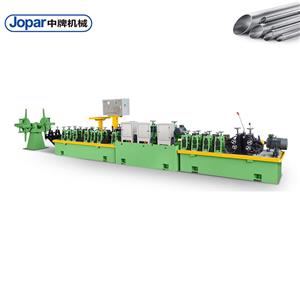
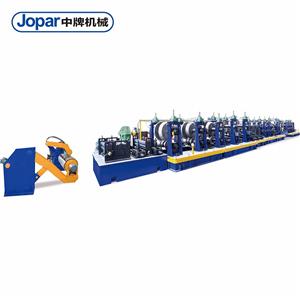
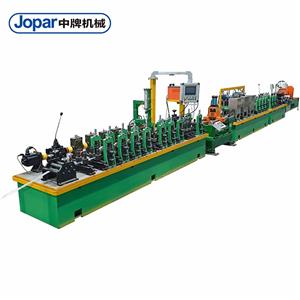
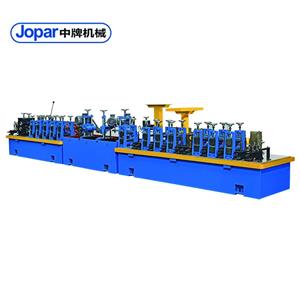
Foshan Jopar Machinery Co.,Ltd has been at the forefront of exhaust pipe making machine technology for over two decades. By listening to customers and investing in R&D, they have developed solutions that directly address the pain points described above. Let's break down how.
Solution 1: Precision Engineering for Consistent Weld Quality
At the heart of Jopar's machines is a commitment to precision. Their CNC-controlled welding systems utilize advanced servo motors and real-time feedback to maintain exact weld parameters. For example, the Jopar WeldMaster series features laser seam tracking that automatically adjusts the welding torch to the joint, ensuring perfect alignment even if the pipe has slight dimensional variations. Additionally, the machines are equipped with closed-loop control of welding current, voltage, and wire feed speed, which minimizes spatter and ensures deep penetration. In independent tests, Jopar machines have achieved weld rejection rates as low as 0.5%, a tenfold improvement over typical industry standards. This precision not only reduces waste but also extends the life of the exhaust system, enhancing customer satisfaction.
Solution 2: High-Speed Automation for Maximum Efficiency
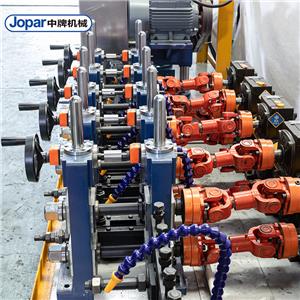
Jopar's machines are built for speed without compromising quality. The flagship model, the Jopar SpeedForm 3000, boasts a cycle time of just 18 seconds for a standard 2-inch diameter, 1-meter long pipe—including cutting, bending, and welding. This is achieved through a combination of high-speed servo presses, automated material handling, and quick-change tooling. The QuickLock tooling system allows changeovers in under 5 minutes, compared to the 30 minutes or more required by conventional machines. Furthermore, Jopar machines are equipped with predictive maintenance sensors that monitor critical components like bearings and motors, alerting operators before a failure occurs. This reduces unplanned downtime by up to 70%. For a manufacturer running two shifts, this translates to thousands of additional parts per month and significant cost savings.
Solution 3: Flexible Design for Diverse Materials and Geometries
Flexibility is engineered into every Jopar machine. The modular design allows for easy integration of different welding technologies (MIG, TIG, laser) and material handling systems. The machines can handle a wide range of materials, from mild steel to stainless steel and even titanium, thanks to adjustable heat input and shielding gas controls. For bending, Jopar offers mandrel bending machines with interchangeable mandrels and wiper dies, capable of producing bends with a centerline radius as tight as 1D (one times the pipe diameter) without wrinkling. This flexibility means manufacturers can take on a wider variety of jobs without investing in multiple machines, maximizing their return on investment.
To illustrate the differences, here's a comparison table between conventional exhaust pipe making machines and Jopar's advanced solutions:
| Feature | Conventional Machines | Jopar Machines |
|---|---|---|
| Weld Rejection Rate | 5-10% | 0.5-1% |
| Changeover Time | 30+ minutes | <5 minutes |
| Material Compatibility | Limited (mostly mild steel) | Wide (mild steel, stainless, titanium) |
| Downtime (unplanned) | High | Low (predictive maintenance) |
| Cycle Time (2" pipe, 1m) | 30-40 seconds | 18 seconds |
Customer Success Stories: Real Results from Around the World
Don't just take our word for it. Here are four real-world examples of how Foshan Jopar Machinery Co.,Ltd has helped manufacturers overcome their challenges and achieve remarkable results.
Case Study 1: Müller Automotive GmbH, Germany
Müller Automotive, a Tier 1 supplier based in Stuttgart, was struggling with a 12% rejection rate on stainless steel exhaust systems for a premium German automaker. They needed to meet stringent quality standards while increasing throughput. After installing two Jopar WeldMaster 5000 machines, Müller reduced their rejection rate to 0.8% and increased production by 25%. "The precision of the Jopar machines is simply unmatched," said Klaus Müller, Production Manager. "We've not only met but exceeded our customer's expectations, and our profitability has improved significantly."
Case Study 2: American Exhaust Systems, Inc., USA
Based in Detroit, American Exhaust Systems produces aftermarket exhausts for muscle cars and trucks. They faced frequent changeovers due to a wide variety of pipe diameters and bend geometries. Their old machines took over 45 minutes to change over, limiting their ability to handle small batches profitably. With a Jopar SpeedForm 3000 and QuickLock tooling, changeover time dropped to 4 minutes. "We can now run small batches of 50 units as efficiently as large batches," said Mike Johnson, CEO. "Our order-to-delivery time has been cut in half, and we've doubled our aftermarket business."
Case Study 3: Nippon Exhaust Co., Japan
Nippon Exhaust, a manufacturer of high-performance exhausts for motorcycles and race cars, needed to work with titanium and Inconel, materials known for their challenging weldability. They turned to Jopar for a custom solution. Jopar engineers developed a specialized TIG welding system with advanced gas shielding and heat control. The result: weld quality that passed stringent aerospace-grade inspections. "Jopar's technical team worked closely with us to tailor the machine to our needs," said Hiroshi Tanaka, Engineering Director. "Their expertise in exotic materials is impressive, and our scrap rate for titanium has dropped from 20% to 3%."
Case Study 4: Australian Custom Pipes, Australia
Australian Custom Pipes, a small but growing manufacturer in Melbourne, was using manual processes and struggling to scale. They invested in a Jopar automated line with robotic handling. Within six months, their output tripled, and labor costs were reduced by 40%. "The Jopar line is the backbone of our business," said Sarah Thompson, Owner. "It's reliable, easy to operate, and the support from Jopar has been outstanding. We couldn't have grown without it."
Applications and Partnerships: Trusted by Industry Leaders
Jopar machines are used in a wide range of applications, from passenger cars and commercial vehicles to motorcycles and industrial engines. Their customers include OEMs, Tier 1 suppliers, and aftermarket manufacturers. Notably, Jopar has established long-term partnerships with several major automotive brands. For instance, they are a preferred supplier to a leading European automaker for their exhaust pipe production lines, and they have collaborated with a top American motorcycle manufacturer to develop a specialized bending and welding cell. These partnerships are built on trust, technical excellence, and a shared commitment to innovation.
In addition to automotive, Jopar machines are also used in the fabrication of HVAC components, furniture frames, and other tubular products. This versatility underscores the robustness and adaptability of their technology.
FAQ: Technical Answers for Engineers and Procurement Managers
Here are answers to five common questions that engineers and procurement managers ask when evaluating exhaust pipe making machines.
1. What are the key specifications to consider when choosing an exhaust pipe making machine?
The key specifications include maximum pipe diameter and wall thickness, bending radius range, welding method (MIG, TIG, laser), cycle time, changeover time, and control system (PLC vs. CNC). Additionally, consider the machine's compatibility with materials you plan to use, and the availability of quick-change tooling. Jopar machines are designed to handle diameters from 1 inch to 6 inches and wall thicknesses up to 3mm, with customizable options for larger sizes.
2. How does Jopar ensure weld quality on stainless steel and other challenging materials?
Jopar employs several technologies to ensure weld quality on stainless steel: precise heat input control via closed-loop feedback, advanced shielding gas delivery systems (e.g., trailing shields for TIG), and laser seam tracking for accurate joint alignment. For titanium, we offer specialized inert gas chambers and purging systems. Our engineers also provide material-specific welding parameters and training to ensure optimal results.
3. What is the typical maintenance schedule and cost for a Jopar machine?
Jopar machines are built for durability, but regular maintenance is essential. We recommend a monthly inspection of critical components (e.g., welding torches, servo motors, and hydraulic systems) and an annual comprehensive service. With predictive maintenance sensors, many issues are detected early. Maintenance costs are typically 2-3% of the machine's purchase price per year, which is lower than industry average due to our robust design and remote diagnostics support.
4. Can Jopar machines be integrated into an existing production line with robots?
Absolutely. Jopar machines are designed with integration in mind. They support standard industrial communication protocols (e.g., Ethernet/IP, PROFINET) and can be equipped with robotic loading/unloading systems. We have experience integrating with major robot brands like KUKA, ABB, and FANUC. Our engineers can work with your team to ensure seamless integration and minimal disruption.
5. What is the lead time for delivery and installation?
Lead time varies depending on the machine model and customization. Standard machines typically ship within 8-10 weeks, while custom solutions may take 12-16 weeks. Installation and commissioning usually take 1-2 weeks on-site, including training for your operators. Jopar provides global support with service engineers available for on-site assistance and remote troubleshooting.
Conclusion and Call to Action
In the competitive world of exhaust pipe manufacturing, the right machine can be the difference between struggling to keep up and leading the pack. A great exhaust pipe making machine—like those from Foshan Jopar Machinery Co.,Ltd—combines precision, speed, and flexibility to address the industry's toughest pain points. With a proven track record of customer success stories from Germany to Australia, Jopar has demonstrated its ability to deliver tangible results: higher quality, greater efficiency, and lower costs.
If you're ready to transform your production line, we invite you to take the next step. Contact our sales engineers to discuss your specific requirements, or request our detailed technical white paper on advanced exhaust pipe manufacturing. Don't let outdated equipment hold you back—partner with Jopar and experience the difference that true innovation can make.