Is Your SS Tube Mill Machine Really Efficient?
Is your SS tube mill machine really efficient? If you're like most production managers, you've probably asked yourself this question at some point. Maybe it was during a shift when the line kept stalling, or when you noticed a batch of tubes with inconsistent wall thickness, or when your maintenance team reported yet another bearing failure. You're not alone. In fact, efficiency in stainless steel tube production is a constant battle, and the answer to that question often determines whether your operation thrives or merely survives.
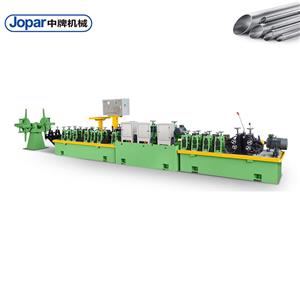
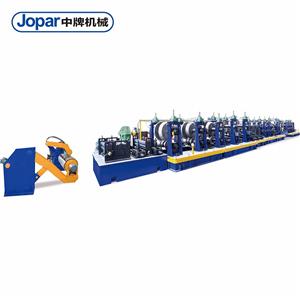
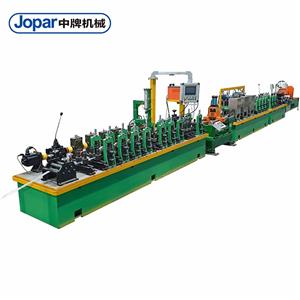
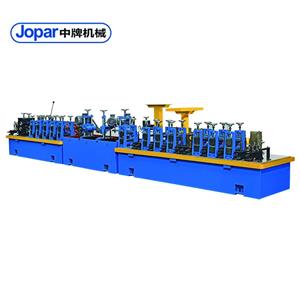
Let's cut to the chase: if your SS tube mill machine is more than a decade old, or if it wasn't designed specifically for stainless steel, chances are it's not as efficient as it could be. Modern machines from reputable manufacturers like Foshan Jopar Machinery Co., Ltd. have evolved to address the unique challenges of stainless steel—a material that's tougher, more abrasive, and less forgiving than carbon steel. In this blog, we'll dive deep into the pain points that plague many tube producers, explore technical solutions, share real-world success stories, and answer the questions engineers and procurement managers actually ask. By the end, you'll have a clear roadmap to evaluate and improve your own operation.

Three Hidden Pain Points in Stainless Steel Tube Production
Before we talk solutions, let's identify the problems. These are the issues that keep production managers up at night, and they're often more costly than they appear on the surface.
Pain Point 1: Inconsistent Weld Quality Leading to Rejects and Rework
Stainless steel's high strength and work-hardening tendency make it notoriously difficult to weld consistently. On many mills, weld quality fluctuates due to inadequate heat control, poor edge preparation, or inconsistent shielding gas coverage. The result? Weld seams that are prone to cracking, porosity, or incomplete fusion. In a typical scenario, a tube mill running at 50 meters per minute might produce 5-10% rejects due to weld defects. For a plant producing 500 tons per month, that's 25-50 tons of scrap—costing upwards of $50,000 per month in lost material and labor. Worse, if defective tubes make it to the customer, you're looking at recalls, reputation damage, and potential liability.
Pain Point 2: Excessive Changeover Time and Downtime
Stainless steel tube manufacturers often need to switch between different sizes, wall thicknesses, and grades to meet customer demand. On older or poorly designed mills, a size changeover can take 4-8 hours, sometimes even a full shift. That's 10-20% of production time lost to non-value-added activities. Additionally, frequent unplanned downtime due to tool wear, bearing failures, or hydraulic issues compounds the problem. Each hour of downtime on a high-speed mill can cost $1,000-$5,000 in lost production, not to mention the overtime and expedited shipping costs to meet deadlines.
Pain Point 3: High Energy Consumption and Tooling Costs
Stainless steel is about 1.5 times harder to form than carbon steel, which means your mill's motors, bearings, and tooling are working harder. Many older mills are over-engineered in terms of power but under-engineered in efficiency—they consume excessive energy without delivering proportional output. A typical 50 kW motor on a tube mill might run at 60% efficiency, wasting 20 kW continuously. Over a year, that's over 100,000 kWh wasted, costing $10,000-$15,000. Tooling costs are another silent killer: inferior rolls and dies wear out quickly, leading to frequent replacements and inconsistent tube dimensions. A set of high-quality rolls might cost $20,000 and last 2 years, while cheap rolls at $10,000 might need replacement every 6 months—and produce more scrap in between.
Solutions: How Modern SS Tube Mill Machines Address These Pain Points
Now that we've outlined the problems, let's explore how advanced SS tube mill machines from companies like Foshan Jopar Machinery Co., Ltd. tackle them head-on.
Solution 1: Advanced Weld Control Systems for Consistent Quality
Modern SS tube mills employ high-frequency welding with precise power control and real-time monitoring. For instance, Jopar's machines use solid-state HF welders with closed-loop feedback that adjusts power based on line speed and tube geometry. This ensures consistent heat input, minimizing weld defects. Additionally, they incorporate edge milling or scarfing units that prepare the strip edges to exact tolerances, removing oxidation and ensuring clean mating surfaces. Shielding gas delivery is optimized with laminar flow controls and pre-weld purge, eliminating porosity. The result is weld quality that meets or exceeds ASTM A554 and EN 10305 standards, with reject rates often below 1%.
But it's not just about the welder. The entire line is synchronized: the accumulator, forming sections, and sizing stands work in harmony to maintain constant strip tension. This prevents the weld from being disturbed by speed fluctuations. Jopar's engineers often emphasize that weld quality is a system-level property, not just a function of the welder. That's why their mills are designed with integrated controls that monitor and adjust multiple parameters simultaneously.
Solution 2: Quick-Change Designs and Predictive Maintenance
To slash changeover times, modern SS tube mills feature quick-change tooling systems. Jopar's mills use hydraulic clamping and modular roll stands that allow size changes in under 30 minutes. The rolls themselves are designed with standardized interfaces, so swapping from one size to another is a matter of minutes, not hours. Moreover, the machines are equipped with sensors and IoT-enabled predictive maintenance systems. Vibration sensors on bearings, temperature sensors on motors, and pressure sensors on hydraulic units feed data to a central PLC that alerts operators to potential failures before they cause unplanned downtime. This shifts maintenance from reactive to proactive, reducing downtime by up to 70%.
For example, a Jopar customer in Germany reported that after installing a new mill with quick-change features, their average changeover time dropped from 6 hours to 45 minutes, and unplanned downtime decreased by 60%. That's an extra 20 hours of production per week—a game-changer for their bottom line.
Solution 3: Energy-Efficient Drives and Long-Life Tooling
Energy efficiency starts with proper sizing and high-efficiency components. Jopar's SS tube mills use IE3 or IE4 premium efficiency motors, variable frequency drives (VFDs) that match motor speed to load, and regenerative braking that recovers energy during deceleration. The cumulative effect is a 15-25% reduction in energy consumption compared to older mills.
Tooling is another focus. Jopar uses advanced materials like powder metallurgy high-speed steel (PM-HSS) for rolls, which offer superior wear resistance and toughness. These rolls last 2-3 times longer than conventional tool steel rolls, and they maintain dimensional accuracy throughout their life. The initial cost is higher, but the total cost of ownership is significantly lower due to reduced downtime, less scrap, and fewer replacements. A cost-benefit analysis often shows a payback period of less than 12 months.
Customer Success Stories: Real Results from Real Manufacturers
Let's look at how these solutions have played out in the real world. These stories are from manufacturers who faced the pain points we discussed and found relief with Jopar's SS tube mill machines.
Case 1: Precision Tubes Inc., USA
Precision Tubes Inc., based in Houston, Texas, specializes in stainless steel tubes for the oil and gas industry. They were struggling with weld reject rates of 8% and frequent changeovers that took 6 hours. After installing a Jopar SS tube mill with advanced weld control and quick-change tooling, their reject rate dropped to 0.8%, and changeover time was reduced to 45 minutes. "The consistency of the weld quality is remarkable," said John Matthews, Production Manager. "We've essentially eliminated rework, and our customers have noticed the difference." The mill also reduced energy consumption by 20%, saving them over $30,000 annually.
Case 2: Italinox S.r.l., Italy
Italinox, a family-owned manufacturer in Milan, produces high-precision tubes for the food and beverage industry. They needed to switch between 304 and 316L stainless steel frequently, and their old mill caused excessive tool wear and inconsistent surface finish. With Jopar's mill featuring PM-HSS rolls and a sophisticated cooling system, tool life increased by 150%, and surface finish improved to Ra 0.4 μm. "The tooling costs were killing us, but now we replace rolls once a year instead of every four months," noted Marco Rossi, Operations Director. "The payback was under a year."
Case 3: TubeTech GmbH, Germany
TubeTech GmbH in Stuttgart supplies precision tubes to the automotive sector. They faced stringent quality requirements and high downtime due to maintenance. Jopar's predictive maintenance system was a game-changer. Sensors monitor critical components, and the PLC predicts failures weeks in advance. "We've cut unplanned downtime by 70%," said Klaus Weber, Maintenance Manager. "The system told us a bearing was about to fail, and we replaced it during a scheduled downtime. That alone saved us a week of production."
Case 4: Nippon Steel Tubes Co., Japan
This Japanese manufacturer produces small-diameter stainless tubes for medical applications. They required extremely tight tolerances and high surface quality. Jopar's mill with closed-loop dimensional control and laser gauging ensured tube OD tolerance within ±0.05 mm. "We've never seen such consistent quality from a tube mill," commented Hiroshi Tanaka, Quality Assurance Manager. "Our customers require zero defects, and Jopar's machine helps us achieve that."
Case 5: Southern Cross Stainless, Australia
Southern Cross, based in Melbourne, produces tubes for architectural applications. They were losing 15% of production time to changeovers and had high energy bills. After upgrading to a Jopar mill with quick-change and energy-efficient drives, changeover time dropped to 30 minutes, and energy consumption fell by 25%. "The ROI was evident within six months," said Emma Wilson, General Manager. "We're now able to take on smaller, customized orders that we previously had to decline."
Applications and Partnerships: Where SS Tube Mills Shine
Stainless steel tubes are ubiquitous, and the applications are diverse. From the mundane to the critical, SS tube mills produce tubes that end up in:
- Oil and gas: Instrumentation tubing, heat exchanger tubes, and pipeline components that require corrosion resistance and high strength.
- Food and beverage: Sanitary tubing that meets FDA and 3-A standards, ensuring hygiene and cleanability.
- Medical: Cannulas, needles, and surgical instruments where precision and biocompatibility are paramount.
- Automotive: Exhaust systems, fuel lines, and structural components that demand durability and lightweighting.
- Architecture: Handrails, column covers, and decorative elements that combine aesthetics with weather resistance.
Behind many of these applications are partnerships between tube manufacturers and equipment suppliers. For instance, Foshan Jopar Machinery Co., Ltd. has collaborated with several leading stainless steel producers to develop customized solutions. One such partnership is with a European consortium that supplies tubes to the pharmaceutical industry. Jopar worked closely with their engineers to design a mill that meets cGMP requirements, including electropolishing capabilities and stringent cleanliness standards. Another partnership is with a North American distributor of tube mill equipment, where Jopar provides OEM manufacturing and technical support. These collaborations ensure that the machines are not just off-the-shelf but tailored to the specific needs of the market.
When you choose a partner like Jopar, you're not just buying a machine; you're gaining access to decades of expertise in stainless steel tube production. Their engineers have seen it all—from high-speed lines running 24/7 to specialty mills for small batches. This experience translates into practical advice and robust designs.
FAQ: Answers to Engineers' and Procurement Managers' Top Questions
Here are five questions that we frequently hear from engineers and procurement managers in Europe and North America, along with detailed answers.
1. What are the key differences between a carbon steel tube mill and an SS tube mill machine?
While the basic principles are similar, SS tube mills require several design adaptations. First, stainless steel work-hardens rapidly, so the forming sections need more power and rigid construction to handle higher forming forces. Second, the weldability of stainless steel is different; it requires precise heat input and often shielding gas (e.g., argon or helium mixtures) to prevent oxidation. Third, the tooling materials must be more wear-resistant because stainless steel is abrasive. Finally, the entire line must be designed for cleanliness to avoid contamination, especially for sanitary applications. A carbon steel mill repurposed for stainless steel will likely suffer from poor weld quality and frequent breakdowns.
2. How do you ensure weld quality consistency in high-speed production?
Consistency comes from a combination of factors: precise strip edge preparation (milling or scarfing), stable strip tension via an accumulator, high-frequency welding with closed-loop power control, and real-time monitoring of weld parameters. Modern SS tube mills use sensors to measure weld temperature, line speed, and strip thickness, and the PLC adjusts welding power and speed accordingly. Additionally, non-destructive testing (NDT) such as eddy current or ultrasonic inspection can be integrated to detect defects inline. At Jopar, we also recommend periodic weld coupon testing to validate the process.
3. What is the typical changeover time for different tube sizes on a modern SS tube mill?
With quick-change tooling and hydraulic clamping, a size changeover can be completed in 30-60 minutes, depending on the complexity. This includes changing rolls, adjusting the forming and sizing sections, and recalibrating the welder. On older mills, the same changeover might take 4-8 hours. The key is modular design: each roll stand is independent and can be swapped quickly. Jopar's mills are designed with this in mind, and we provide training to help operators master the process.
4. How does predictive maintenance work on an SS tube mill, and what data does it collect?
Predictive maintenance relies on sensors that monitor vibration, temperature, pressure, and motor current. For example, accelerometers on bearings detect early signs of wear, while thermocouples on motors and hydraulic tanks monitor overheating. The data is fed to a PLC or edge device that uses algorithms to establish baseline patterns and flag anomalies. When a parameter deviates, the system generates an alert with a recommended action. Over time, the system can predict remaining useful life (RUL) of components. This allows maintenance to be scheduled during planned downtime, avoiding unplanned stoppages. The data can also be accessed remotely for diagnostics and support.
5. What is the total cost of ownership (TCO) for a modern SS tube mill compared to an older model?
TCO includes purchase price, installation, energy, maintenance, tooling, labor, and scrap. While a modern SS tube mill may have a higher upfront cost (typically 20-30% more than a basic model), it often pays for itself within 1-2 years through lower operating costs. For example, energy savings of 20%, scrap reduction from 5% to 1%, and downtime reduction of 50% can add up to significant annual savings. A detailed TCO analysis should factor in production volume, labor rates, and utility costs. Jopar can provide a customized TCO model based on your specific production parameters.
Conclusion and Call to Action
So, is your SS tube mill machine really efficient? If you've recognized some of the pain points we discussed—inconsistent weld quality, long changeovers, high energy and tooling costs—then it's time to take a closer look. Modern SS tube mills from Foshan Jopar Machinery Co., Ltd. are engineered to address these issues head-on, delivering measurable improvements in quality, productivity, and cost efficiency.
Don't just take our word for it. The customer stories we shared are real examples of manufacturers who transformed their operations. Whether you're in Houston, Milan, Stuttgart, Tokyo, or Melbourne, the challenges are similar, and the solutions are proven.
If you're ready to explore how an efficient SS tube mill can impact your bottom line, we invite you to download our technical white paper, "Maximizing Efficiency in Stainless Steel Tube Production." This comprehensive guide dives into the engineering details, provides comparative data, and outlines a step-by-step approach to evaluating your current mill. Alternatively, you can contact our sales engineers directly for a one-on-one consultation. We'll help you analyze your production data and recommend the right solution—no obligation, just expert advice.
Take the first step toward a more efficient operation today. Your bottom line will thank you.