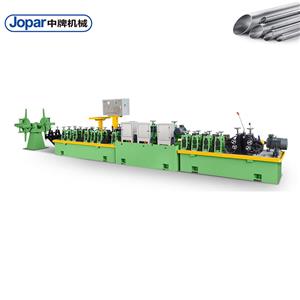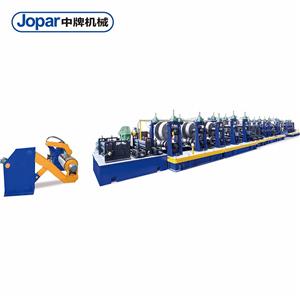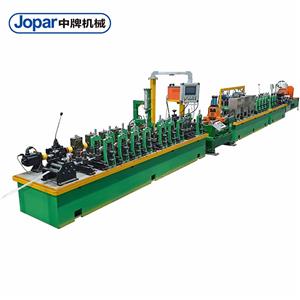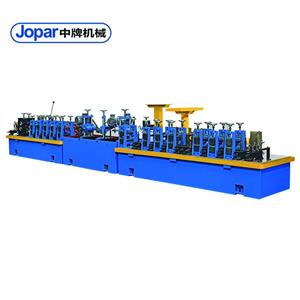
Is SS Pipe Making Machinery Your Production Bottleneck?
Is your stainless steel pipe production line holding you back? You're not alone. In the high-stakes world of precision tube manufacturing, even a momentary drop in output or quality can cascade into missed deadlines, lost contracts, and eroded profitability. The answer to this persistent challenge lies in the strategic deployment of advanced ss pipe making machinery that is engineered for speed, precision, and unwavering reliability. This blog delves into the core issues plaguing manufacturers and provides a clear path forward, showcasing how the right technology can transform your operation from a bottleneck into a competitive advantage.
The Hidden Costs of Suboptimal Stainless Steel Pipe Production
Stainless steel (SS) pipe is ubiquitous—from the intricate tubing in medical devices to the robust pipelines in chemical plants. Yet, producing it efficiently and to exacting standards is a formidable task. Many manufacturers, particularly those using older or poorly integrated equipment, face three critical pain points that silently drain resources and stifle growth.
Pain Point 1: Inconsistent Weld Quality and Seam Integrity
Imagine a production run of 316L stainless steel tubing destined for a high-purity pharmaceutical application. The weld seam, the very heart of the pipe's structural and corrosion-resistant integrity, exhibits sporadic porosity or incomplete penetration. The immediate consequences are dire: the entire batch is rejected during quality control, leading to significant material waste and a production halt. The downstream impact is even more severe—late delivery penalties, damage to your reputation as a reliable supplier, and the potential loss of a long-term client. The cost? A single rejected batch of 10,000 meters can represent upwards of $50,000 in lost material, labor, and energy, not to mention the unquantifiable cost of lost trust.
Pain Point 2: Low Throughput and Excessive Changeover Times
In today's market, flexibility is key. A manufacturer may need to switch from producing 1/2" OD sanitary tubing to 2" schedule 40 pipe within the same shift. With conventional or manually adjusted machinery, this changeover can take hours. During this downtime, the line is silent, orders pile up, and overtime costs soar. Furthermore, if the machinery's maximum line speed is limited, you're constantly fighting to meet demand. This bottleneck directly caps your revenue potential and makes you less responsive to customer needs than competitors with more agile ss pipe making machinery.
Pain Point 3: High Scrap Rates and Material Waste
Stainless steel is expensive. Every inch of scrap is a direct hit to your bottom line. Inefficient machinery often struggles with precise cut-to-length accuracy, leading to excessive trim waste. More critically, unstable forming and welding processes can cause continuous defects, forcing operators to discard long sections of pipe. A scrap rate of even 5% on a high-volume line can translate into hundreds of thousands of dollars in annual losses. This waste isn't just financial; it's also an environmental concern, as stainless steel production is energy-intensive.
Engineering the Solution: How Advanced SS Pipe Making Machinery Eliminates Bottlenecks
The challenges above are not insurmountable. They are the direct result of technology that has not kept pace with modern demands. Companies like Foshan Jopar Machinery Co.,Ltd have dedicated themselves to engineering solutions that directly address these core issues. Let's explore how.
Solution 1: Precision Welding and Real-Time Monitoring
To combat inconsistent weld quality, modern ss pipe making machinery integrates high-frequency (HF) or tungsten inert gas (TIG) welding systems with advanced control algorithms. These systems maintain exact weld parameters—current, voltage, speed, and gas flow—regardless of minor fluctuations in the strip material. Furthermore, real-time monitoring systems, such as weld seam trackers and thermal imaging cameras, provide immediate feedback. If a deviation is detected, the system can automatically adjust or alert the operator, preventing a full batch from being scrapped. This ensures a consistent, leak-proof weld seam with full penetration, meeting the stringent requirements of ASTM A269 or EN 10217-7 standards.
Solution 2: High-Speed Lines with Quick-Change Tooling
Throughput and flexibility are enhanced through smart design. Jopar's machinery, for instance, features high-speed forming and sizing sections capable of line speeds that significantly outpace older models. But speed alone isn't enough. The key is rapid changeover. Quick-change tooling systems, often using hydraulic or pneumatic clamping, allow operators to switch between different pipe diameters and wall thicknesses in a fraction of the time. A job that took four hours to set up can now be completed in 30 minutes, dramatically increasing the machine's uptime and your production capacity.
Solution 3: Intelligent Control and Material Optimization
Reducing scrap starts with precise control. Advanced ss pipe making machinery utilizes servo-driven flying cut-off systems that guarantee length accuracy to within ±0.5mm, minimizing trim waste. The entire line is orchestrated by a PLC (Programmable Logic Controller) with a user-friendly HMI (Human-Machine Interface). This central brain optimizes the entire process, from strip feeding to final cut-off, ensuring smooth acceleration and deceleration to prevent material stretching or deformation. By maintaining perfect tension and alignment, the system produces less waste, directly improving your material yield.
Real-World Impact: Customer Success Stories
The theoretical benefits of advanced machinery are compelling, but the true measure of success is in the field. Here are a few examples of how manufacturers have overcome their bottlenecks with Jopar's technology.
Case Study 1: Enhancing Medical Tubing Quality in Germany
Client: A precision tubing manufacturer in Bavaria, Germany, supplying the medical device industry.
Challenge: Facing a 7% rejection rate on 316LVM stainless steel tubing due to weld porosity, leading to costly rework and delivery delays.
Solution: Implemented a Jopar HF welder with closed-loop control and an integrated weld monitoring system.
Result: Rejection rate plummeted to less than 0.5%. Throughput increased by 22% as the line could run at higher speeds with confidence.
Quote: "The consistency of the weld is now our strongest selling point. Jopar's machinery didn't just fix a problem; it gave us a competitive edge." – Production Manager, Bavaria.
Case Study 2: Boosting Capacity for a US Sanitary Pipe Producer
Client: A mid-sized manufacturer in Wisconsin, USA, specializing in sanitary tubing for the food and dairy industry.
Challenge: Frequent and lengthy changeovers between 1" and 3" OD tubes were killing productivity, limiting them to 15,000 meters per week.
Solution: Installed a Jopar high-speed line with automatic tooling change and a quick-release forming section.
Result: Changeover time reduced from 3 hours to 20 minutes. Weekly output surged to over 28,000 meters, allowing them to take on new contracts.
Quote: "We were turning away business because we couldn't keep up. Now, we're proactively seeking new opportunities. The flexibility is a game-changer." – Operations Director, Wisconsin.
Case Study 3: Reducing Scrap for a Middle Eastern Oil & Gas Supplier
Client: A large pipe manufacturer in the UAE, supplying welded stainless steel pipes to the oil and gas sector.
Challenge: A high scrap rate of 8% due to cut-length inaccuracies and ovality issues on thick-walled pipes, costing millions annually.
Solution: Adopted a Jopar heavy-duty pipe mill with servo-controlled flying cut-off and advanced sizing stands.
Result: Scrap rate reduced to 2.1%. The precision of the cut and the improved roundness of the pipe eliminated downstream fabrication issues for their clients.
Quote: "The ROI was almost immediate. The savings from reduced scrap alone paid for the machine upgrade in under 18 months." – Plant Manager, UAE.
Case Study 4: Improving Efficiency for an Italian Automotive Supplier
Client: A Tier 1 automotive exhaust system manufacturer near Turin, Italy.
Challenge: Needed to increase production of 409 stainless steel exhaust tubing while reducing energy consumption per meter.
Solution: Integrated a Jopar tube mill with high-efficiency induction welding and a smart energy management system.
Result: Production speed increased by 18%, while energy consumption per meter dropped by 12%. Overall equipment effectiveness (OEE) improved from 65% to 82%.
Quote: "We are committed to sustainability, and Jopar's technology helped us meet both our production and environmental goals." – Engineering Manager, Turin.
Applications and Trusted Partnerships
The versatility of modern ss pipe making machinery from Foshan Jopar Machinery Co.,Ltd extends across a wide spectrum of industries. Our equipment is pivotal in producing:
- Sanitary Tubing: For pharmaceutical, biotech, food, and beverage processing, where internal surface finish and weld integrity are paramount.
- Heat Exchanger Tubes: For power plants and HVAC systems, requiring precise dimensions and excellent thermal conductivity.
- Automotive Tubing: For exhaust systems, fuel lines, and structural components, demanding high strength and corrosion resistance.
- Oil and Gas Pipes: For upstream, midstream, and downstream applications, often requiring thick walls and resistance to harsh chemicals.
- Decorative Tubes: For architectural and furniture applications, where surface finish and aesthetic appeal are critical.
Our commitment to quality has made us a trusted partner for numerous large-scale procurement companies and engineering firms globally. We collaborate closely with clients to understand their unique production challenges and tailor solutions that integrate seamlessly into their existing workflows. This partnership approach ensures that every Jopar machine is not just a piece of equipment, but a strategic asset for growth.
Frequently Asked Questions from Engineers and Procurement Managers
Q1: What are the key differences between TIG and HF welding for stainless steel pipe, and which does your machinery support?
A: TIG welding offers superior weld quality and is often preferred for thinner walls and critical applications, but it is slower. HF welding is much faster and ideal for high-volume production of thinner to medium-walled pipes. The choice depends on your specific material, wall thickness, and production targets. Jopar provides machinery capable of integrating both TIG and HF welding systems, and our engineers can help you select the optimal configuration for your needs.
Q2: How does your machinery handle the work hardening of stainless steel during forming?
A: Work hardening is a significant concern. Our machines are designed with multiple forming stages that apply gradual, controlled pressure to minimize stress on the material. We use high-quality tooling with specific surface treatments and lubrication systems to reduce friction. The roll design is optimized using finite element analysis (FEA) to ensure the material flows smoothly without excessive strain, preserving its mechanical properties.
Q3: What is the typical lead time for a custom ss pipe making machinery line, and what support do you offer for installation and training?
A: Lead times vary based on complexity, typically ranging from 4 to 8 months. We provide comprehensive support, including on-site installation supervision, commissioning, and extensive training for your operators and maintenance staff. Our goal is to ensure your team is fully proficient and your line is operational and optimized as quickly as possible.
Q4: How do you ensure the dimensional accuracy and roundness of the final pipe?
A: Dimensional accuracy is achieved through a combination of precise roll forming, a robust sizing section, and a high-precision cut-off. Our sizing stands use multiple rolls to gradually shape the pipe to its final dimensions, correcting any ovality. The entire line is controlled by a PLC that maintains precise speed and tension, preventing distortion. Laser measurement systems can be integrated for real-time diameter and ovality monitoring.
Q5: What are the maintenance requirements and expected lifespan of your machinery?
A: Our machinery is built for durability with high-grade components from reputable suppliers. Routine maintenance primarily involves lubrication, inspection of tooling, and calibration of sensors. With proper care, the core mechanical components have a lifespan of 15-20 years or more. We offer preventive maintenance programs and a global network of service engineers to support you throughout the lifecycle of your equipment.
Transform Your Production Line Today
The limitations of outdated ss pipe making machinery are a choice, not a necessity. By addressing the root causes of weld inconsistency, low throughput, and high scrap, you can unlock significant untapped capacity and profitability. The success stories from Germany, the USA, the UAE, and Italy demonstrate that the right technology delivers measurable, transformative results.
Don't let your production line remain the bottleneck. Take the next step towards operational excellence. For a deeper technical dive into the engineering behind these solutions, we invite you to request our comprehensive white paper, "Optimizing Stainless Steel Pipe Production: A Guide to Modern Machinery." Alternatively, connect directly with a Jopar sales engineer to discuss your specific challenges and discover how a tailored solution can be designed for your facility. The future of your production is precision, speed, and efficiency—let's build it together.