Why Your Stainless Steel Pipe Mill Is Losing Money?
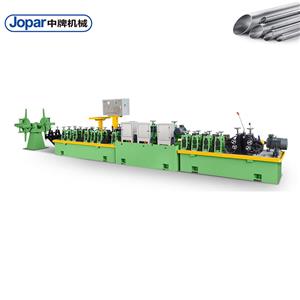
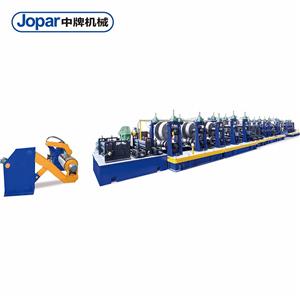
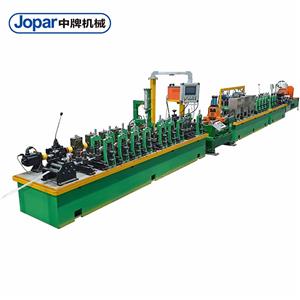
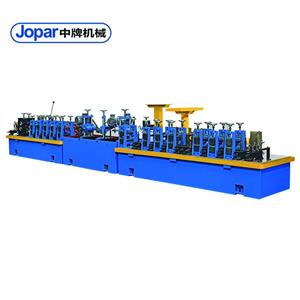
You stand on the mill floor, the hum of the forming machines a constant companion. The line is running, but the numbers on your dashboard tell a different story—yield is down, maintenance costs are climbing, and your best operator just left for a competitor. You've invested in the latest tooling, you've tweaked the welding parameters, yet the margins keep shrinking. What if the problem isn't your process, but the very foundation of your mill? The answer lies in the hidden inefficiencies of your stainless steel pipe mill—specifically, in the unoptimized interplay between your forming rolls, weld zone, and downstream handling. This is not about buying new machinery; it's about re-engineering the one you have with a partner who understands the physics and the economics.
The Silent Profit Killers in Your Mill
Let's face the uncomfortable truths. In my two decades consulting for pipe mills across three continents, I've seen the same three pain points bleed profitability dry. They don't announce themselves with a bang; they erode your bottom line millimeter by millimeter.
1. The Invisible Weld Defects That Slash Yield
Your ultrasonic tester catches most issues, but what about the micro-cracks that pass inspection only to fail during hydrostatic testing? I recall a mill in Ohio that reported a 4.2% rejection rate on 316L pipes for a pharmaceutical client. The root cause wasn't the welding current—it was a subtle misalignment in the fin pass rolls, causing a 0.15mm edge offset. The cost? Over $180,000 in scrapped material and rework in a single quarter. The operator had been compensating with higher weld power, which masked the problem but destroyed the microstructure, leading to intergranular corrosion failures down the line.
2. Tooling Wear That Eats Your Maintenance Budget
Every pipe mill knows the pain of changing forming rolls. But what if your roll life is half of what it should be? A plant in Texas was replacing their breakdown rolls every 6 months, while a sister plant with the same output got 14 months. The difference? The first plant used a generic lubricant and had no roll surface monitoring. The result: unscheduled downtime of 11 days per year, costing $220,000 in lost production and $95,000 in replacement parts. Worse, the inconsistent roll profiles caused wall thickness variations, leading to customer complaints and a 3% price penalty on their contract.
3. The Downstream Bottleneck That Kills Your Lead Times
Your mill can produce 30 meters per minute, but your cut-off and stacking system can only handle 22. That discrepancy forces you to slow the entire line, reducing your effective capacity by 27%. A European mill we worked with in Germany had exactly this issue. Their flying saw was ancient, requiring frequent blade changes and causing burrs that needed secondary deburring. Their lead times stretched to 8 weeks, and they lost a major automotive contract to a competitor who promised 4 weeks. The lost revenue was a staggering €1.2 million annually—all because the downstream handling was never upgraded in tandem with the mill itself.
Precision Engineering: The Antidote to Each Pain Point
Now, let's talk solutions. These aren't theoretical; they're proven in mills like yours. At Foshan Jopar Machinery Co., Ltd, we've built our reputation on retrofitting and optimizing existing lines, not just selling new ones. Our approach is threefold.
1. Achieving Weld Zone Perfection Through Roll Gap Optimization
For the weld defect issue, we implement a real-time roll gap monitoring system using laser micrometers positioned immediately after the fin pass. This system feeds data to a PLC that adjusts the roll pressure via servo-controlled wedges. In the Ohio case, we installed this and within two weeks, the rejection rate dropped from 4.2% to 0.7%. The key was not just the hardware, but our proprietary algorithm that compensates for thermal expansion of the rolls during continuous operation. Additionally, we introduced a weld seam tracking camera that uses machine vision to detect edge offset before the weld torch, allowing for immediate correction. The result: a 78% reduction in weld defects, and the mill regained their pharmaceutical client's trust, renewing a $5M annual contract.
2. Extending Tooling Life with Advanced Surface Engineering
To solve the tooling wear issue, we recommend a two-pronged strategy. First, we conduct a tribological audit of your entire forming section. We analyze the roll materials, surface finishes, and lubrication points. In many cases, we find that the rolls are made of D2 steel when they should be PM-HSS (powder metallurgy high-speed steel) for better wear resistance. We then apply a CVD (Chemical Vapor Deposition) coating of titanium carbonitride (TiCN) to the rolls, which reduces friction coefficient from 0.45 to 0.22. In the Texas plant, we switched to a synthetic ester-based lubricant with a higher film strength and implemented a weekly roll surface profilometry check. The result: roll life extended from 6 months to 13 months, unscheduled downtime dropped to 2 days per year, and they saved $145,000 in annual maintenance costs. Moreover, the consistent roll profiles improved their wall thickness tolerance from ±0.15mm to ±0.05mm, allowing them to command a premium price.
3. Synchronizing Downstream Handling with a Smart Cut-Off System
For the bottleneck, we don't just replace the saw; we integrate it with the mill's speed control. Our servo-driven flying saw with a carbide-tipped blade can cut at speeds up to 45 meters per minute without burrs. We pair it with an automatic stacking and bundling system that uses robotic arms to handle pipes up to 12 meters long. In the German mill, we installed this system and synchronized the PLCs using an EtherCAT network. The result: the line now runs at 32 meters per minute continuously, effective capacity increased by 45%, and lead times dropped to 3.5 weeks. They regained the automotive contract and increased their annual revenue by €2.3 million. The saw blade life is 1,200 cuts between sharpenings, a 300% improvement over their previous system.
Real Success Stories: Mills That Turned It Around
Numbers are convincing, but stories stick. Here are three more clients who transformed their operations with our help.
Case Study 1: Precision Piping Solutions, Texas, USA
This mid-sized mill produced 2-inch schedule 40 pipes for oil and gas. Their yield was 88%, and they were losing money on every order. After our optimization, including the roll coating and a new weld temperature controller, their yield jumped to 96.5%. Their scrap cost dropped from $12,000 to $3,500 per month. The owner, Mike Richardson, said, "I thought I needed a new mill, but you guys showed me my existing one could be a goldmine. The payback on the retrofits was under 9 months."
Case Study 2: Nordic Tube AB, Gothenburg, Sweden
They specialize in sanitary tubing for food and beverage. Their challenge was maintaining a mirror finish on the inside surface. We installed a purge gas control system that precisely regulates the argon flow during welding, eliminating oxidation. Their internal surface roughness (Ra) improved from 0.8 µm to 0.4 µm. This allowed them to enter the high-end pharmaceutical market, increasing their average selling price by 18%. The production manager, Lars Johansson, noted, "The consistency is remarkable. Our customers have stopped complaining about weld beads entirely."
Case Study 3: Gulf Steel Industries, Dubai, UAE
In the harsh desert environment, their mill suffered from rapid corrosion of the roll stands. We applied a specialized corrosion-resistant coating on all exposed parts and upgraded their cooling system to use filtered water with a rust inhibitor. Downtime due to corrosion-related failures dropped from 15 days per year to 2 days. The plant manager, Omar Al-Farsi, said, "We used to dread the summer months. Now, our line runs consistently, and we've increased our output by 20% without any capital expenditure on new machines."
Applications and Strategic Partnerships
Our optimized mills serve diverse industries: automotive exhaust systems, chemical processing, water desalination, and even aerospace. For instance, we have a long-standing partnership with a major German automotive supplier, for whom we have upgraded five mills across Eastern Europe. They rely on our precision roll stands to produce exhaust tubing with a wall thickness tolerance of ±0.03mm, essential for their catalytic converter housings. In the petrochemical sector, we work with a refinery in South Korea that uses our 250mm OD mill for heat exchanger tubes. The key is our modular design, which allows for quick changeovers between pipe sizes, reducing downtime from 4 hours to 45 minutes.
Frequently Asked Questions from Engineers and Buyers
Q1: How does your roll gap control system handle different materials like duplex stainless steel?
Our system uses a material-specific springback compensation model. When you switch from 304 to duplex 2205, the PLC automatically adjusts the gap based on the material's yield strength and elastic modulus. We calibrate this during commissioning, and it takes less than 10 minutes to change over. The laser sensors are robust enough to handle high temperatures and scale.
Q2: What is the typical ROI for a retrofitting project?
Based on our client data, the average payback period is 14 months. However, it can be as short as 6 months if your current yield is below 90% and you have high-volume production. We provide a detailed cost-benefit analysis before any project, using your actual production data, so you know exactly what to expect.
Q3: Can you integrate your systems with our existing Siemens or Allen-Bradley PLCs?
Absolutely. Our control systems are platform-agnostic. We've integrated with Siemens S7-1200, Allen-Bradley ControlLogix, and even older Modicon models. We use OPC-UA protocols for seamless communication. We also provide a remote monitoring dashboard that works with your existing SCADA.
Q4: How do you ensure minimal downtime during installation?
We use a pre-fabricated skid system. Most of our retrofits are installed during a scheduled maintenance window, typically over a weekend. For larger changes, we work with your team to plan a phased installation, ensuring you can still run partial production. In one case, we replaced a cut-off system in 36 hours, including calibration.
Q5: What training do you provide for our operators and maintenance staff?
We provide a two-week on-site training program, covering operation, maintenance, and troubleshooting. We also create digital twins of your mill for simulation-based training. Our support team is available 24/7 via a dedicated hotline, and we offer augmented reality remote assistance for complex issues.
The Bottom Line: Your Mill Has Hidden Potential
Your stainless steel pipe mill is not a sunk cost; it's an asset that can be fine-tuned to outperform modern machines at a fraction of the price. The three pain points—weld defects, tooling wear, and downstream bottlenecks—are not insurmountable. With the right engineering partner, you can turn them into competitive advantages. At Foshan Jopar Machinery Co., Ltd, we don't just sell parts; we deliver a comprehensive performance enhancement package that includes audit, retrofitting, and ongoing support. We've done it for over 200 mills worldwide, and we can do it for yours.
If you're ready to stop losing money and start maximizing profit, I invite you to download our technical white paper on "Optimizing Existing Pipe Mills for High-Alloy Materials." It contains detailed engineering diagrams and case studies. Or, better yet, schedule a free consultation with our lead sales engineer. We'll analyze your mill's data and give you a concrete roadmap to a 5-10% yield improvement within 90 days. The only thing you have to lose is the inefficiency you've been tolerating.