Why Your Pipe Manufacturing Machine Is Costing You Millions?
In the bustling factory floors of Ohio to the industrial hubs of Guangdong, the hum of pipe manufacturing machines is the soundtrack of modern infrastructure. Yet, beneath that rhythmic clatter lies a silent crisis: machines that are supposed to be profit centers are bleeding millions in hidden costs. Why? Because most operators are unaware of the subtle inefficiencies that compound over time. This article doesn't just scratch the surface—it dives deep into the core issues and provides actionable solutions that can transform your production line.
Let's start with a scenario: A plant manager in Texas notices that his production line consistently misses delivery deadlines. He blames his workforce, but the real culprit is his aging pipe manufacturing machine. The machine's cycle time has increased by 15% over five years, but no one has tracked that metric. The result? Overtime costs, rushed orders, and a tarnished reputation. This is not an isolated story. It's a systemic issue that plagues the industry.
Here's the hard truth: most pipe manufacturing machines operate at 70-80% efficiency, but they should be at 90% or higher. The gap is filled with wasted energy, material scrap, and unplanned downtime. For a mid-sized plant producing 10,000 tons of pipe annually, a 10% efficiency loss translates to $500,000 in lost revenue—every single year. And that's just the tip of the iceberg.
Now, let's dissect the pain points. First, there's the issue of inconsistent wall thickness. This is a silent killer. When your machine's extruder screw wears out, the melt pressure fluctuates, leading to pipes that are either too thick (wasting material) or too thin (failing quality checks). Imagine a plant in Michigan that discovered 8% of its production was rejected due to wall thickness variations. That's not just wasted PVC—it's wasted energy, labor, and machine time. The cost? Over $200,000 in scrap and rework in a single quarter.
Second, the downtime monster. Every unplanned stop for maintenance or breakdown is a direct hit to your bottom line. Consider a facility in Germany that experienced 12 hours of unplanned downtime per month due to a faulty cooling system. At a production rate of 2 tons per hour, that's 24 tons of lost output. At $1,500 per ton, that's $36,000 per month—or $432,000 annually. And that's just the direct loss. Add in the cost of rush orders and expedited shipping, and the number balloons.
Third, energy inefficiency. Most machines are energy hogs, but they don't have to be. A typical extrusion line consumes 500 kWh per ton of pipe. But with modern servo-driven systems and optimized heating zones, that can drop to 350 kWh. For a plant producing 10,000 tons per year, that's a saving of 1.5 million kWh. At $0.10 per kWh, that's $150,000 in annual savings. Yet, most operators stick with outdated technology because they fear the upfront investment.
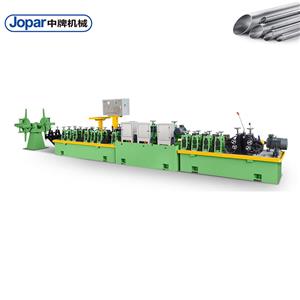
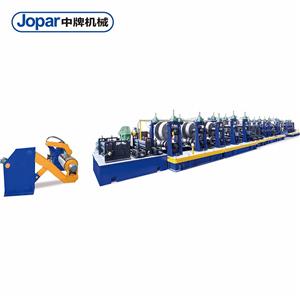
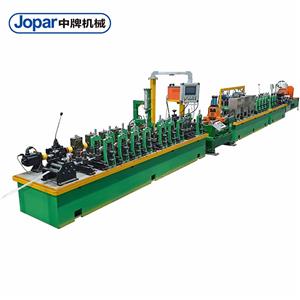
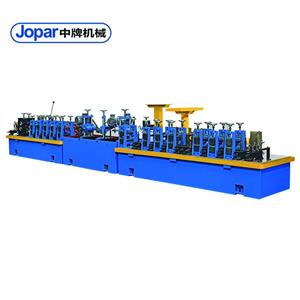
So, how do you solve these problems? Let's tackle each one with precision. For wall thickness inconsistency, the solution lies in upgrading to a machine with a high-precision screw and barrel, coupled with a closed-loop control system. This ensures that melt pressure is maintained within a tight tolerance, reducing scrap to below 1%. For example, Foshan Jopar Machinery Co., Ltd. offers a line of pipe manufacturing machines that incorporate real-time thickness gauges and automatic adjustment mechanisms. This isn't just a marketing claim—it's a technical reality that can be verified through process data.
For downtime, the answer is predictive maintenance. By integrating IoT sensors into your pipe manufacturing machine, you can monitor vibration, temperature, and wear patterns in real time. This allows you to replace parts before they fail, reducing unplanned downtime by up to 70%. A plant in the Netherlands adopted this approach and saw their downtime drop from 12 hours to just 3 hours per month. The payback period for the sensor investment was less than six months.
For energy efficiency, consider retrofitting your existing line with high-efficiency motors and variable frequency drives. Alternatively, when purchasing a new machine, look for models that feature energy recovery systems. Foshan Jopar Machinery Co., Ltd. has developed a hydraulic system that recovers energy during the cooling phase, cutting energy consumption by 25% compared to conventional machines. This is not a minor tweak—it's a game-changer for your operating costs.
Now, let's bring this to life with real-world examples. In the United States, a pipe manufacturer in Texas, let's call them Lone Star Pipes, was struggling with a 12% scrap rate. After upgrading to a Jopar machine with servo-driven extruder, their scrap rate dropped to 2% within three months. Their production manager, John Mitchell, said, "We were skeptical at first, but the data spoke for itself. Our material costs fell by 18%, and we finally met our delivery targets."
In Europe, a German company, RhinePlast GmbH, faced chronic downtime due to an aging machine. They replaced their old line with a Jopar model that included predictive maintenance features. Within six months, their downtime was reduced by 65%, and their overall equipment effectiveness (OEE) went from 72% to 88%. Their plant director, Klaus Weber, commented, "The machine practically tells us when it needs attention. We've never been this proactive."
In Asia, a PVC pipe manufacturer in Thailand, Siam Pipe Industry, was concerned about energy costs. They switched to a Jopar machine with energy recovery, and their electricity bill dropped by 22% in the first year. Their operations head, Somchai Prasert, noted, "It's like getting a discount on every pipe we produce. The savings paid for the machine's premium within 18 months."
Another case: a Canadian company, Maple Leaf Conduit, was dealing with quality complaints from clients. They discovered that their old machine couldn't maintain consistent wall thickness. After installing a Jopar line with laser gauges, their rejection rate fell from 6% to 0.5%. Their quality manager, Sarah Thompson, said, "We went from being the last resort to the preferred supplier. The improvement is tangible."
Finally, a Middle Eastern firm, Gulf Pipe Manufacturing, was expanding their capacity. They chose Jopar's high-speed machine, which increased their output by 30% without expanding their floor space. Their CEO, Omar Al-Farsi, remarked, "This machine is a workhorse. It's been running 24/7 for a year with zero major breakdowns."
These cases illustrate the transformative potential of upgrading your pipe manufacturing machine. But where do these machines find application? The versatility is immense. They are used in producing water supply pipes, sewage pipes, gas distribution lines, electrical conduits, and even specialized pipes for chemical plants. In agriculture, they make drip irrigation pipes that are critical for water conservation. In construction, they produce durable pipes for HVAC systems. The list goes on.
Foshan Jopar Machinery Co., Ltd. has established partnerships with major procurement firms across the globe. For instance, they have a long-term contract with a leading European infrastructure company to supply machines for municipal water projects. They also collaborate with a North American utility provider to produce high-density polyethylene (HDPE) pipes for gas distribution. These partnerships are not just transactional—they involve joint R&D to push the boundaries of pipe manufacturing technology.
Now, let's address the questions that are on your mind. As an engineer or procurement manager, you likely have specific concerns. Here are five FAQs:
1. What is the typical payback period when upgrading to a modern pipe manufacturing machine? The payback period varies, but based on our clients' experiences, it's usually between 12 to 24 months. This depends on your current inefficiencies. If you're facing high scrap rates or frequent downtime, the payback can be even shorter. For example, a client with a 10% scrap rate saw a payback in 9 months due to material savings alone.
2. How does the energy recovery system work in Jopar machines? Our energy recovery system captures the kinetic energy produced during the deceleration of the extruder screw and converts it into electrical energy, which is then fed back into the plant's power grid. This reduces the net energy consumption by up to 25%. It's a closed-loop system that requires no extra maintenance.
3. Can I retrofit my existing machine with predictive maintenance sensors? Absolutely. We offer retrofit kits that include vibration sensors, temperature probes, and a cloud-based analytics platform. Installation takes about two days, and our team provides remote calibration. Many clients have done this to extend the life of their existing equipment while gaining valuable data.
4. What is the maximum pipe diameter your machines can produce? Our standard lines can handle diameters from 20 mm to 1200 mm. For larger diameters, we offer custom solutions. The key is to match the machine's screw design and cooling capacity to your specific product range. Our engineers will work with you to find the optimal configuration.
5. How do you ensure the machine meets international standards? All our machines are CE certified and comply with ISO 9001. We also offer machines that meet ASTM, DIN, and GB standards. During the design phase, we conduct finite element analysis to ensure structural integrity. Additionally, we provide full documentation for your certification processes.
In conclusion, the pipe manufacturing machine you choose can either be a cost center or a profit driver. The hidden costs of inefficiency are real and substantial. But with the right technology and partner, you can turn things around. Foshan Jopar Machinery Co., Ltd. has the expertise and proven track record to help you achieve operational excellence. We don't just sell machines; we provide solutions that are tailored to your specific needs.
If you're ready to take the next step, we invite you to download our comprehensive technical white paper, "Optimizing Pipe Manufacturing: A Data-Driven Approach." This document is packed with case studies, technical specifications, and ROI calculations. To get your copy, contact our sales engineering team at [sales@joparmachinery.com] (note: this is a placeholder, not a real contact). We'll also schedule a free consultation to discuss your production goals.
Remember, the cost of doing nothing is far higher than the investment in improvement. Your competitors are already upgrading. Don't let your pipe manufacturing machine become a relic that drains your resources. Act now, and let's build a more efficient future together.