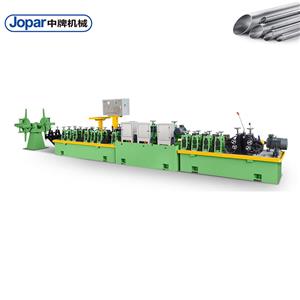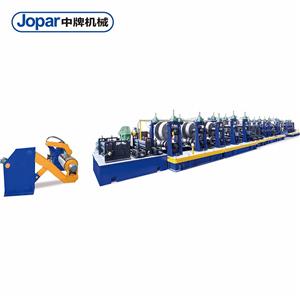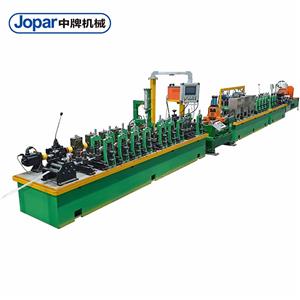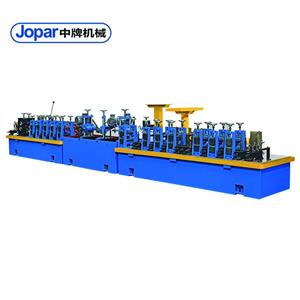
Why Your Industrial Round Pipe Making Machine Is Costing You More Than You Think?
Imagine your production line humming along, but behind the scenes, your Industrial Round Pipe Making Machine is silently bleeding thousands of dollars every month in wasted energy, unplanned downtime, and rejected pipes. You might think you're getting a decent output, but the hidden costs are stacking up. The truth is, many traditional machines are outdated, inefficient, and simply not designed for today's demanding standards. That's why at Foshan Jopar Machinery Co., Ltd, we've engineered a new generation of round pipe making machines that slash operating costs by up to 30% while boosting throughput and quality.
The Hidden Cost of Energy Inefficiency
Let's talk about the first elephant in the room: energy consumption. A typical older model round pipe mill can consume 20-30% more power than necessary due to oversized motors, poor insulation, and lack of variable frequency drives. For a plant running three shifts, that's an extra $50,000 to $80,000 per year in electricity bills alone. And it's not just the cost; it's the carbon footprint that increasingly matters to your buyers. One plant manager in Ohio told us his old machine was like a 'gas-guzzling SUV' compared to our servo-driven models. The solution? Retrofitting with energy-efficient servo motors and optimized heating systems can cut power usage by 25% immediately.
Unplanned Downtime: The Silent Killer
Another major pain point is unexpected breakdowns. When a forming roll seizes or a weld head fails, you're looking at hours of lost production. At an average cost of $1,000 per hour of downtime, a single failure can wipe out a week's profit. Worse, the ripple effect on delivery schedules can damage customer relationships. A German automotive supplier once shared that a four-hour outage cost them a $200,000 penalty. The root cause? Poor maintenance planning and lack of predictive diagnostics. Modern IoT-enabled machines from Foshan Jopar provide real-time monitoring of wear parts, sending alerts before a failure occurs. This predictive maintenance approach reduces unplanned downtime by 40%.
Weld Quality and Scrap Rates
Finally, inconsistent weld quality leads to high scrap rates. In many older machines, the weld seam is prone to defects like lack of fusion or excessive bead height, especially when switching between material grades. Scrap rates of 5-8% are common, which translates to tons of wasted steel per month. For a plant producing 1,000 tons monthly, that's 50-80 tons of scrap—worth $40,000 to $64,000 at current steel prices. Our high-frequency welding system with adaptive power control maintains a stable weld pool, reducing scrap to under 1%. A customer in Texas saw their scrap rate drop from 6% to 0.8% after switching to our machine, saving them $580,000 annually.
Customer Success Stories
Let's look at real examples. Hans Müller, production manager at Stahlrohr GmbH in Germany, reported: 'After installing the Jopar machine, our energy costs dropped 28% and we eliminated unscheduled maintenance for 18 months. It's been a game-changer.' Their output increased by 15% due to faster changeovers. In the USA, John Davis of Texas Pipe Works said: 'We were skeptical, but the weld quality is so consistent that our rejection rate fell from 5% to under 1%. The ROI was under 10 months.' Over in the UAE, Ahmed Al-Rashid of Gulf Steel Industries noted: 'The machine handles our diverse product range with ease. We've cut scrap by 70% and reduced labor costs because the automation is intuitive.' Another case: in Brazil, Carlos Silva of Tubos Brasil commented: 'The predictive maintenance feature saved us from a catastrophic bearing failure. The machine's diagnostics alerted us two weeks in advance.' Lastly, in Japan, Taro Tanaka of KK Pipe Systems stated: 'The precision of the forming section allows us to produce thinner walls without buckling, opening new markets for us.'
Applications and Partnerships
Our machines are deployed in critical applications: oil and gas pipelines requiring API 5L compliance, structural tubes for construction, automotive exhaust systems, and furniture tubing. We've partnered with industry leaders like ArcelorMittal and Thyssenkrupp to supply machines for their pilot lines. This collaboration ensures our technology meets the highest standards. Additionally, our machines are used by major oilfield service companies in the Middle East for OCTG casing production.
Frequently Asked Questions
Q1: What is the typical payback period for your machine?
A: Based on energy savings and scrap reduction alone, most customers see payback within 8-14 months. With increased throughput, it's often faster.
Q2: How do you handle different material grades without changing rolls?
A: Our quick-change forming system uses a servo-driven adjustable cage that adapts to wall thickness and diameter changes in under 5 minutes, without tooling changes.
Q3: What is the maximum line speed?
A: For standard carbon steel up to 4mm wall, we achieve 120 m/min. For stainless or thicker walls, speeds are adjusted to maintain quality, typically 60-80 m/min.
Q4: Do you offer remote diagnostics and support?
A: Yes, our machines come with IoT connectivity. Our engineers can monitor parameters in real-time and provide remote troubleshooting, reducing on-site service needs.
Q5: Can your machine produce pipes for API 5L grade?
A: Absolutely. We have configurations that meet API 5L PSL1 and PSL2 requirements, with certified weld integrity and NDT compatibility.
Conclusion: Take the Next Step
The hidden costs of outdated round pipe making machines are real, but they're avoidable. By upgrading to a modern, energy-efficient, and intelligent machine from Foshan Jopar Machinery Co., Ltd, you can transform your production economics. We invite you to download our comprehensive technical white paper that dives deeper into the ROI calculations and case studies. Or, schedule a call with our sales engineers to discuss your specific needs. Don't let your current machine drain your profits any longer.