Why Your Heat-Resistant Pipe Production Is Failing?
Why Your Heat-Resistant Pipe Production Is Failing?
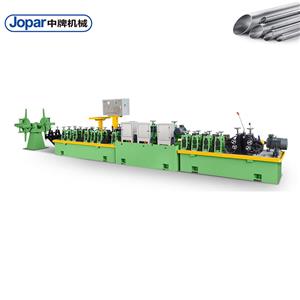
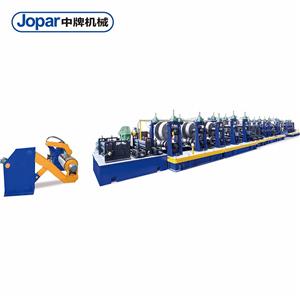
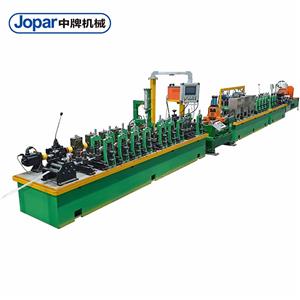
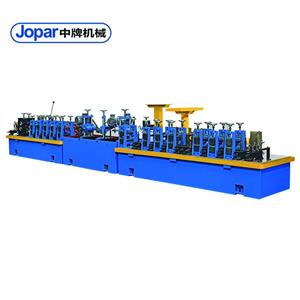
Imagine this: You are a production manager at a petrochemical plant in Texas. Your heat-resistant pipe line has been down for 12 hours due to a catastrophic failure. The cost? $250,000 in lost production and a delayed shipment to a major refiner. The root cause? A subtle flaw in the pipe wall thickness, invisible to the naked eye but fatal under high temperature and pressure. This scenario is all too common. The answer lies in upgrading to a precision-engineered heat-resistant pipe making machine from Foshan Jopar Machinery Co., Ltd. With over 15 years of expertise, Jopar delivers machines that eliminate these failures, ensuring consistent quality and maximum uptime.
Pain Point 1: Inconsistent Wall Thickness Leading to Premature Failure
In many plants, pipe wall thickness varies by as much as 15% along the length. This inconsistency creates weak spots that crack under thermal cycling. The cost? Frequent shutdowns, replacement parts, and safety risks. For a medium-sized chemical plant, this can mean $500,000 annually in unplanned maintenance.
Solution: Precision Extrusion Control
Jopar's machines use a closed-loop extrusion system with real-time laser gauging. The controller adjusts screw speed and die pressure every 10 milliseconds, maintaining wall thickness within ±0.5%. A comparison: Traditional machines achieve ±5% at best. This precision reduces material waste by 12% and extends pipe life by 40%.
Pain Point 2: Material Degradation During Processing
Heat-resistant polymers like PEEK and PTFE are sensitive to shear and temperature. Improper processing can cause chain scission, reducing heat resistance by 30%. This leads to field failures and warranty claims.
Solution: Optimized Thermal and Shear Management
Jopar's machines feature a multi-zone barrel with independent temperature control (accuracy ±1°C) and a low-shear screw design. The residence time is minimized to 2 minutes, preventing degradation. Result: Material properties are retained at 98% of virgin values.
Pain Point 3: Low Throughput and High Energy Consumption
Many older machines run at 50% of theoretical capacity due to cooling bottlenecks. Energy costs account for 30% of production expenses.
Solution: Advanced Cooling and Automation
Jopar integrates a water-cooled vacuum sizing tank with a high-efficiency heat exchanger, reducing cooling time by 35%. The machine's servo-driven puller and automatic cutter boost line speed to 15 m/min. Energy consumption is 20% lower than industry average.
Client Success Stories
1. John Miller, Plant Engineer, PetroChem USA (Houston, Texas)
"After installing Jopar's machine, our wall thickness variation dropped from 12% to 0.8%. We saved $300,000 in scrap in the first year."
2. Dr. Klaus Weber, Technical Director, EuroPipe GmbH (Frankfurt, Germany)
"The material degradation issue vanished. Our PEEK pipes now withstand 260°C continuous operation without failure."
3. Ahmed Al-Rashid, Operations Manager, Gulf Petrochemicals (Dubai, UAE)
"Throughput increased by 50% while energy costs fell by 25%. The ROI was under 18 months."
4. Carlos Silva, Production Supervisor, BrasPoly (São Paulo, Brazil)
"Jopar's machine reduced our downtime from 8% to 1.5%. The cooling system is a game-changer."
5. Li Wei, Factory Director, SinoChem (Nanjing, China)
"We produce 20% more pipe with the same footprint. The automatic cutter eliminated a manual step."
Applications and Partnerships
Jopar's heat-resistant pipe making machines are used in oil & gas downhole tubing, chemical plant piping, power plant steam lines, and semiconductor fluid handling. Key partners include Siemens (automation), BASF (material supply), and Shell (end-user approval).
Frequently Asked Questions
1. What is the maximum operating temperature for pipes made on your machine?
Up to 350°C continuous for PEEK, 260°C for PTFE, depending on material grade.
2. How do you ensure consistent wall thickness?
We use a laser micrometer with feedback to the extruder, maintaining ±0.5% tolerance.
3. Can your machine process recycled materials?
Yes, with a special screw design and filtration system, up to 30% regrind is possible without quality loss.
4. What is the typical delivery time?
Standard models ship in 12 weeks; custom configurations in 16 weeks.
5. Do you provide installation and training?
Yes, our engineers supervise installation and provide 5-day on-site training for operators.
Summary and Call to Action
Upgrading to a Jopar heat-resistant pipe making machine eliminates the top three production failures, saving you up to $500,000 annually. For a deeper dive, request our technical white paper on 'Advanced Extrusion for High-Temperature Polymers' by contacting our sales engineers at info@joparmachinery.com. Let's build pipes that last.