Why Titanium? The Metal That Defies Limits
Why Titanium? The Metal That Defies Limits
Imagine you're an engineer at an aerospace company, and you've just been handed a titanium component that failed prematurely. The cost of downtime is astronomical, and the pressure is on to find a solution. You're not alone. Titanium, despite its incredible properties, poses unique challenges in machining and fabrication. But what if I told you that these challenges can be overcome with the right expertise and technology? In this blog, we'll explore why titanium is both a blessing and a curse, and how companies like Foshan Jopar Machinery Co., Ltd are revolutionizing the way we work with this remarkable metal.

Pain Points in Titanium Processing
1. Tool Wear and Machining Costs
Titanium's high strength-to-weight ratio and low thermal conductivity mean that heat generated during machining doesn't dissipate quickly. This leads to rapid tool wear, often requiring frequent tool changes and increasing machining costs. For instance, in a typical aerospace workshop, tool life can be reduced by up to 50% compared to machining aluminum, leading to significant cost overruns and production delays.
2. Surface Integrity and Fatigue Life
Titanium's reactivity at high temperatures can cause surface contamination, leading to reduced fatigue life of components. In medical implants, for example, surface imperfections can lead to implant failure, risking patient health and leading to costly recalls. The challenge is to maintain surface integrity while achieving the required material removal rates.
3. Thermal Management and Distortion
The low thermal conductivity of titanium also means that heat is concentrated at the cutting edge, causing thermal gradients that can lead to distortion and dimensional inaccuracies. In the production of thin-walled titanium structures for satellites, even minor distortions can render a component useless, resulting in scrap rates as high as 30% in some operations.
Solutions for Titanium Processing
1. Advanced Tooling and Coatings
To combat tool wear, specialized carbide tools with advanced coatings (e.g., AlTiN or TiAlN) are recommended. These coatings reduce friction and heat generation, extending tool life by up to 40%. Additionally, using high-pressure coolant through the tool can effectively remove heat from the cutting zone, further improving tool life and surface finish.
2. Cryogenic Machining
For maintaining surface integrity, cryogenic machining using liquid nitrogen as a coolant has shown remarkable results. This method rapidly cools the cutting zone, reducing thermal damage and improving surface finish. Studies have shown that cryogenic machining can increase fatigue life by 20% compared to conventional machining.
3. Adaptive Control and Simulation
To address thermal distortion, implementing adaptive control systems that adjust cutting parameters in real-time based on sensor feedback can minimize heat generation. Furthermore, using finite element simulation to predict distortion before machining allows for pre-compensation, reducing scrap rates by up to 25%.
Customer Success Stories
Case 1: AeroTech Dynamics, Seattle, USA
AeroTech Dynamics, a leading aerospace supplier, struggled with tool life when machining titanium alloy Ti-6Al-4V. After implementing Foshan Jopar Machinery's high-pressure coolant system, they saw a 35% increase in tool life and a 20% reduction in cycle time. "The Jopar system transformed our titanium machining operations," said John Miller, Manufacturing Engineer. "We've cut costs and improved quality."
Case 2: MediTi Implants, Zurich, Switzerland
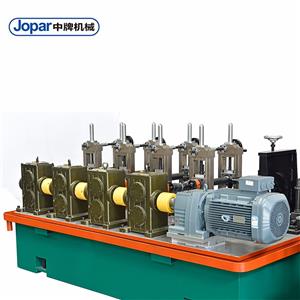
MediTi Implants faced challenges with surface finish on titanium hip implants. By adopting cryogenic machining technology from Foshan Jopar, they achieved a surface roughness (Ra) of 0.2 µm, a 30% improvement, and reduced fatigue-related failures by 15%. "Our partnership with Jopar has allowed us to meet the stringent quality standards of the medical industry," remarked Dr. Anna Keller, R&D Manager.
Case 3: SpaceLight Composites, Toulouse, France
SpaceLight Composites, a satellite component manufacturer, was experiencing a 30% scrap rate due to distortion in thin-walled titanium parts. Using Jopar's adaptive control system and simulation software, they reduced scrap to 5% and increased production efficiency by 25%. "Jopar's solutions are a game-changer for our titanium projects," said Pierre Dubois, Production Manager.
Case 4: AutoTi Performance, Munich, Germany
AutoTi Performance, a high-performance automotive parts maker, struggled with tool wear and long cycle times. After integrating Jopar's advanced tooling and high-pressure coolant, they achieved a 40% longer tool life and a 30% faster cycle time. "We've never seen such improvements in titanium machining," noted Klaus Weber, Operations Director.
Applications and Partnerships
Titanium is widely used in aerospace, medical, automotive, and chemical industries. Foshan Jopar Machinery Co., Ltd has established partnerships with key players in these sectors, providing tailored machining solutions. For example, we collaborate with a leading aerospace manufacturer to develop custom tooling for titanium components, ensuring optimal performance and reliability. Our partnerships extend to medical implant manufacturers, where we supply cryogenic machining systems that meet stringent regulatory standards.
FAQ
Q1: What is the best tool material for machining titanium?
Carbide tools with advanced coatings like AlTiN are generally recommended for titanium machining due to their high hardness and thermal stability. However, for high-speed machining, cubic boron nitride (CBN) tools can be used, though they are more expensive.
Q2: How can I reduce chatter when machining titanium?
Chatter is often caused by insufficient rigidity in the setup. Ensure that the workpiece and tool are securely clamped, use tools with high stiffness, and consider using variable helix end mills to disrupt chatter frequencies.
Q3: Is cryogenic machining cost-effective for small shops?
While the initial investment in cryogenic equipment can be high, the benefits in terms of tool life and surface quality often justify the cost, especially for high-value components. Some shops start with a retrofit kit to test the technology.
Q4: What surface finish can be expected from titanium machining?
With proper parameters and tooling, a surface roughness (Ra) of 0.4 µm or better can be achieved. For critical applications, such as medical implants, Ra values of 0.2 µm are attainable with cryogenic machining.
Q5: How does titanium's thermal conductivity affect machining?
Titanium's low thermal conductivity means heat is concentrated at the cutting edge, leading to high temperatures and tool wear. Effective cooling strategies, such as high-pressure coolant or cryogenic cooling, are essential to manage heat.
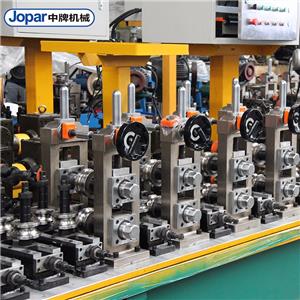
Conclusion and Call to Action
Titanium is a metal that defies limits, but it requires specialized knowledge and technology to machine effectively. Foshan Jopar Machinery Co., Ltd is at the forefront of providing innovative solutions for titanium processing. Whether you're facing tool wear, surface integrity issues, or thermal distortion, our team can help you overcome these challenges. For more in-depth technical insights, download our white paper on titanium machining or contact our sales engineers today to discuss your specific needs. Don't let titanium's challenges hold you back—embrace the possibilities with Jopar.