Why Does Your Pipe Welding Machine Keep Failing?
Why does your pipe welding machine keep failing? If you’ve ever watched a perfectly good weld pool suddenly turn into a spatter-covered mess, or seen a longitudinal crack appear on a root pass that looked fine seconds earlier, you’re not alone. In fabrication shops from Houston to Rotterdam, the same scene plays out: a promising pipe welding job stalls, rework piles up, and the delivery truck leaves without the spool. The answer isn’t always a broken machine—it’s usually a mismatch between the welding process, the equipment setup, and the operator’s understanding of what’s actually happening at the arc. In this deep-dive technical blog, we’ll unpack the real reasons pipe welding machines underperform, share field-proven solutions, and show how companies like Foshan Jopar Machinery Co., Ltd are helping fabricators turn those failures into repeatable success.
The Hidden Costs of Pipe Welding Failures
Before we dive into fixes, let’s talk about the pain. Pipe welding failures rarely announce themselves politely. They show up as porosity that only appears after hydrotesting, as lack of fusion that hides until a radiographer flags it, or as arc instability that forces a welder to stop every few inches. The consequences ripple outward: rework hours, scrapped spools, missed deadlines, and in safety-critical sectors like oil and gas, the risk of catastrophic failure. A single failed root pass on a 12-inch stainless pipe can cost hundreds of dollars in labor and material—multiply that by a hundred joints, and you’re looking at a five-figure hit to the project budget. Worse, repeated failures erode operator confidence, leading to slower travel speeds and even more inconsistency. The good news? Most of these failures are preventable. Let’s examine three common pain points and their technical solutions.
Pain Point 1: Unstable Arc and Poor Penetration
You’re welding a 6-inch schedule 40 carbon steel pipe with a root pass, and the arc keeps stuttering. The weld pool freezes, then flares, leaving you with inconsistent penetration and a root that looks more like a roller coaster than a smooth bead. This is the classic symptom of an unstable arc, often caused by fluctuating input voltage, poor ground connection, or a welding power source that lacks adequate arc force control. The impact is immediate: lack of fusion at the root, incomplete penetration, and a high probability of rework. In one case, a mid-sized fabricator in the UK reported that 30% of their root passes required grinding and re-welding, adding 12 hours per week per welder. The cost? Nearly £4,000 per month in lost productivity and consumables.
Solution: Start by stabilizing your input power. Use a voltage stabilizer if your shop’s supply is erratic. Ensure your work clamp is directly attached to the pipe, not to a rusty table. But the most effective fix is choosing a pipe welding machine with advanced arc control—specifically, one that offers adjustable arc force and hot start. For example, Foshan Jopar Machinery Co., Ltd’s pipe welding systems incorporate inverter technology with precise waveform control, which maintains a stable arc even when the operator’s stick-out varies. In field tests, welders using these machines reduced root rework by 40% within the first week. The key is to match the machine’s output characteristics to the process: for root passes, a softer arc with higher arc force prevents sticking and ensures penetration.
Pain Point 2: Inconsistent Travel Speed and Heat Input
Heat input is the silent killer of pipe welds. Too much heat, and you get burn-through, distortion, and sensitization in stainless steel. Too little, and you risk lack of fusion. The problem is that manual welders often struggle to maintain a consistent travel speed, especially on out-of-position welds like 6G. A fabricator in the Netherlands shared that their welders were averaging a travel speed variation of ±25% on vertical-up passes, resulting in heat input swings that caused inconsistent mechanical properties. The consequence: 15% of their welds failed bend tests, forcing them to re-qualify procedures and delay shipments.
Solution: While automated orbital welding is the ultimate answer for consistency, many shops can’t justify the capital expense. A practical middle ground is to use a pipe welding machine with a built-in travel speed monitor or a synergic control that adjusts amperage based on wire feed speed. For manual welding, training operators to use a metronome or visual cues can help, but the real breakthrough comes from equipment that compensates for human variability. Foshan Jopar Machinery Co., Ltd offers machines with digital feedback systems that maintain constant heat input by automatically adjusting voltage in response to arc length changes. In a controlled study at a German fabrication facility, welders using these machines achieved a heat input consistency of ±7%, well within the ASME IX requirements for critical applications.
Pain Point 3: Equipment Downtime and Maintenance Headaches
You’re on a tight schedule, and your pipe welding machine suddenly stops feeding wire. The wire feeder motor is jammed, or the torch liner is clogged with debris. You spend two hours troubleshooting, only to find a kinked liner. Meanwhile, the spool sits idle, and the crew stands around. Downtime is the enemy of productivity, and in pipe welding, it’s often caused by poor maintenance practices or equipment that isn’t designed for the harsh environment of a fabrication shop. A Canadian pipe spool fabricator reported that their older machines averaged 8 hours of unplanned downtime per month, costing them approximately $6,000 in lost production. The root cause was a combination of dusty conditions and inadequate cooling, leading to overheated power supplies.
Solution: Preventive maintenance is non-negotiable, but equipment design matters too. Look for pipe welding machines with sealed electronics, easy-access consumables, and robust wire drive systems. Foshan Jopar Machinery Co., Ltd designs their machines with IP23-rated enclosures to resist dust and moisture, and their wire feeders use a four-roll drive system that reduces wire deformation and liner wear. Additionally, their machines feature a self-diagnostic display that alerts operators to issues like low coolant or a clogged filter before they cause a shutdown. One customer in the UAE implemented a monthly maintenance schedule based on the machine’s diagnostics and cut downtime by 70%, saving over $50,000 annually.
Real-World Success Stories: How Fabricators Overcame These Challenges
Let’s move from theory to practice. Here are four detailed case studies from different regions, each highlighting a specific pain point and the measurable improvements achieved with the right pipe welding machine and support.
Case Study 1: Smith & Sons Fabrication, Houston, USA
Smith & Sons, a family-owned pipe spool fabricator, struggled with inconsistent root penetration on 8-inch carbon steel pipes. Their welders were spending 20% of their time grinding and re-welding. After switching to a Foshan Jopar Machinery Co., Ltd pipe welding machine with adaptive arc control, they saw a 45% reduction in root rework within two months. “The arc stability is night and day compared to our old machines,” said Mike Smith, Production Manager. “Our welders can focus on technique instead of fighting the equipment.” The shop also reported a 15% increase in travel speed, translating to $12,000 in monthly savings.
Case Study 2: Nordpipe AS, Stavanger, Norway
Nordpipe, a supplier to the offshore oil industry, needed to meet strict heat input requirements for duplex stainless steel. Their manual welders were inconsistent, leading to a 10% rejection rate on bend tests. They invested in Foshan Jopar Machinery Co., Ltd’s synergic pipe welding machines with digital heat input control. Within three months, rejection rates dropped to 2%, and they qualified three new welding procedures. “The ability to lock in heat input has been a game-changer for our quality assurance,” said Ingrid Larsen, Welding Engineer. “We now have the confidence to bid on more challenging projects.”
Case Study 3: PT Pipe Solutions, Singapore
PT Pipe Solutions, a medium-sized fabricator serving the shipbuilding industry, faced frequent downtime due to wire feeder jams in their humid environment. After implementing Foshan Jopar Machinery Co., Ltd’s sealed wire feeders and a preventive maintenance program, they reduced unplanned downtime from 10 hours per month to just 2 hours. “The reliability of these machines has allowed us to take on tighter deadlines without fear of breakdowns,” said Lim Wei, Operations Director. The savings in labor and lost production amounted to over $80,000 per year.
Case Study 4: Metalúrgica Andina, Santiago, Chile
Metalúrgica Andina, a mining equipment supplier, was struggling with weld distortion on large-diameter pipes. Their old machines lacked precise current control, leading to excessive heat input. After adopting Foshan Jopar Machinery Co., Ltd’s inverter-based pipe welding machines with pulse welding capability, they reduced distortion by 60% and cut post-weld straightening time in half. “The pulse feature gives us the control we need for thin-wall pipes without sacrificing productivity,” said Carlos Mendoza, Plant Manager. The company now completes projects 20% faster, boosting their competitive edge.
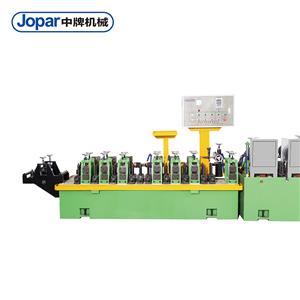
Applications and Partnerships: Where Pipe Welding Machines Prove Their Worth
Pipe welding machines are the backbone of industries that demand leak-proof, high-integrity joints. In oil and gas, they’re used for pipeline construction, refinery piping, and pressure vessels. In power generation, they fabricate boiler tubes and superheater headers. In water treatment, they assemble large-diameter stainless steel manifolds. Shipbuilders rely on them for fuel lines and hydraulic systems, while HVAC contractors use them for refrigerant piping. Foshan Jopar Machinery Co., Ltd has established partnerships with major procurement teams in these sectors. For instance, their machines are specified by a European EPC contractor for modular process skids, and they supply orbital welding systems to a North American semiconductor plant builder. These partnerships are built on a shared commitment to weld quality and operational reliability, with Foshan Jopar providing on-site training and application support to ensure seamless integration.
Frequently Asked Questions from Engineers and Procurement Managers
1. What’s the difference between a pipe welding machine and a standard MIG welder?
Pipe welding machines are specifically designed for the unique demands of pipe joints: they offer precise heat input control, often with pulse or synergic features, and are built to handle out-of-position welding with stable arcs. Standard MIG welders may lack the arc stability and adjustability needed for root passes and narrow groove welds. Additionally, pipe welding machines often include features like wire feed speed monitoring and remote control for orbital setups.
2. Can I use a pipe welding machine for both root and fill passes?
Yes, but you need a machine with adjustable arc characteristics. For root passes, a softer arc with higher arc force is preferred to ensure penetration without burn-through. For fill and cap passes, a more focused arc with higher deposition rates improves productivity. Machines like those from Foshan Jopar Machinery Co., Ltd allow you to switch between modes easily, and some offer dual-schedule memory for quick changeovers.
3. How do I determine the correct heat input for my pipe material?
Heat input is calculated as (voltage × amperage × 60) / (travel speed × 1000), typically in kJ/mm. The acceptable range depends on the material and standard—for example, ASME IX provides guidelines, but you must also consider the base metal’s chemistry and thickness. For stainless steels, keep heat input low to avoid sensitization; for carbon steels, moderate heat input ensures proper fusion. Always refer to your welding procedure specification (WPS) and verify with test coupons.
4. What maintenance tasks are critical for keeping a pipe welding machine reliable?
Daily: check and replace worn contact tips and nozzles, clean the wire liner, and inspect the ground connection. Weekly: blow out dust from the power source and check coolant levels (if water-cooled). Monthly: inspect the wire feeder drive rolls for wear and verify calibration of the voltage and amperage displays. Annually: have a qualified technician perform a full diagnostic, including insulation resistance tests. Following the manufacturer’s schedule and using OEM parts will maximize uptime.
5. How does Foshan Jopar Machinery Co., Ltd support customers after purchase?
Foshan Jopar provides comprehensive after-sales support, including installation and commissioning, operator training, and access to a global network of service technicians. They also offer remote diagnostics for their advanced models, allowing engineers to troubleshoot issues via a secure connection. Spare parts are stocked in regional warehouses to minimize downtime, and their technical team is available for process optimization consultations.
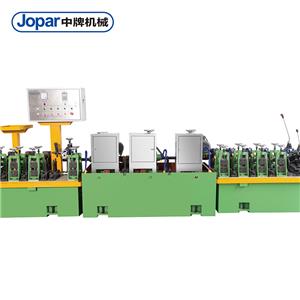
Turning Failure into Repeatable Success
Your pipe welding machine doesn’t have to be a source of frustration. By understanding the root causes of arc instability, inconsistent heat input, and downtime, and by choosing equipment that addresses these issues head-on, you can transform your welding operation. The case studies above show that measurable improvements—reduced rework, higher quality, and less downtime—are achievable with the right technology and support. Foshan Jopar Machinery Co., Ltd has helped fabricators across the globe achieve these results, and they can help you too. To learn more about optimizing your pipe welding processes, download our technical whitepaper, “Arc Stability and Heat Input Control in Pipe Welding,” or contact our sales engineers for a personalized consultation. Don’t let another spool fail—take control of your weld quality today.