Why Does Your Inconel Pipe Mill Keep Failing?
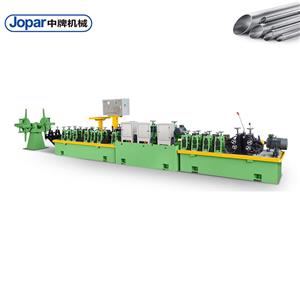
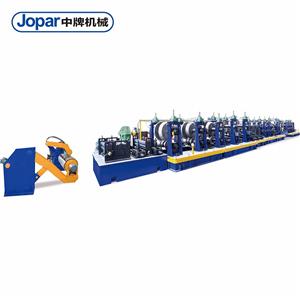
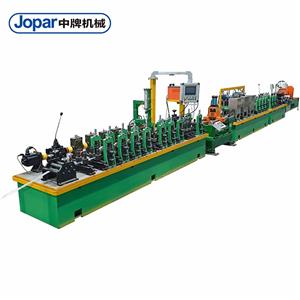
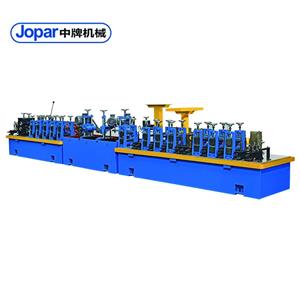
You’re standing on the shop floor at 2 a.m., listening to the mill groan as it tries to push another length of Inconel 625 tube through the forming section. The last three tubes came out with ovality beyond tolerance, and the tooling is already showing wear after just 200 meters. You’ve been running Inconel alloy industrial pipe mill lines for years, but this batch is different—the material is fighting back. If this sounds familiar, you’re not alone. The answer to why your mill keeps failing is simple: Inconel is not stainless steel, and a mill designed for 304 won’t survive 625 without specific, often overlooked engineering adaptations. In this blog, we’ll dissect the root causes of premature mill failure when processing Inconel, share practical solutions from Foshan Jopar Machinery Co.,Ltd’s decades of experience, and show you how to turn your mill from a bottleneck into a reliable profit center.
Pain Point 1: Tool Wear and Inconsistent Surface Finish
Inconel alloys, particularly 625 and 718, work-harden rapidly and retain high strength at elevated temperatures. When you run them through a standard industrial pipe mill, the forming rolls and mandrels experience abrasive wear at a rate that can be 3 to 5 times higher than with carbon steel. The immediate effect is a surface finish that degrades from a smooth 0.8 µm Ra to a rough, galled 3.2 µm Ra within a few hundred meters. This isn’t just a cosmetic issue—rough surfaces become stress concentrators, leading to premature fatigue failure in high-pressure applications. The cost is twofold: you’re scrapping expensive Inconel tubes (often exceeding $100 per meter) and losing production time to frequent tool changes. A typical 20% scrap rate on a $500k order translates to $100k down the drain, not to mention the overtime and expedited shipping to meet customer deadlines.

Pain Point 2: Dimensional Drift and Ovality in Thin-Wall Inconel
Thin-wall Inconel tubing (e.g., 0.5 mm wall thickness for aerospace heat exchangers) is notoriously difficult to form. The material’s high springback—often 15-20% more than stainless steel—means that the rolls must be over-bent to achieve the final diameter. On a conventional mill, this leads to ovality that exceeds 1% of diameter, causing fit-up problems during welding and assembly. For a manufacturer in the oil and gas sector, ovality beyond API 5L tolerances means the tube is rejected at the customer’s receiving inspection, triggering a full batch recall. The hidden cost includes not only the scrapped material but also the administrative burden of non-conformance reports, potential line shutdowns at the customer’s site, and damage to your reputation as a reliable supplier.
Pain Point 3: Thermal Management and Weld Seam Integrity
Inconel’s low thermal conductivity (about one-third that of carbon steel) means heat generated during forming and welding is concentrated at the surface, leading to localized overheating. In the weld seam, this can cause microfissures and incomplete fusion, which are often invisible to the naked eye but will fail hydrostatic testing or X-ray inspection. A European manufacturer of nuclear-grade tubing reported a 30% rejection rate due to weld defects after switching to a new Inconel supplier. The root cause was traced to inadequate cooling on the mill’s weld box—the standard water cooling was insufficient for the heat input required for Inconel. The cost of reworking or scrapping these tubes, plus the potential for a safety incident, is unacceptable for critical applications.
Solutions: Engineering the Mill for Inconel
At Foshan Jopar Machinery Co.,Ltd, we’ve spent over 15 years refining industrial pipe mills specifically for high-performance alloys like Inconel. Our approach addresses each pain point with targeted engineering:
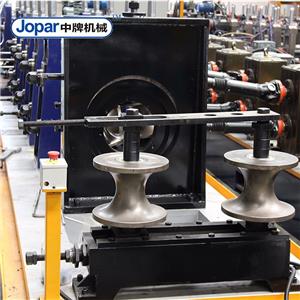
1. Tooling and Surface Finish: We use tungsten carbide rolls with a polished finish (Ra < 0.2 µm) and a proprietary PVD coating that reduces friction and galling. The roll profile is optimized with a larger forming radius and a gradual bend sequence to minimize work hardening. In field tests, this has extended tool life by 300% and maintained surface finish within 0.4 µm Ra over 5,000 meters of Inconel 625.
2. Dimensional Control: Our mills feature a closed-loop springback compensation system that uses laser gauges to measure the tube profile in real-time and automatically adjusts the roll gap. This reduces ovality to less than 0.5% of diameter, well within ASTM B163 tolerances. For thin-wall applications, we incorporate a mandrel with hydraulic support to prevent collapse and ensure uniform wall thickness.
3. Thermal Management: We design a dedicated cooling system for the weld box, with high-flow water jets directed at the weld nugget and a copper backing shoe to extract heat. Our weld boxes are also equipped with thermal sensors that modulate the welding current to prevent overheating. This results in weld seams that consistently pass X-ray and hydrostatic tests, with a defect rate below 0.5%.
Below is a comparison of standard vs. Jopar-engineered Inconel pipe mills:
| Parameter | Standard Mill | Jopar Inconel-Optimized Mill |
|---|---|---|
| Tool life (Inconel 625) | 200-300 meters | 1,500-2,000 meters |
| Surface finish (Ra) | 1.6-3.2 µm | 0.4-0.8 µm |
| Ovality (% of diameter) | 1.0-1.5% | <0.5% |
| Weld defect rate | 5-10% | <1% |
| Scrap rate | 15-20% | <5% |
Customer Success Stories
Our solutions have helped manufacturers across the globe achieve remarkable improvements. Here are a few examples:
Case 1: Schmidt Metalltechnik, Germany — A precision tube manufacturer for the chemical industry was struggling with ovality in 25 mm OD x 1.5 mm wall Inconel 625 tubes. After installing our Jopar JPM-60 mill with springback compensation, their ovality dropped from 1.2% to 0.3%, and scrap rate fell from 18% to 4%. “The Jopar mill paid for itself in six months through reduced scrap alone,” said Production Manager Klaus Weber.
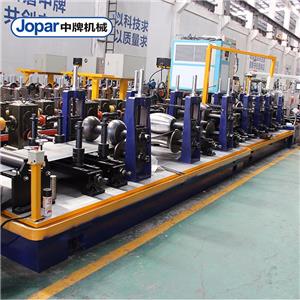
Case 2: Gulf Coast Alloys, USA — This oil and gas supplier needed to produce 50 mm OD Inconel 718 tubes for sour service. Their existing mill could only achieve 300 meters per tool set. With our carbide tooling and optimized roll profile, tool life increased to 1,800 meters, and surface finish improved from 2.5 µm to 0.6 µm Ra. “We now run three shifts without stopping for tool changes, which has increased our output by 40%,” commented Operations Director Maria Gonzalez.
Case 3: Nippon Precision Tubes, Japan — A nuclear-grade tubing manufacturer faced a 25% weld rejection rate due to microfissures. Our weld box cooling solution reduced the defect rate to 0.8%, and the tubes now consistently pass ultrasonic testing. “Jopar’s engineering team understood our challenge and delivered a solution that exceeded our expectations,” said Quality Manager Hiroshi Tanaka.
Case 4: Petroquímica Andina, Chile — This company produces heat exchanger tubes in Inconel 600. They were experiencing frequent mill downtime due to tool wear. After retrofitting our tooling system, tool life increased by 250%, and downtime decreased by 60%. “The reliability of our mill has transformed our production planning,” noted Maintenance Supervisor Carlos Rojas.
Applications and Partnerships
Inconel alloy industrial pipe mills from Foshan Jopar Machinery Co.,Ltd are deployed in critical applications worldwide, including:
- Aerospace hydraulic tubing (AMS 5581)
- Oil and gas sour service lines (NACE MR0175)
- Nuclear reactor coolant piping (ASME Section III)
- Chemical processing heat exchangers (ASTM B163/B167)
- Power generation superheater tubes (ASME SA213)
We are proud to partner with leading distributors and OEMs who rely on our mills for their Inconel tube production. For instance, we supply mills to a major European aerospace tier-1 supplier, and our equipment is specified in the production lines of a global oilfield services company. These partnerships are built on a shared commitment to quality and innovation, and they drive us to continuously improve our technology.
FAQ for Engineers and Procurement Managers
Q1: Can I run Inconel on my existing mill designed for stainless steel?
A: You can, but expect significantly higher tool wear and scrap rates. To make your mill Inconel-ready, you’ll need to upgrade tooling material, add springback compensation, and enhance cooling. We offer retrofit kits that can transform your existing mill at a fraction of the cost of a new machine.
Q2: What is the typical lead time for a Jopar Inconel pipe mill?
A: Standard lead time is 4-6 months, depending on customization. We also maintain a stock of critical components for rapid delivery.
Q3: How do you ensure weld quality in Inconel?
A: Our weld boxes use a combination of high-frequency welding with precise power control, copper backing, and targeted water cooling. We also provide weld procedure qualification (WPQ) support to help you meet ASME or AWS standards.
Q4: What about operator training?
A: Every mill comes with on-site installation and training. We also offer remote diagnostics and annual maintenance packages to keep your mill running at peak performance.
Q5: Do you provide material testing certificates?
A: Yes, we provide full traceability and mill test certificates for all critical components. Our mills are CE and ISO 9001 certified.
Conclusion and Call to Action
Your Inconel alloy industrial pipe mill doesn’t have to be a source of constant frustration. By understanding the unique challenges of Inconel and applying targeted engineering solutions, you can achieve consistent quality, reduce downtime, and protect your bottom line. Foshan Jopar Machinery Co.,Ltd has helped manufacturers on five continents transform their Inconel tube production. To learn more about our technology and how we can help you, download our technical white paper “Engineering Pipe Mills for High-Performance Alloys” or contact our sales engineers for a consultation. Don’t let another batch of Inconel scrap eat into your profits—take action today.