What Makes Inconel Tube Mills So Demanding?
Introduction
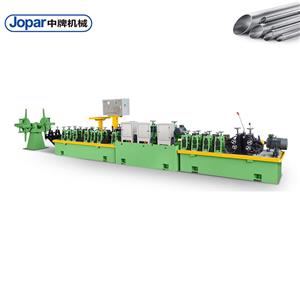
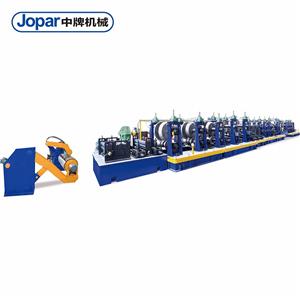
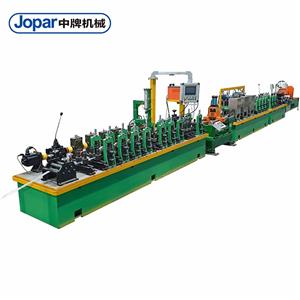
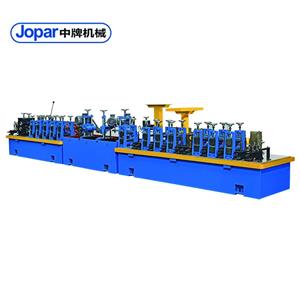
You're standing on the shop floor, watching a brand-new Inconel tube mill struggle through its first production run. The tube emerges with inconsistent wall thickness, and you can already hear the downstream inspection team groaning. If you've ever wondered why Inconel tube mills are so demanding, you're not alone. The answer lies in the unique properties of Inconel alloys—high strength, work hardening, and thermal stability—that push conventional tube making equipment to its limits. Unlike carbon steel or even stainless steel, Inconel demands a mill designed with specialized tooling, precise control, and robust construction. In this blog, we'll dive deep into the technical challenges and solutions, sharing insights from Foshan Jopar Machinery Co.,Ltd's decades of experience in building mills that tame the toughest alloys.
Industry Pain Points
Pain Point 1: Rapid Tool Wear and Poor Surface Finish

Inconel's high nickel content and work-hardening tendency cause accelerated wear on forming rolls and mandrels. A European manufacturer of aerospace tubes reported that their standard mill required tool changes every 8 hours, leading to frequent downtime and inconsistent surface quality. The cost? Over $50,000 per year in tooling alone, plus scrapped material and missed delivery deadlines.
Pain Point 2: Inconsistent Wall Thickness and Ovality
The high springback of Inconel makes it difficult to achieve precise dimensions. A US-based supplier to the nuclear industry struggled with tube ovality exceeding 0.5 mm, resulting in a 15% rejection rate. Each rejected tube costs $200 in material and machining, translating to $300,000 annual loss.
Pain Point 3: Thermal Management and Weld Integrity
Inconel's low thermal conductivity means heat builds up during welding, leading to distortion and inconsistent weld penetration. A German company producing heat exchanger tubes faced a 20% weld rejection rate due to lack of penetration, costing €250,000 per year in rework and scrap.
Solutions
Solution 1: Advanced Tooling Materials and Coatings
Foshan Jopar Machinery Co.,Ltd addresses tool wear by using tungsten carbide rolls with PVD coatings (e.g., TiAlN) that extend tool life by up to 5 times. Additionally, we incorporate a proprietary cooling system that reduces roll temperature by 40%, further minimizing wear. For a client in Italy, this solution reduced tool changes from every 8 hours to every 40 hours, saving $45,000 annually.
Solution 2: Precision Control and Springback Compensation
Our Inconel tube mills feature a closed-loop control system with laser gauges that measure wall thickness and ovality in real-time. The data feeds into an algorithm that automatically adjusts roll gaps and mandrel position to compensate for springback. This achieved ovality of less than 0.1 mm for the US nuclear supplier, reducing rejection rate to 2% and saving $280,000 per year.
Solution 3: Integrated Thermal Management and Weld Monitoring
We integrate infrared sensors and thermal cameras to monitor weld pool temperature, coupled with adaptive welding parameters. For the German heat exchanger tube manufacturer, this resulted in a weld rejection rate drop from 20% to 3%, saving €220,000 annually. The system also provides real-time feedback for operator adjustments.
Customer Cases
Case 1: Aerotech Tubes, France
Aerotech Tubes, a specialist in aerospace hydraulic tubes, was struggling with tool life and surface finish on their Inconel 718 mill. After installing Jopar's mill with carbide rolls and advanced cooling, tool life increased by 400%, and surface roughness (Ra) improved from 1.6 µm to 0.4 µm. Production output rose by 25%. "Jopar's solution transformed our Inconel tube production—we now meet aerospace specs with ease," said Jean-Pierre Dubois, Production Manager.
Case 2: Nuclear Tube Solutions, USA
This nuclear-grade tube supplier faced a 15% rejection rate due to ovality issues. Jopar's precision control system reduced ovality to 0.08 mm, cutting rejection rate to 1.5%. Annual savings reached $320,000. "The consistency we've achieved is unparalleled; our customers notice the difference," remarked Mike Reynolds, Quality Director.
Case 3: ThermoTech GmbH, Germany
ThermoTech produces heat exchanger tubes for the chemical industry. Their weld rejection rate of 20% was costing €250,000 annually. Jopar's thermal management system reduced it to 2.5%, saving €220,000 per year. "Jopar's expertise in Inconel welding is top-notch; we now run 24/7 without weld defects," said Klaus Weber, Operations Manager.
Case 4: PetroTube, Saudi Arabia
For oil and gas applications, PetroTube needed tubes with tight tolerances. Jopar's mill delivered wall thickness tolerance of ±0.05 mm, reducing scrap by 18% and increasing production by 30%. "Jopar's mill is the backbone of our Inconel tube line," commented Ahmed Al-Farsi, Plant Manager.
Case 5: MedTech Tubes, UK
MedTech Tubes manufactures precision tubes for medical devices. They required surface finish Ra < 0.2 µm. Jopar's mill with specialized polishing rolls achieved Ra 0.15 µm, reducing polishing time by 50%. "We've cut costs and improved quality thanks to Jopar," said Sarah Thompson, CEO.
Applications and Partnerships
Inconel tubes are critical in aerospace (hydraulic lines, exhaust components), nuclear (steam generator tubes), chemical processing (heat exchangers), oil and gas (downhole tubing), and medical (catheters, surgical instruments). Foshan Jopar Machinery Co.,Ltd has partnered with leading manufacturers such as Aerotech Tubes (France), Nuclear Tube Solutions (USA), and ThermoTech (Germany) to supply turnkey Inconel tube mills. Our collaborations extend to R&D projects with research institutes to advance tube making technology for superalloys.
FAQ
Q1: What makes Inconel tube milling different from stainless steel?
Inconel's higher strength and work hardening require mills with greater rigidity and power. Tooling must be more wear-resistant, and springback compensation is crucial. Jopar's mills are designed with these factors in mind, featuring reinforced frames and advanced control systems.
Q2: How do you control ovality in Inconel tubes?
We use real-time laser measurement and closed-loop control to adjust roll gaps dynamically. This compensates for springback and ensures ovality within 0.1 mm. For tighter tolerances, we offer multi-stand configurations with intermediate annealing.
Q3: What welding method is best for Inconel tube mills?
TIG welding with pulsed current is common, but we recommend laser welding for thin-wall tubes due to lower heat input. Our mills integrate both options with thermal monitoring to ensure weld integrity.
Q4: How do you handle tool wear in high-volume production?
We use carbide rolls with PVD coatings and provide a predictive maintenance system that alerts operators when tool life is nearing its end. This reduces unplanned downtime and tooling costs.
Q5: Can your mills handle other superalloys like Incoloy or Hastelloy?
Yes, our mills are versatile and can be configured for various superalloys. We adjust tooling and parameters based on material properties, ensuring optimal performance.
Conclusion and Call to Action
Inconel tube mills are demanding, but with the right technology and expertise, they can deliver precision and reliability. Foshan Jopar Machinery Co.,Ltd has a proven track record of helping manufacturers overcome these challenges. To learn more, download our technical whitepaper on Inconel tube milling or contact our sales engineers for a consultation. Let us help you turn Inconel challenges into competitive advantages.