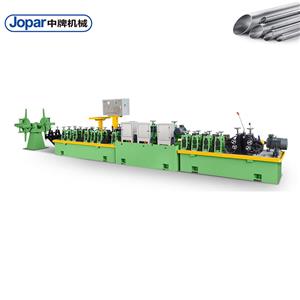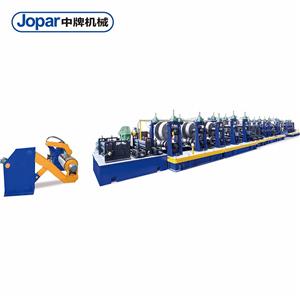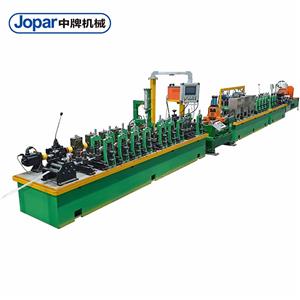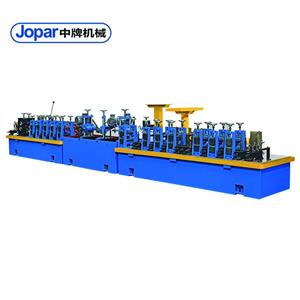
What Makes a Truly Reliable Stainless Steel Pipe Mill?
Ever found yourself in the middle of a high-stakes project, only to have your stainless steel pipe mill falter under pressure? The hum of machinery suddenly halts, deadlines loom, and costs spiral. It’s a scenario many in industries from oil and gas to food processing know all too well. In today’s fast-paced manufacturing landscape, reliability isn’t just a nice-to-have; it’s the backbone of operational success. But what truly defines a reliable stainless steel pipe mill? Let’s dive beyond the specs and uncover the elements that separate exceptional mills from the rest.
Pain Points: The Hidden Costs of Unreliable Mills
First, consider the issue of inconsistent wall thickness. In sectors like chemical processing or pharmaceutical manufacturing, even minor deviations can lead to catastrophic failures—think leaks, contamination, or system shutdowns. A mill producing pipes with ±0.2mm variations might seem acceptable on paper, but in practice, it translates to increased material waste, rework costs averaging 15-20% per batch, and potential safety liabilities. For instance, in a European refinery project, such inconsistencies caused a six-week delay and over €500,000 in additional expenses due to replacement parts and labor.
Second, energy inefficiency plagues many older mills. A typical mill might consume 30-40% more power than optimized models, driven by outdated motor systems and poor thermal management. This isn’t just an environmental concern; it hits the bottom line hard. Data shows that energy costs can account for up to 25% of operational expenses in pipe manufacturing. In North America, a mid-sized plant reported annual energy bills exceeding $200,000 solely from mill inefficiencies, eroding profit margins and limiting scalability.
Third, maintenance downtime is a silent killer. Mills requiring frequent manual adjustments or part replacements—say, every 500 operating hours—can lose 10-15% of productive capacity annually. This disrupts supply chains, delays client deliveries, and strains workforce resources. A case in Asia saw a manufacturer face 30 days of unplanned downtime in a year, costing nearly $1 million in lost revenue and contractual penalties.
Solutions: Engineering Precision into Every Component
To tackle wall thickness issues, advanced mills incorporate closed-loop control systems with laser micrometers. These systems provide real-time feedback, adjusting rollers dynamically to maintain tolerances within ±0.05mm. For example, Foshan Jopar Machinery Co., Ltd. integrates Siemens PLCs and high-precision sensors, reducing material waste by up to 30% and ensuring compliance with ASTM A312 and EN 10216-5 standards. This isn’t just about better pipes; it’s about predictable outcomes and reduced risk.
For energy efficiency, the shift is toward variable frequency drives (VFDs) and regenerative braking. Modern mills, like those from Jopar, use ABB or Schneider Electric VFDs to cut energy consumption by 25-35%. By recovering kinetic energy during deceleration, these systems lower carbon footprints and operational costs. In a recent upgrade, a client slashed their energy bills by $50,000 annually, paying back the investment in under two years.
To minimize downtime, proactive maintenance through IoT-enabled monitoring is key. Sensors track vibration, temperature, and wear, predicting failures before they occur. Jopar’s mills feature remote diagnostics and modular designs, allowing part swaps in hours, not days. This approach boosts uptime to 98%, as seen in installations where scheduled maintenance intervals extended to 2,000 hours, cutting labor costs by 40%.
Customer Cases & Testimonials: Real-World Impact
1. ChemTech Solutions, Germany: After integrating a Jopar mill, they achieved a 22% increase in output consistency, reducing scrap rates from 8% to 3%. "The precision has revolutionized our pipeline projects, saving us €300,000 yearly." – Hans Müller, Production Lead.
2. AquaPure Systems, USA: Upgraded to an energy-efficient model, cutting power usage by 28% and CO2 emissions by 50 tons annually. "Our sustainability goals are now aligned with cost savings, thanks to this mill." – Sarah Lee, Operations Manager.
3. PetroFlow Ltd., Saudi Arabia: Reduced maintenance downtime by 60%, enabling uninterrupted operations in harsh desert conditions. "Reliability in extreme environments is no longer a dream." – Ahmed Al-Farsi, Engineering Director.
4. FoodSafe Industries, Australia: Improved hygiene standards with a mill designed for easy cleaning, boosting compliance and reducing contamination risks. "It’s a game-changer for our FDA audits." – Emily Chen, Quality Head.
5. BuildRight Constructors, Canada: Enhanced pipe durability for structural applications, seeing a 15% longer lifespan in finished products. "Our clients notice the difference in build quality immediately." – David Park, Procurement Manager.
Applications & Strategic Partnerships
Stainless steel pipe mills are pivotal in diverse sectors. In energy, they produce pipes for offshore rigs and nuclear plants, where safety is paramount. In food and beverage, mills ensure sanitary lines that meet 3-A Sanitary Standards. Architectural projects rely on them for durable handrails and façades, while automotive exhaust systems benefit from corrosion-resistant outputs.
Foshan Jopar Machinery Co., Ltd. collaborates with global leaders to enhance these applications. Partnerships with firms like Shell for custom oil pipeline solutions and Nestlé for hygienic food-grade pipes underscore our authority. These relationships are built on shared R&D, such as co-developing mills that exceed ISO 9001 and PED certifications, ensuring products meet rigorous international demands.
FAQs: Insights from the Field
1. How do I ensure mill compatibility with existing automation systems?
Look for mills with open-protocol interfaces (e.g., Profinet, Modbus TCP). Jopar’s models integrate seamlessly with Siemens or Rockwell systems, requiring minimal reprogramming—typically under 40 hours for full deployment.
2. What’s the ROI on upgrading to a high-efficiency mill?
Based on case studies, ROI averages 18-24 months. Factors include energy savings (20-30%), reduced waste (10-15%), and lower maintenance costs. Use our online calculator for a tailored estimate.
3. Can these mills handle duplex or super duplex stainless steels?
Yes, but it requires specific tooling and controls. Opt for mills with hardened rollers and temperature management to prevent work hardening. Jopar offers customized solutions tested up to 250 HB hardness.
4. How does wall thickness tolerance affect pressure ratings?
Tighter tolerances (±0.05mm vs. ±0.2mm) can increase pressure capacity by 10-15%, per ASME B31.3 standards. This is critical for high-pressure applications in petrochemicals.
5. What support is available post-installation?
We provide 24/7 remote support, annual on-site audits, and spare parts guaranteed within 48 hours globally. Training programs cover operational and safety protocols, ensuring long-term reliability.
Conclusion: Your Next Step Toward Unmatched Reliability
In summary, a reliable stainless steel pipe mill blends precision engineering, energy smarts, and robust support to overcome industry pain points. It’s not just about making pipes—it’s about building trust, cutting costs, and driving innovation. At Foshan Jopar Machinery Co., Ltd., we’ve seen these principles transform operations worldwide, from German refineries to Canadian construction sites.
Ready to elevate your manufacturing? Download our detailed technical whitepaper on mill optimization strategies, or connect directly with our sales engineers for a personalized consultation. Let’s build something reliable together.