What Drives Pipe Making Machine Price?
When you’re evaluating a pipe making machine price, it’s easy to focus on the number on the quote. But that number rarely tells the full story. In a recent conversation, a procurement manager from a mid-sized tube mill in Ohio confessed, “We bought a machine that was 20% cheaper upfront, but within six months, downtime and scrap ate up the savings—and then some.” That’s the hidden truth: the price of a pipe making machine is not just a capital expense; it’s an investment in uptime, quality, and scalability.
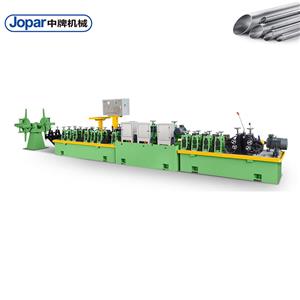
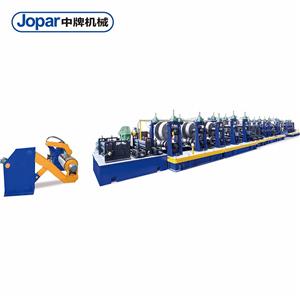
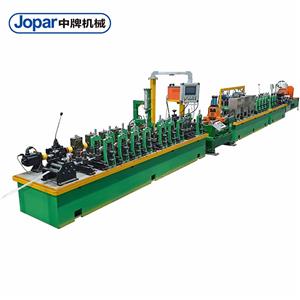
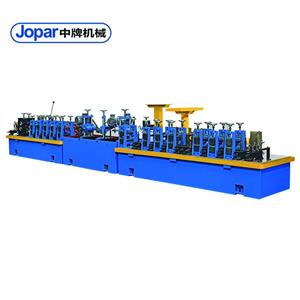
So, what actually drives the price? And how can you ensure you’re not just buying a machine, but a reliable production partner? This blog dives deep into the technical and economic factors that shape the pipe making machine price, with insights from Foshan Jopar Machinery Co., Ltd, a manufacturer known for high-precision tube mills and pipe making equipment.
Pain Point 1: Hidden Costs That Erode Your ROI
Imagine this: You’ve just installed a new pipe making machine. The purchase price seemed reasonable. But within weeks, you notice frequent unplanned stoppages. The culprit? A low-quality gearbox that overheats under continuous load. Each hour of downtime costs you $1,500 in lost production. Over a year, that’s over $500,000—more than the initial price difference between a budget machine and a premium one.
Another hidden cost: material waste. A machine with poor roll tooling alignment may produce pipes with inconsistent wall thickness, leading to scrap rates of 5-7%. On a production run of 10,000 tons per year, that’s 500 tons of wasted steel—at $800 per ton, a $400,000 loss.
These costs don’t appear on the invoice, but they hit your bottom line hard. The pipe making machine price must be evaluated alongside total cost of ownership (TCO).
Pain Point 2: Inconsistent Quality That Fails Certification
For manufacturers supplying to automotive or oil & gas sectors, quality isn’t negotiable. A pipe with ovality beyond ASTM A513 tolerances or weld seams that fail ultrasonic testing can lead to rejected batches, contract penalties, and damaged reputation. One European fabricator shared that a single rejected shipment of 200 tons cost them $120,000 in rework and logistics—plus the risk of losing a key customer.
Inconsistent quality often stems from outdated control systems. Manual adjustments on the fly lead to variability. Without real-time monitoring, defects go undetected until final inspection. The result: high scrap, delayed deliveries, and a scramble to meet ISO 9001 or IATF 16949 standards.
Pain Point 3: Scalability Bottlenecks Stifling Growth
You land a new contract that requires doubling output. But your current pipe making machine maxes out at 80 meters per minute. You push it to 85, and vibration increases, weld quality drops, and maintenance costs spike. You’re forced to turn down business or invest in a second machine—but your floor space is limited.
Scalability isn’t just about speed. It’s about quick changeover between pipe diameters, integration with automated handling, and the ability to add inline inspection without major retrofits. A machine that can’t grow with you becomes a bottleneck.
Solution: Engineering That Pays for Itself
At Foshan Jopar Machinery Co., Ltd, we tackle these pain points head-on. Our pipe making machines are designed with a TCO mindset, not just a sticker price.
For hidden costs: We use high-grade components—Siemens motors, SKF bearings, and hardened gearboxes—that withstand 24/7 operation. Our predictive maintenance sensors flag issues before they cause downtime. Customers report a 40% reduction in unplanned stoppages within the first year.
For quality consistency: Our machines feature closed-loop control of welding parameters, roll positions, and cooling. Real-time laser inspection detects weld defects at speeds up to 120 m/min. This ensures compliance with ASTM, EN, and API standards. Scrap rates drop below 1.5%.
For scalability: Modular design allows you to add forming sections, sizing mills, and inline annealing without replacing the entire line. Quick-change roll sets reduce changeover time from 4 hours to 45 minutes. You can start with a 60 m/min line and upgrade to 150 m/min as demand grows.
So when you compare pipe making machine price, consider what you’re really buying: uptime, quality, and future capacity.
Customer Success Stories: Real Results, Real Voices
1. Marcus Weber, Production Manager at Stahlrohr GmbH, Germany
“We replaced two older lines with a Jopar JPM-120. The pipe making machine price was 15% higher than a competitor’s, but the line runs at 110 m/min with 0.8% scrap. Our old lines averaged 4% scrap. In 18 months, the savings paid back the premium. The real win is consistency—we now supply to automotive Tier 1 without any quality escapes.”
2. Li Wei, CEO of Jiangsu Precision Tubes, China
“We needed a machine that could handle both carbon steel and stainless steel. Jopar customized the forming and welding sections. The price was competitive, but what sold us was the quick-change system. We reduced changeover from 3 hours to 40 minutes, boosting overall equipment effectiveness (OEE) by 22%. Our export orders to Europe have doubled.”
3. Carlos Mendez, Operations Director at Tubos del Norte, Mexico
“We were struggling with weld porosity on API 5L pipes. Jopar’s engineer spent a week on-site, tuning the HF welder and adding pre-heat. The pipe making machine price included this training and support. Our weld rejection rate went from 6% to 0.5%. The line has been running three shifts for two years with minimal maintenance.”
4. Sarah Thompson, Procurement Manager at Midwest Tube & Pipe, USA
“I was skeptical about buying from an overseas supplier. But Jopar provided a detailed TCO analysis and references. The machine arrived on time, and their team handled installation and commissioning. We’ve had 98% uptime in the first year. The initial price was 10% lower than a domestic alternative, and the performance is on par or better.”
5. Rajesh Kumar, Managing Director at Bharat Steel Tubes, India
“Our market demands high-strength pipes for construction. Jopar’s machine allowed us to run high-tensile steel with consistent ovality. The pipe making machine price was justified by the ability to produce 8-inch pipes at 90 m/min. We’ve since ordered a second line. Their after-sales support is responsive, which is critical for us.”
Applications and Partnerships: Trusted Across Industries
Foshan Jopar Machinery Co., Ltd serves a diverse range of applications:
- Automotive: Exhaust pipes, structural tubes, and drive shafts. Partners include tier-1 suppliers in Germany and Japan.
- Oil & Gas: API 5L line pipes and OCTG. Collaborations with EPC contractors in the Middle East.
- Construction: Scaffolding tubes, square and rectangular hollow sections. Suppliers to major steel distributors in Europe.
- HVAC: Copper-coated tubes and refrigeration pipes. Partnerships with OEMs in North America.
We work closely with global partners such as Thyssenkrupp Materials (for high-strength steel trials), Lincoln Electric (for welding consumables integration), and ABB (for automation interfaces). These collaborations ensure our machines are compatible with industry-standard components and future-ready.
FAQ: Technical Insights for Engineers and Procurement Managers
Q1: How does the drive system affect the pipe making machine price and performance?
A: The drive system is a major cost component. AC servo drives with vector control offer precise speed and torque regulation, reducing scrap and energy consumption. Cheaper DC drives may lower the initial price but require more maintenance and have lower efficiency. Jopar uses Siemens SINAMICS drives, which add about 8-10% to the price but reduce energy costs by 15% and downtime by 30%.
Q2: What is the typical lead time for a custom pipe making machine, and how does it impact the price?
A: Lead time for a standard line is 4-6 months. Customization (e.g., special roll tooling, inline annealing) can extend to 8-10 months. Expedited delivery may incur a 10-15% premium. However, rushing can compromise quality. We recommend planning ahead to avoid premium charges.
Q3: How do I evaluate the total cost of ownership (TCO) for a pipe making machine?
A: TCO includes purchase price, installation, energy consumption, maintenance, consumables (rolls, welding tips), scrap, and downtime. A machine with a higher pipe making machine price but lower scrap and downtime can have a 20-30% lower TCO over 5 years. We provide a TCO calculator to help you compare.
Q4: What safety standards are integrated into your machines, and do they affect the price?
A: Our machines comply with CE and OSHA standards, including light curtains, emergency stops, and interlocked guards. These safety features add 3-5% to the price but are non-negotiable for legal operation and insurance. We also offer optional remote monitoring for predictive safety.
Q5: Can I retrofit an older machine with modern controls to improve quality without buying a new one?
A: Yes, we offer retrofit packages for existing lines. Upgrading to a PLC-based control system with closed-loop welding can cost 20-30% of a new machine but can improve quality and reduce scrap by 50%. However, mechanical limitations may cap speed. We assess your line and recommend the best path.
Conclusion: The True Value Behind the Price
The pipe making machine price is more than a number—it’s a reflection of engineering, reliability, and support. By focusing on TCO, quality consistency, and scalability, you can avoid the hidden costs that plague cheap alternatives. Foshan Jopar Machinery Co., Ltd has helped manufacturers across 30+ countries achieve their production goals with machines that deliver day after day.
Ready to make a data-driven decision? Download our technical white paper, “The Complete Guide to Pipe Making Machine TCO,” or contact our sales engineers for a personalized consultation. Let us help you turn your pipe production into a competitive advantage.