Is Your Tube Mill Machine Really Efficient?
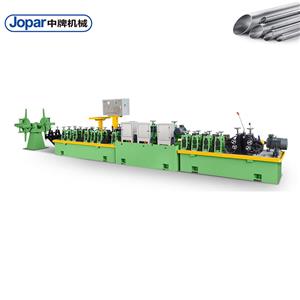
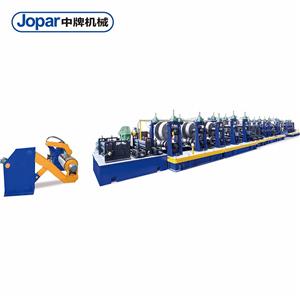
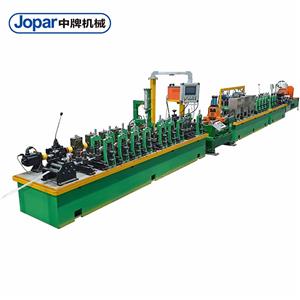
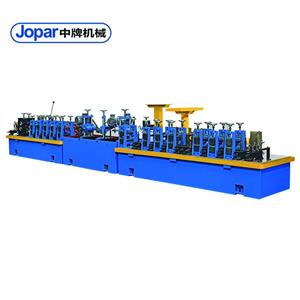
Is your tube mill machine really as efficient as it could be? If you're like most manufacturers, you might be nodding yes, but deep down, you know there's room for improvement. The truth is, many tube mills operate at 60-70% overall equipment effectiveness (OEE), bleeding profits through scrap, downtime, and energy waste. In this blog, we'll uncover the hidden inefficiencies and show you how to transform your tube mill into a lean, mean, high-precision production powerhouse. And we'll do it with insights from Foshan Jopar Machinery Co.,Ltd, a leader in tube mill technology.
Imagine this: It's 2 AM, and your tube mill has been running for 16 hours straight. The operator notices a slight variation in the weld seam, but it's within tolerance—or so it seems. By morning, quality control rejects 5% of the day's production due to inconsistent weld quality. That's not just a minor hiccup; it's a significant financial hit. This scenario is all too common in the tube and pipe industry, where even small inefficiencies can compound into major losses.
In this comprehensive guide, we'll delve into the three most critical pain points that plague tube mill operations and provide actionable solutions. We'll also share success stories from manufacturers who have revamped their processes, and answer burning questions from engineers and procurement managers. By the end, you'll have a clear roadmap to boost your tube mill's efficiency, quality, and profitability.
Pain Point 1: Inconsistent Weld Quality Leading to High Scrap Rates
Weld quality is the heart of tube production. If the weld is weak, the tube fails. If it's inconsistent, you get scrap. The problem often stems from outdated welding controls, improper heat input, or poor edge preparation. The consequences are severe: scrap rates can soar to 5-10%, costing a mid-sized manufacturer hundreds of thousands of dollars annually. Moreover, inconsistent quality can lead to customer complaints, returns, and damaged reputation.
Consider a scenario where a tube mill produces 10,000 tons per year. A 5% scrap rate means 500 tons of wasted material, plus the energy and labor that went into producing it. At an average price of $800 per ton, that's $400,000 down the drain. And that's before factoring in the cost of rework, expedited shipping, and lost business.
The root cause? Many older tube mills rely on manual adjustments for welding parameters. Operators tweak voltage and current based on experience, but human error is inevitable. Variations in strip thickness, material composition, and line speed further complicate matters. Without real-time monitoring and automatic control, maintaining consistent weld quality is a constant battle.
To make matters worse, the industry lacks a universal standard for weld quality in tube mills. Each application—from automotive to HVAC—has its own requirements. For instance, tubes for hydraulic cylinders must withstand high pressure, while tubes for furniture need aesthetic welds. This diversity demands a flexible, precise welding system.
So, what's the solution? Advanced welding technologies such as high-frequency induction welding with closed-loop control. These systems continuously monitor weld parameters and adjust in real-time, ensuring optimal heat input and consistent weld quality. Additionally, automated edge preparation and strip alignment reduce variability. Companies like Foshan Jopar Machinery Co.,Ltd have developed tube mills equipped with such intelligent welding controls, helping manufacturers achieve scrap rates below 1%.
Pain Point 2: Excessive Downtime Due to Manual Adjustments and Maintenance
Downtime is the silent killer of productivity. In a typical tube mill, unplanned downtime can account for 15-20% of total production time. That's nearly two hours lost per 10-hour shift. The causes range from tooling changes and roll adjustments to equipment failures. Each minute of downtime costs money—not just in lost output, but in idle labor and missed deadlines.
Take a common scenario: A tube mill needs to switch from producing 1-inch tubes to 2-inch tubes. In a manual setup, this changeover might take 2-3 hours. During that time, the line is stopped, operators are waiting, and orders are delayed. If this happens twice a week, you're losing 4-6 hours of production weekly. Over a year, that's 200-300 hours—equivalent to 5-7 weeks of lost production.
Moreover, manual adjustments are prone to errors. If a roll is set incorrectly, it can cause strip misalignment, edge cracking, or excessive wear on tooling. This leads to more downtime for corrections and repairs. The cost of maintenance also escalates as parts wear out prematurely.
Preventive maintenance is often overlooked due to tight production schedules. But skipping maintenance leads to unexpected breakdowns, which are far more costly. A single bearing failure can halt the entire line for hours, and if a critical component like a welding oscillator fails, you might wait days for a replacement.
The solution lies in automation and predictive maintenance. Modern tube mills from Foshan Jopar Machinery Co.,Ltd feature quick-change tooling systems that reduce changeover time to under 30 minutes. Automated roll positioning and recipe management allow operators to switch products with the push of a button. Sensors and IoT technology monitor equipment health, predicting failures before they occur. This enables maintenance to be scheduled during planned downtime, minimizing disruption.
Furthermore, modular design simplifies repairs. Components can be swapped out quickly, reducing mean time to repair (MTTR). With these advancements, manufacturers can achieve uptime levels above 95%, significantly boosting overall productivity.
Pain Point 3: High Energy Consumption and Operational Costs
Energy is a major operating expense for tube mills. The welding process, in particular, consumes a lot of power. Inefficient welding can waste up to 30% of the energy input. Additionally, motors, drives, and auxiliary equipment contribute to the energy bill. With rising energy prices, even a small reduction in consumption can lead to substantial savings.
Let's quantify: A typical tube mill might consume 500 kW of power. If it operates 6,000 hours per year, that's 3,000,000 kWh. At $0.10 per kWh, the annual energy cost is $300,000. A 20% reduction would save $60,000 per year—money that can be reinvested in the business.
But energy waste isn't just about cost; it's also about environmental impact. Many manufacturers are under pressure to reduce their carbon footprint. Inefficient tube mills emit more CO2, which can affect compliance with regulations and corporate sustainability goals.
The causes of high energy consumption are multifaceted. Older welding generators are less efficient than modern solid-state power supplies. Improper matching of impedance can cause reflected power, wasting energy. Mechanical inefficiencies in drives and bearings also add to the load. Furthermore, many mills run at fixed speeds regardless of production demand, leading to unnecessary energy use during idle periods.
To address this, Foshan Jopar Machinery Co.,Ltd has integrated energy-efficient technologies into their tube mills. High-frequency welding with advanced power supplies achieves up to 90% energy efficiency, compared to 70% for traditional systems. Variable frequency drives (VFDs) on motors adjust speed according to load, saving energy during low-demand periods. Additionally, regenerative braking systems capture energy during deceleration and feed it back to the grid.
Smart control systems also play a role. They optimize welding parameters to minimize energy use while maintaining quality. For example, adaptive control adjusts power based on strip thickness and line speed, avoiding over-welding. These measures can reduce overall energy consumption by 15-25%, delivering both cost savings and environmental benefits.
Solutions: Advanced Technology and Automation from Foshan Jopar Machinery Co.,Ltd
Having identified the pain points, let's explore how Foshan Jopar Machinery Co.,Ltd addresses them with cutting-edge solutions. With decades of experience in tube mill manufacturing, Jopar has developed a range of machines that combine precision engineering with intelligent automation.
1. Intelligent Welding Systems: Jopar's tube mills feature high-frequency induction welding with closed-loop control. The system continuously monitors weld temperature, current, and voltage, adjusting in real-time to ensure consistent weld quality. This reduces scrap rates to less than 1% and eliminates the need for manual tweaking. The welding head is also designed for quick maintenance, minimizing downtime.
2. Quick-Change and Automated Setup: Jopar's mills are equipped with motorized roll adjustment and recipe management. Changeover between different tube sizes can be completed in minutes, not hours. The tooling is designed for rapid replacement, and the control system stores all parameters for future runs. This flexibility allows manufacturers to respond quickly to market demands.
3. Energy-Efficient Design: Jopar uses high-efficiency motors, VFDs, and advanced power supplies to reduce energy consumption. The mills also feature intelligent standby modes that lower power usage during breaks. Additionally, the welding process is optimized to minimize waste heat, further saving energy.
4. Predictive Maintenance and IoT: Jopar's tube mills can be equipped with sensors that monitor vibration, temperature, and other parameters. Data is analyzed to predict equipment failures, allowing maintenance to be scheduled proactively. This reduces unplanned downtime and extends equipment life.
5. Robust Construction and Quality Components: Jopar uses high-grade materials and components from reputable suppliers. The mills are built to last, with minimal maintenance requirements. This reliability translates to higher uptime and lower total cost of ownership.
To illustrate the impact of these solutions, consider the following comparison table between a traditional tube mill and a Jopar-equipped mill:
| Parameter | Traditional Tube Mill | Jopar Tube Mill |
|---|---|---|
| Scrap Rate | 5-10% | <1% |
| Changeover Time | 2-3 hours | <30 minutes |
| Energy Efficiency | 70% | 90% |
| Uptime | 80-85% | >95% |
| Maintenance Cost | High | Low |
As the table shows, the improvements are substantial. By investing in a Jopar tube mill, manufacturers can achieve significant gains in quality, productivity, and cost savings.
Customer Success Stories: Real-World Results
Let's look at how companies around the world have benefited from Jopar's tube mill technology.
Case 1: SteelPro Industries, Germany
SteelPro, a manufacturer of precision tubes for the automotive sector, struggled with a 7% scrap rate due to inconsistent welds. After installing a Jopar tube mill with intelligent welding control, they reduced scrap to 0.8% within three months. "The consistency of the weld quality is remarkable," said Klaus Müller, Production Manager. "We've not only saved on material costs but also improved our delivery performance."
Case 2: TubeTech Solutions, USA
TubeTech, a supplier of tubes for HVAC applications, faced frequent downtime during product changeovers. Their old mill took 3 hours to switch from one size to another. With Jopar's quick-change system, they cut changeover time to 25 minutes. "We can now take on smaller, more diverse orders without losing efficiency," said Sarah Johnson, Operations Director. "Our uptime has increased by 20%."
Case 3: AsiaTube Manufacturing, Vietnam
AsiaTube, a producer of structural tubes, was burdened by high energy costs. After upgrading to a Jopar energy-efficient tube mill, their power consumption dropped by 22%. "The savings go straight to our bottom line," said Nguyen Van Minh, Plant Manager. "We also appreciate the reduced carbon footprint, which aligns with our sustainability goals."
Case 4: Nordic Tube AB, Sweden
Nordic Tube, a manufacturer of stainless steel tubes, needed to improve surface finish and reduce maintenance. Jopar's tube mill with advanced roll design and predictive maintenance sensors delivered. "Our maintenance costs are down 30%, and the tube surface quality is exceptional," said Erik Andersson, CEO. "Jopar's support team is also very responsive."
Case 5: Precision Pipes, UK
Precision Pipes, serving the oil and gas industry, required tubes that meet stringent API standards. Jopar's tube mill with closed-loop welding control ensured weld integrity. "We passed API certification on the first try," said James Wilson, Quality Manager. "The Jopar mill gives us the confidence to take on the most demanding projects."
These stories highlight the tangible benefits of Jopar's technology. Each customer achieved significant improvements in quality, efficiency, and cost savings.
Applications and Partnerships: Trusted by Industry Leaders
Jopar tube mills are used in a wide range of applications, including:
- Automotive: exhaust systems, chassis components, and structural tubes.
- Construction: scaffolding, handrails, and structural pipes.
- HVAC: refrigerant lines, heat exchangers, and ducting.
- Furniture: frames, legs, and decorative tubes.
- Energy: oil and gas pipelines, boiler tubes, and heat exchangers.
Jopar has established partnerships with leading companies in these sectors. For example, they supply tube mills to ArcelorMittal for their automotive tube production, and to Sandvik for their precision tubes. These collaborations are built on trust and a shared commitment to quality and innovation.
In addition, Jopar works closely with research institutions to advance tube mill technology. They are a member of the International Tube Association and participate in industry standards development. This ensures their equipment meets the latest requirements and best practices.
For procurement managers, choosing Jopar means partnering with a company that understands the challenges of tube production. Jopar's engineers work with customers to customize solutions, from mill layout to automation features. They also provide comprehensive training and after-sales support, ensuring a smooth integration and long-term reliability.
FAQ: Technical Insights for Engineers and Procurement Managers
Q1: What is the typical payback period for upgrading to a Jopar tube mill?
A1: The payback period depends on your current efficiency and production volume. For a mid-sized manufacturer, the savings from reduced scrap, downtime, and energy costs typically pay back the investment in 12-18 months. For example, if you're losing $400,000 annually to scrap and $200,000 to downtime, a Jopar mill that reduces these losses by 80% would save $480,000 per year. With a typical mill cost of $500,000 to $1,000,000, the payback is well under two years.
Q2: How does Jopar ensure weld quality for high-strength steel tubes?
A2: High-strength steel requires precise heat input and cooling. Jopar's tube mills use high-frequency induction welding with closed-loop control. The system monitors weld temperature and adjusts power to maintain optimal weld pool conditions. Additionally, the mill can be equipped with post-weld annealing to relieve stresses. For critical applications, we also offer laser welding as an option, which provides even greater precision.
Q3: Can Jopar tube mills handle small batch sizes with frequent changeovers?
A3: Absolutely. Jopar's quick-change systems are designed for flexibility. With motorized roll adjustment and recipe management, changeover can be completed in under 30 minutes. This makes it feasible to run small batches economically. Many of our customers serve just-in-time markets and rely on this flexibility to meet diverse customer demands.
Q4: What kind of maintenance is required for a Jopar tube mill?
A4: Jopar tube mills are designed for low maintenance. Routine tasks include lubrication, inspection of tooling, and checking sensor calibration. With predictive maintenance sensors, you can schedule maintenance based on actual condition rather than fixed intervals. We provide a detailed maintenance manual and training to ensure your team can handle it. Typically, daily checks take 15 minutes, and more thorough maintenance is needed every 500 hours.
Q5: How does Jopar support customers in meeting environmental regulations?
A5: Our tube mills are designed with energy efficiency in mind. They consume less power and reduce waste, which lowers CO2 emissions. We also offer features like regenerative braking and intelligent standby. For customers with specific sustainability targets, we can provide energy consumption data and help optimize settings. Jopar is committed to helping the industry transition to greener manufacturing.
Conclusion: Take Action to Optimize Your Tube Mill Performance
In today's competitive landscape, tube mill efficiency is not just a goal—it's a necessity. The pain points we discussed—inconsistent weld quality, excessive downtime, and high energy consumption—are costing you money every day. But with the right technology and partner, you can overcome these challenges and achieve world-class performance.
Foshan Jopar Machinery Co.,Ltd offers advanced tube mill solutions that deliver measurable results. From intelligent welding systems to energy-efficient designs, Jopar's mills are engineered to maximize your productivity and profitability. As our customers have shown, the transformation is real and impactful.
So, is your tube mill machine really efficient? If you're not sure, it's time to find out. We invite you to download our technical white paper, "Optimizing Tube Mill Efficiency: A Comprehensive Guide," which provides in-depth analysis and case studies. Or better yet, contact our sales engineers to discuss your specific needs. They can perform a free assessment of your current operations and show you how Jopar can help you achieve your goals.
Don't let inefficiency eat into your profits. Take the first step towards a more efficient, reliable, and sustainable tube mill today. Partner with Jopar and experience the difference.