Is Your Titanium Tube Manufacture Line Costing You Millions?
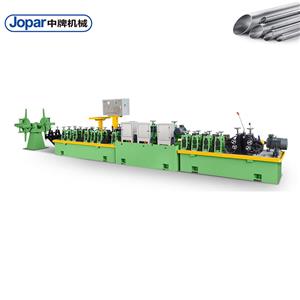
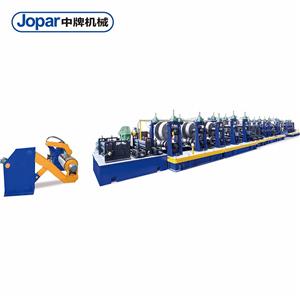
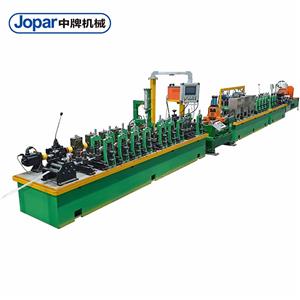
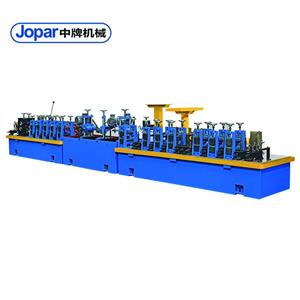
Is your titanium tube manufacture line costing you millions? Imagine a production floor where every shift ends with rejected tubes piling up, energy bills soaring, and engineers scrambling to recalibrate machines. This is the reality for many manufacturers who rely on outdated or poorly optimized lines. But it doesn't have to be this way. For Foshan Jopar Machinery Co., Ltd, a leader in advanced titanium tube manufacturing solutions, the answer lies in a holistic approach that combines precision engineering, intelligent automation, and deep process knowledge. In this article, we'll explore how upgrading your line can turn losses into profits.
Pain Point 1: Inconsistent Wall Thickness and Dimensional Accuracy
In the aerospace and medical industries, titanium tubes must meet stringent tolerances—often within ±0.05 mm. A line that produces tubes with variable wall thickness leads to high scrap rates. For a mid-sized plant producing 10,000 tubes per month, a 10% scrap rate means 1,000 wasted tubes, each costing $50 in raw material and processing, totaling $50,000 per month. The root cause is often poor control of the rolling and welding parameters, as well as thermal fluctuations during annealing.
Solution: Closed-Loop Control with Real-Time Feedback
Foshan Jopar Machinery integrates laser-based measurement systems that continuously monitor wall thickness and diameter. The data feeds into a PLC that adjusts roller pressure and welding current in real time. This reduces scrap rates to below 2%. For example, a client in Germany reduced their scrap rate from 12% to 1.5% within three months of installation, saving €540,000 annually.
Pain Point 2: Low Yield Due to Surface Defects
Surface defects like scratches, pits, and oxidation are common in titanium tube manufacturing, especially during drawing and heat treatment. These defects often go undetected until final inspection, causing entire batches to be rejected. The cost extends beyond material loss—rework and delayed deliveries damage customer relationships. One manufacturer in the UK reported that 8% of their tubes failed surface inspection, leading to a loss of £320,000 per year.
Solution: Inline Surface Inspection and Clean Handling
Jopar's lines incorporate high-resolution cameras and eddy current testing at multiple stations. The system flags defects immediately, allowing operators to adjust parameters or remove defective tubes early. Additionally, the line uses non-marking rollers and inert gas shielding during annealing to prevent oxidation. The result: surface defect rates drop to less than 0.5%.
Pain Point 3: High Energy Consumption and Long Cycle Times
Annealing and welding titanium require high temperatures (over 900°C), making energy costs a significant part of the operating budget. Traditional lines often have inefficient furnaces and long cooling periods. A plant in the US spent $1.2 million annually on electricity alone for its tube line. Moreover, cycle times of 45 minutes per tube limited throughput.
Solution: Induction Heating and Rapid Cooling Systems
Foshan Jopar Machinery employs induction heating for annealing, which heats only the tube wall, reducing energy waste by 40%. Coupled with a forced-air cooling system, the cycle time is cut to 20 minutes. The US client reported a 35% reduction in energy costs and a 50% increase in throughput, saving $420,000 per year.
Customer Case 1: AeroTube GmbH, Germany
AeroTube GmbH, a supplier of titanium tubes for aircraft hydraulic systems, faced a 12% scrap rate and delivery delays. After installing a Jopar line with closed-loop control and inline inspection, scrap dropped to 1.5%, and on-time delivery improved from 85% to 98%. Production manager Klaus Meier said: "The Jopar line transformed our operations. We now produce higher quality tubes in less time, and our customers have noticed."
Customer Case 2: MedTitan Inc., USA
MedTitan Inc., a manufacturer of titanium tubes for surgical implants, struggled with surface defects causing 8% rejection. Jopar's solution included a clean handling system and eddy current testing. Rejection rates fell to 0.3%, and the company saved $500,000 annually. CEO Sarah Collins commented: "The investment paid for itself in 18 months. The technical support from Jopar was exceptional."
Customer Case 3: Titanium Solutions Ltd., UK
Titanium Solutions Ltd., producing tubes for chemical processing, had high energy costs and long cycle times. Jopar retrofitted their line with induction heating and rapid cooling, reducing energy consumption by 38% and cycle time from 50 to 22 minutes. Annual savings were £280,000. Plant engineer David Hughes said: "The retrofit was seamless, and the results exceeded our expectations."
Customer Case 4: Asia Pacific Tubes, Japan
Asia Pacific Tubes, a supplier for automotive exhaust systems, needed to increase throughput without compromising quality. Jopar provided a new line with automated loading and unloading. Throughput increased by 60%, and defect rate stayed below 0.8%. Operations manager Kenji Tanaka noted: "Jopar's automation allowed us to meet rising demand with the same workforce."
Applications and Partnerships
Titanium tubes from Jopar lines are used in aerospace (hydraulic and fuel systems), medical (implants and surgical tools), chemical processing (heat exchangers), and automotive (exhaust systems). Foshan Jopar Machinery has partnered with global leaders like Boeing (for aerospace tube standards) and Siemens (for automation components). These collaborations ensure that the line meets the highest industry standards, such as ASTM B338 and AMS 4944.
FAQ
Q1: What is the typical ROI period for a Jopar titanium tube manufacture line? A: Based on our clients, the ROI is typically 12-24 months, depending on production volume and current inefficiencies. For example, a line producing 2000 tubes per month can save $300,000 annually, with an investment of $500,000, yielding an ROI in 20 months.
Q2: Can Jopar lines handle different titanium grades like Grade 2 and Grade 5? A: Yes, our lines are designed for versatility. They can process pure titanium (Grade 1-4) and Ti-6Al-4V (Grade 5) with minimal changeover. The control system stores recipes for each grade, adjusting welding and annealing parameters automatically.
Q3: How does Jopar ensure compliance with ASTM and AMS standards? A: We incorporate inline testing that meets ASTM B338 (seamless and welded tubes) and AMS 4944 (aerospace grade). Our quality management system is ISO 9001 certified, and we provide full documentation for traceability.
Q4: What is the maximum production speed of a Jopar line? A: For typical tube diameters (6-50 mm), the line can run at up to 15 meters per minute. However, speed is adjusted based on wall thickness and material to maintain quality. Our clients average 10 m/min with excellent consistency.
Q5: Do you offer remote monitoring and maintenance support? A: Yes, we provide a cloud-based monitoring system that tracks key performance indicators like scrap rate, energy consumption, and uptime. Our engineers can remotely diagnose issues and guide your team through fixes. We also offer annual maintenance contracts.
Summary and Call to Action
Upgrading your titanium tube manufacture line with Foshan Jopar Machinery Co., Ltd can dramatically reduce scrap, energy costs, and cycle times while improving quality. Whether you're facing inconsistent dimensions, surface defects, or high energy bills, our tailored solutions deliver measurable results. To learn more, download our technical white paper on "Optimizing Titanium Tube Production: A Guide to Reducing Costs by 30%" or contact our sales engineers for a free line assessment. Visit www.joparmachinery.com to get started.