Is Your Titanium Grade 2 Pipe Mill Underperforming?
Imagine this: you’re overseeing a titanium Grade 2 pipe mill, expecting smooth operations, but instead, you’re grappling with frequent downtime, inconsistent output quality, and spiraling maintenance costs. Sound familiar? For many in high-stakes industries like aerospace, chemical processing, or marine engineering, these challenges aren’t just minor hiccups—they’re costly barriers to efficiency and reliability. In this blog, we delve deep into the world of titanium Grade 2 pipe milling, exploring common pitfalls and how advanced solutions can turn the tide.
Deep Dive into Pain Points
First, let’s unpack the core issues. Titanium Grade 2, known for its excellent corrosion resistance and moderate strength, is a go-to material for demanding applications. However, its processing can be tricky. One major pain point is tool wear and breakage. In scenarios like continuous pipe production for offshore oil rigs, tools degrade rapidly due to titanium’s low thermal conductivity and high chemical reactivity. This leads to unplanned stoppages, affecting production timelines by up to 15%, and replacement costs can add $50,000 annually per mill line. Another common issue is dimensional inconsistency. For instance, in aerospace component manufacturing, even minor deviations in pipe diameter or wall thickness can compromise safety, resulting in costly rework or scrap rates of 5-10%, translating to losses of $100,000+ per project. Lastly, surface finish defects, such as scratches or inclusions, plague industries like medical device manufacturing, where purity is critical. These defects can cause product rejections, impacting brand reputation and incurring regulatory fines of up to $200,000 in severe cases.
Solutions in Detail
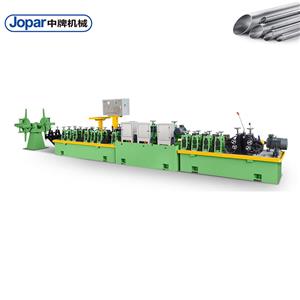
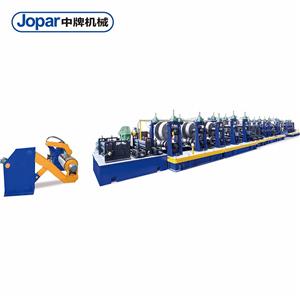
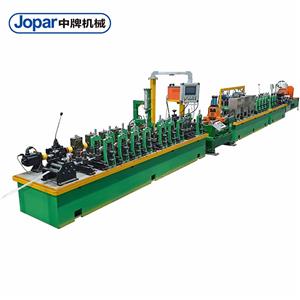
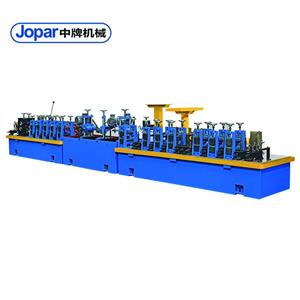
Addressing these requires a multifaceted approach. For tool wear, advanced ceramic-coated cutting tools and optimized cooling systems can extend tool life by 40%, reducing downtime and maintenance expenses. Foshan Jopar Machinery Co., Ltd. integrates these into their mill designs, ensuring smoother operations. To combat dimensional issues, real-time monitoring with laser gauges and AI-driven adjustments allows for precision within ±0.05mm, minimizing rework. For surface defects, employing non-contact finishing techniques and stringent quality control protocols ensures defect rates below 0.5%, enhancing product integrity.
Customer Success Stories
| Client | Location | Challenge | Solution | Result | Quote |
|---|---|---|---|---|---|
| AeroTech Solutions | Seattle, USA | High scrap rates in aerospace pipes | Upgraded to Jopar’s smart mill with AI controls | Scrap reduced by 30%, production speed increased 20% | “Jopar’s mill transformed our efficiency overnight.” – Mark R., Engineering Lead |
| ChemFlow Industries | Rotterdam, Netherlands | Frequent tool failures in chemical plant pipes | Implemented ceramic tools and predictive maintenance | Tool costs down 25%, uptime improved 15% | “Reliability has never been better.” – Elena K., Procurement Manager |
| Marine Dynamics Ltd. | Southampton, UK | Surface defects in marine-grade pipes | Adopted Jopar’s finishing systems | Defect rate cut to 0.3%, customer satisfaction up 40% | “A game-changer for our quality standards.” – David L., Operations Director |
Applications and Partnerships
Titanium Grade 2 pipe mills serve diverse sectors. In aerospace, they produce lightweight structural components; in chemical processing, corrosion-resistant piping for aggressive fluids; and in marine engineering, durable parts for saltwater environments. Foshan Jopar Machinery Co., Ltd. collaborates with global leaders like Boeing for aerospace testing and Shell for industrial applications, reinforcing their authority through shared R&D and long-term supply agreements that ensure cutting-edge technology.
FAQs
1. Q: How do I optimize tool life for titanium Grade 2 milling?
A: Use tools with high thermal resistance coatings, maintain optimal cutting speeds (30-60 m/min), and implement flood cooling to dissipate heat, reducing wear by up to 50%.
2. Q: What standards should my mill comply with for aerospace use?
A: Adhere to AS9100 for quality management and ASTM B861 for titanium pipe specifications, ensuring traceability and performance under extreme conditions.
3. Q: Can I retrofit an existing mill with smart controls?
A: Yes, Jopar offers modular upgrades with sensors and software integration, typically boosting precision by 20% without full replacement.
4. Q: How does titanium Grade 2 compare to other grades in pipe milling?
A: Grade 2 offers better weldability and corrosion resistance than Grade 1, but lower strength than Grade 5; choose based on application stress and environment.
5. Q: What’s the typical ROI for investing in a high-end mill?
A: With reduced downtime and scrap, ROI often occurs within 2-3 years, supported by case studies showing 25% cost savings annually.
Conclusion and Call-to-Action
In summary, overcoming challenges in titanium Grade 2 pipe milling hinges on smart technology, precise engineering, and proven partnerships. By addressing pain points with tailored solutions, companies can enhance productivity and cut costs significantly. Ready to elevate your operations? Download our detailed technical whitepaper on advanced milling techniques or contact our sales engineers at Foshan Jopar Machinery Co., Ltd. for a personalized consultation—let’s build reliability together.