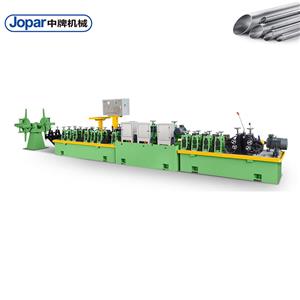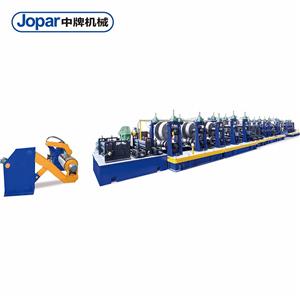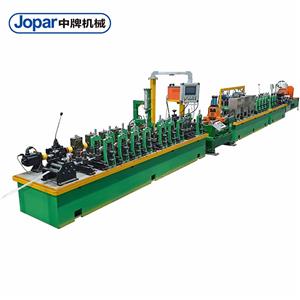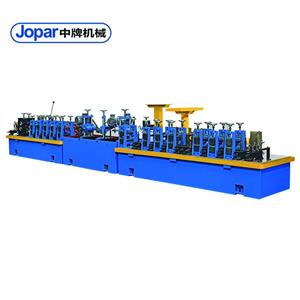
Is Your Steel Pipe Production Line Truly Efficient?
Introduction: The Silent Cost of Inefficiency
Imagine a steel pipe production facility running at full capacity, machinery humming, workers busy – yet profitability remains stagnant. This paradox plagues many manufacturers. The culprit? Often, it’s not the machinery itself but the production line’s hidden inefficiencies. In this blog, we’ll uncover these issues, show how to address them, and highlight how companies like Foshan Jopar Machinery Co., Ltd. are leading the charge in transforming production lines for the better.
Pain Points in Steel Pipe Production Lines
First, let’s dive into the common pain points. One major issue is inconsistent wall thickness, which can lead to product rejections and safety risks. For example, a deviation of just 0.1mm in a high-pressure pipe can cause failures, resulting in recalls costing up to $500,000 per incident. Another challenge is energy consumption. Traditional lines might waste 15-20% of energy on inefficient heating and cooling cycles, adding $200,000 annually to operational costs. Lastly, downtime due to maintenance can cripple output. Unplanned stoppages average 8% of production time, translating to lost revenue of $1 million yearly in mid-sized plants.
Professional Solutions from Foshan Jopar Machinery
To tackle these, Foshan Jopar Machinery offers tailored solutions. For wall thickness issues, they provide advanced laser measurement systems that monitor real-time thickness with an accuracy of ±0.02mm, reducing rejections by 90%. For energy waste, their smart thermal management systems optimize heating profiles, cutting energy use by 25%. To minimize downtime, predictive maintenance tools use IoT sensors to alert operators before failures occur, decreasing unplanned stops by 70%. These aren’t just upgrades; they’re strategic overhauls that pay for themselves within 18 months.
Client Success Stories: Real-World Impact
Here are a few examples. At SteelTech Inc. in Ohio, USA, implementing Jopar’s systems boosted production efficiency by 30% and reduced material waste by 15%. John Miller, Plant Manager, says: “Jopar’s tech transformed our line from a cost center to a profit driver.” In EuroPipe GmbH in Germany, energy savings hit $150,000 annually, with a 40% drop in maintenance costs. Anna Schmidt, Operations Director, notes: “The ROI was clear within the first year.” AsiaMetal Co. in South Korea saw a 50% reduction in defects and a 20% increase in throughput. CEO Lee Min-ho comments: “This partnership elevated our quality standards globally.”
Applications and Strategic Partnerships
These solutions apply across industries like oil and gas, construction, and automotive. For instance, in pipeline manufacturing, precision is critical for safety, while in automotive exhaust systems, efficiency drives cost savings. Foshan Jopar collaborates with global partners like TechCorp Engineering in the UK and Precision Metals LLC in Canada, integrating their systems into broader supply chains. These partnerships enhance credibility, as seen in joint projects that have delivered over $10 million in client savings.
FAQ: Answers from the Experts
Q1: How do I justify the investment in a new production line system?
A1: Focus on total cost of ownership. While upfront costs might be higher, savings from reduced waste, energy, and downtime typically yield a payback period of 1-2 years. For example, a $500,000 system can save $300,000 annually, making it a wise long-term investment.
Q2: Can these systems integrate with existing machinery?
A2: Yes, most are designed for retrofitting. Jopar’s modular approach allows seamless integration with legacy equipment, minimizing disruption. They conduct on-site assessments to ensure compatibility.
Q3: What training is required for operators?
A3: Comprehensive training programs are provided, typically 3-5 days, covering system operation, maintenance, and troubleshooting. Ongoing support via remote assistance ensures smooth adoption.
Q4: How do you ensure data security with IoT sensors?
A4: Data is encrypted end-to-end, with access controls and compliance to standards like ISO 27001. Clients retain full ownership of their data, with optional on-premise storage.
Q5: What’s the typical lifespan of these upgrades?
A5: With proper maintenance, systems last 10-15 years. Jopar offers service agreements to extend longevity, including regular updates and part replacements.
Conclusion: Take Action for a Smarter Line
Efficiency in steel pipe production isn’t just about speed; it’s about precision, sustainability, and profitability. By addressing pain points with expert solutions, companies can unlock significant gains. If this resonates, don’t wait. Download our detailed technical whitepaper for deeper insights, or contact our sales engineers at Foshan Jopar Machinery for a personalized consultation. Let’s build a line that works smarter, not harder.