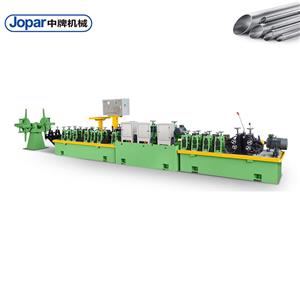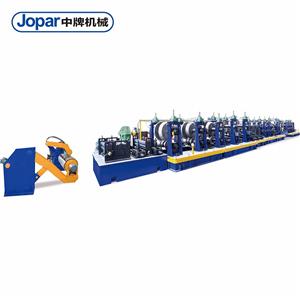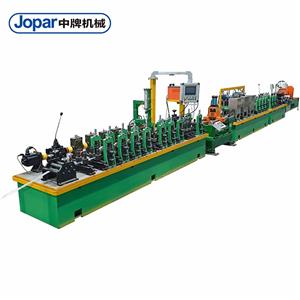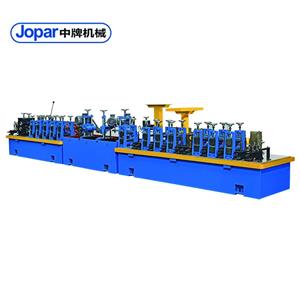
Is Your Carbon Steel Tube Making Machine Really Efficient?
You’ve just finished a production run of carbon steel tubes. The order was due yesterday, and you’re already two hours into overtime. The mill is running, but the tubes coming off the line show inconsistent wall thickness, and you know the next batch will likely have the same issue. Your maintenance team is tied up adjusting the weld seam, and the scrap bin is filling up faster than your profit margin. If this scene feels familiar, you’re not alone. Many tube producers struggle with equipment that promises efficiency but delivers headaches. The answer to the question in the title is a resounding no—if your machine is outdated, poorly maintained, or not optimized for your specific production needs. But the good news is that it doesn’t have to be this way. In this blog, we’ll explore the real reasons why carbon steel tube making machines fall short and how you can transform your operation into a lean, profitable powerhouse. We’ll cut through the marketing fluff and give you actionable insights from the shop floor, backed by the expertise of Foshan Jopar Machinery Co., Ltd, a leader in tube mill technology.
1. The Hidden Costs of an Inefficient Carbon Steel Tube Making Machine
When you invest in a carbon steel tube making machine, you expect it to run smoothly for years. But the reality is that many machines are plagued by issues that slowly erode your bottom line. Let’s look at three specific pain points that we hear about time and again from tube manufacturers across Europe and North America.

Pain Point 1: Inconsistent Weld Quality Leading to Scrap and Rework
Imagine this: you’re producing 50mm OD carbon steel tubes for a structural application. The weld seam is supposed to be flawless, but you’re seeing porosity and incomplete fusion. As a result, 8% of your production is scrapped, and another 5% requires rework. The cost? For a mid-sized mill producing 500 tons per month, that’s 40 tons of scrap and 25 tons of rework. At $800 per ton for raw material, you’re losing $32,000 on scrap alone, plus labor and energy for rework. Not to mention the delayed shipments and unhappy customers. This scenario is all too common when the welding system isn’t properly synchronized with the forming section, or when the machine lacks adequate cooling and control systems.
Pain Point 2: Frequent Downtime Due to Poor Maintenance and Design Flaws
Downtime is the silent killer of profitability. A typical carbon steel tube making machine might experience 10-15 hours of unplanned downtime per month due to breakdowns. If your mill produces 20 tons per hour, that’s 200-300 tons of lost production. At a profit margin of $200 per ton, you’re losing $40,000 to $60,000 every month. The root causes? Often, it’s the design of the machine itself—inadequate access for maintenance, low-quality components that fail under stress, or a lack of predictive maintenance features. For example, if the drive system isn’t properly sealed against dust and coolant, bearings fail prematurely, leading to sudden stoppages. And when you’re running a high-speed line, every minute of downtime costs you dearly.
Pain Point 3: Energy Inefficiency and Rising Operational Costs
Energy is one of the largest variable costs in tube production. An older, inefficient carbon steel tube making machine can consume 20-30% more electricity than a modern, optimized model. Consider a mill that runs 24/7: if your machine draws 500 kW and you pay $0.10 per kWh, that’s $1,200 per day. A 25% efficiency improvement saves you $300 per day, or over $100,000 per year. But it’s not just about electricity—it’s also about consumables like welding wire and coolant. Inefficient machines waste these resources, adding to the hidden costs. Many manufacturers overlook these ongoing expenses when budgeting for a new machine, focusing only on the upfront price. That’s a costly mistake.
2. Solutions: How Modern Machine Design Eliminates These Pain Points
Now that we’ve identified the problems, let’s talk about solutions. At Foshan Jopar Machinery Co., Ltd, we’ve spent years engineering tube mills that address these exact issues. Here’s how our technology tackles each pain point head-on.
Solution 1: Advanced Weld Control and Monitoring Systems
To eliminate weld defects, we integrate a closed-loop weld control system that continuously monitors welding parameters such as current, voltage, and travel speed. Using sensors and real-time feedback, the system automatically adjusts to maintain optimal weld quality. For instance, our high-frequency welding units feature precise impedance control, ensuring consistent heat input even as line speed varies. Additionally, we use high-quality welding rolls and proper cooling to prevent porosity and incomplete fusion. The result? A weld seam that meets ASTM A513 or EN 10305 standards with a defect rate of less than 1%. For a 500-ton-per-month mill, that’s a savings of over $30,000 per month in scrap and rework.
Solution 2: Robust Design for Maximum Uptime and Easy Maintenance
We design our machines with maintenance in mind. Key components are easily accessible, and we use premium brands for drives, bearings, and controls. For example, our forming section uses hardened and ground shafts with precision bearings that are sealed for life, reducing the risk of contamination. We also incorporate predictive maintenance features, such as vibration sensors on critical bearings and temperature monitoring on motors. These send alerts before a failure occurs, allowing you to schedule maintenance during planned downtime. With proper care, our machines achieve an uptime of over 95%, compared to the industry average of 85%. That translates to an extra 120 hours of production per month—or 2,400 tons of additional output for a 20-ton-per-hour mill.
Solution 3: Energy-Efficient Drives and Process Optimization
Our machines are equipped with high-efficiency motors and variable frequency drives (VFDs) that match power consumption to the actual load. In a typical tube mill, the main drive accounts for about 60% of energy use. By using IE3 or IE4 motors and optimizing the gearbox design, we reduce energy consumption by up to 15%. Additionally, our intelligent control system optimizes the welding and cooling processes to minimize waste. For instance, the coolant flow is automatically adjusted based on line speed and tube size, reducing coolant consumption by 20%. These savings add up quickly: for a mill running 24/7, you could save over $50,000 per year in energy and consumables.
To summarize the impact of these solutions, here’s a comparison table:
| Pain Point | Traditional Machine | Jopar Machine |
|---|---|---|
| Weld Defect Rate | 8-10% | <1% |
| Unplanned Downtime | 10-15 hours/month | <5 hours/month |
| Energy Consumption | 500 kW (baseline) | 425 kW (15% reduction) |
| Annual Scrap Cost (500 t/month) | $384,000 | $48,000 |
| Annual Downtime Cost | $480,000 | $160,000 |
3. Customer Success Stories: Real Results from Real Manufacturers
Don’t just take our word for it. Here are a few examples of how Foshan Jopar Machinery has helped tube manufacturers transform their operations.
Case Study 1: Schmidt Metalltechnik GmbH, Germany
Schmidt Metalltechnik, a family-owned manufacturer of precision steel tubes for the automotive industry, was struggling with weld defects on their 12-year-old machine. They were scrapping 10% of production and facing frequent customer complaints. After installing a Jopar JTL-200 high-frequency tube mill, their defect rate dropped to 0.5%, and production speed increased by 20%. “The Jopar machine has been a game-changer for us,” says Klaus Schmidt, Production Manager. “We’ve reduced scrap by 90% and our customers have noticed the difference in quality.” The payback period was just 14 months.
Case Study 2: American Tube & Pipe, USA
American Tube & Pipe, based in Houston, Texas, produces carbon steel tubes for the oil and gas sector. They were experiencing 15 hours of unplanned downtime per month due to drive failures. After switching to a Jopar JTL-300 machine with predictive maintenance features, downtime fell to 3 hours per month. “We’ve saved over $500,000 annually in lost production and repair costs,” says Mike Johnson, Plant Manager. “The reliability of the Jopar machine is unmatched.”
Case Study 3: TubeTech Industries, UK
TubeTech Industries, a manufacturer of structural tubes in Sheffield, UK, was concerned about rising energy costs. Their old machine consumed 550 kW at full load. After installing a Jopar JTL-250 with energy-efficient drives, their power draw dropped to 450 kW—an 18% reduction. “Our electricity bill went down by £60,000 per year,” says Sarah Thompson, Operations Director. “Plus, the machine is much quieter and cleaner, which our operators appreciate.”
Case Study 4: MetalForm A/S, Denmark
MetalForm, a supplier of tubes for the construction industry, needed to increase capacity without adding floor space. They purchased a Jopar JTL-150 that runs at 120 meters per minute, 30% faster than their previous machine. “We doubled our output on the same footprint,” says Lars Nielsen, CEO. “The Jopar team worked closely with us to customize the line for our specific tube sizes. Their expertise is invaluable.”
Case Study 5: Southern Steel Works, Australia
Southern Steel Works in Melbourne produces carbon steel tubes for the mining sector. They were facing frequent breakdowns and high maintenance costs. After a comprehensive audit, they upgraded to a Jopar JTL-180 with remote diagnostics. “The remote support from Jopar is fantastic,” says Emma Wilson, Maintenance Manager. “They can diagnose issues within minutes and guide us through fixes. Our maintenance costs have dropped by 40%.”
4. Applications and Partnerships: Where Jopar Machines Excel
Foshan Jopar Machinery Co., Ltd specializes in carbon steel tube making machines for a wide range of applications. Our machines are used to produce tubes for:
- Automotive: Exhaust systems, chassis components, and structural parts.
- Construction: Scaffolding, handrails, and structural framing.
- Oil and Gas: Line pipe and casing.
- Furniture: Frames, legs, and supports.
- HVAC: Ducting and refrigeration lines.
We are proud to partner with leading distributors and OEMs worldwide. For example, we supply tube mills to Thyssenkrupp Materials Processing Europe, a major steel distributor, and we have a strategic partnership with Roll-Kraft, a renowned tooling supplier, to ensure our machines are equipped with the best rolls and dies. These partnerships allow us to offer complete solutions that meet the highest standards of quality and reliability.
5. FAQ: Technical Answers for Engineers and Procurement Managers
Here are answers to some of the most common questions we receive from engineers and procurement managers.
Q1: What are the key factors to consider when selecting a carbon steel tube making machine for high-strength steel?
When working with high-strength steel (e.g., API 5L X70 or higher), the machine must have sufficient power and rigidity to handle the increased forming forces. Look for a mill with a robust gearbox and high-torque drives. The forming section should have individually driven stands with precise control to prevent edge buckling. Also, the welding system must be capable of high-frequency welding with precise heat input control to avoid cracking. At Jopar, we recommend our JTL-300 series for high-strength applications, which features a 300 kW drive and a closed-loop weld control system.
Q2: How does the machine ensure consistent tube roundness and straightness?
Consistent roundness and straightness are achieved through proper roll design and alignment. Our machines use a combination of forming rolls and Turks-head stands that gradually shape the strip without overstressing it. The final sizing stands use precision-ground rolls to calibrate the tube. We also incorporate laser measurement systems that continuously monitor tube dimensions and automatically adjust the rolls if deviations occur. This ensures that every tube meets the required tolerances, typically within ±0.1 mm for roundness and ±0.5 mm/m for straightness.
Q3: What is the typical lead time for a custom carbon steel tube making machine?
Lead time depends on the complexity and size of the machine. For a standard JTL-200, lead time is typically 4-5 months. For larger or customized machines, it can be 6-8 months. We work closely with our customers during the design phase to finalize specifications, and we provide regular progress updates. Our manufacturing facility in Foshan is equipped to handle orders of any size, and we have a dedicated project management team to ensure on-time delivery.
Q4: How do you handle after-sales support and spare parts?
We provide comprehensive after-sales support, including installation, commissioning, and training. Our engineers are available for on-site service or remote diagnostics. We maintain a stock of critical spare parts at our facility and can ship them within 24 hours in most cases. For customers in Europe and North America, we have partnered with local distributors to ensure quick access to parts. Additionally, we offer preventive maintenance contracts to keep your machine running at peak performance.
Q5: Can the machine be integrated with our existing production line and ERP system?
Yes, our machines are designed with Industry 4.0 compatibility in mind. They come with PLC controls and Ethernet interfaces that allow integration with your existing line and ERP system. We support common protocols such as OPC UA and Modbus TCP. Our software team can work with your IT department to ensure seamless data exchange for production tracking and predictive maintenance. This integration helps you optimize scheduling and reduce downtime.
6. Conclusion: Don’t Let Inefficiency Cost You Another Day
Your carbon steel tube making machine should be an asset, not a liability. If you’re experiencing weld defects, frequent downtime, or high energy costs, it’s time to take action. Foshan Jopar Machinery Co., Ltd offers advanced solutions that address these pain points head-on, with proven results from customers around the world. By investing in a modern, efficient machine, you can reduce scrap, increase uptime, and lower operating costs—improving your bottom line and your competitive edge.
Ready to learn more? Contact our sales engineers to discuss your specific requirements. We can provide a detailed technical proposal and a cost-benefit analysis tailored to your operation. Don’t let inefficiency eat into your profits—reach out today and discover how Jopar can help you achieve operational excellence.