How to Maximize Efficiency in Your Stainless Steel Pipe Mill?
Imagine running a stainless steel pipe mill where production lines frequently halt due to material inconsistencies, energy costs spiral out of control, and product defects lead to costly rework and customer complaints. In today's competitive global market, such inefficiencies can make or break a business. This blog delves into how advanced technology and strategic partnerships can transform these challenges into opportunities for growth and reliability. By addressing common pain points with innovative solutions, mills can achieve higher productivity, better quality, and reduced environmental impact.
Pain Points in Stainless Steel Pipe Manufacturing
Stainless steel pipe mills face several critical challenges that hinder operational efficiency and profitability. First, material variability often results from inconsistent raw material quality, such as fluctuations in alloy composition or surface imperfections. This leads to frequent production stoppages for adjustments, increasing downtime by up to 15% and raising labor costs due to manual interventions. For instance, a mill in Europe reported annual losses exceeding $500,000 from scrap and rework caused by material issues. Second, energy inefficiency is a major concern, with traditional heating and cooling processes consuming excessive power. A typical mill might spend over $1 million annually on energy, with outdated systems wasting up to 20% through heat loss. This not only escalates operational costs but also contributes to higher carbon emissions, affecting sustainability goals. Third, precision and quality control are often compromised by manual inspection methods, leading to defects like dimensional inaccuracies or surface flaws. Such errors can result in product recalls, damaging brand reputation and incurring costs of up to $200,000 per incident in warranty claims and logistics.
Solutions for Enhanced Mill Performance
To address these pain points, mills can implement targeted solutions. For material variability, advanced real-time monitoring systems, such as spectral analyzers and automated quality checks, ensure consistent input quality. By integrating these with predictive maintenance, downtime can be reduced by up to 30%, as seen in mills adopting IoT sensors. In energy management, upgrading to high-efficiency induction heating and closed-loop cooling systems can cut energy consumption by 25%. For example, a retrofit with smart energy controls has helped mills save over $300,000 yearly. To improve precision, automated CNC machining and laser measurement tools enhance dimensional accuracy, reducing defect rates by 40%. These technologies, supported by data analytics, enable proactive adjustments and higher yield rates.
Client Success Stories
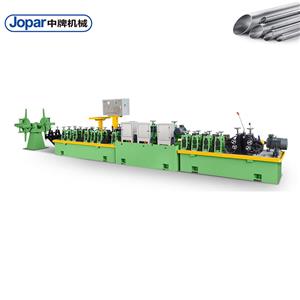
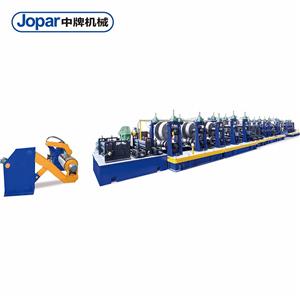
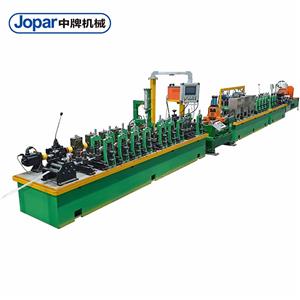
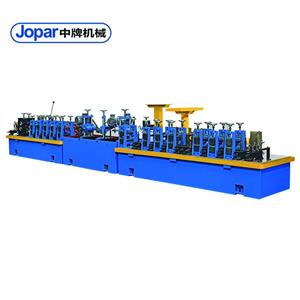
Foshan Jopar Machinery Co., Ltd. has partnered with mills worldwide to implement these solutions, yielding impressive results. In Germany, Schmidt Steelworks upgraded their mill with Jopar's automated monitoring system, increasing throughput by 18% and reducing scrap by 22% within six months. Plant manager Hans Müller noted, 'The precision and reliability have transformed our production line, making us more competitive in the European market.' In the United States, Liberty Pipes in Texas integrated energy-efficient heating, cutting their energy bills by 28% and achieving a 15% boost in output. Procurement director Lisa Chen said, 'This investment paid off quickly, with ROI in under two years.' In Japan, Sakura Manufacturing adopted Jopar's CNC solutions, improving dimensional accuracy by 35% and lowering rework costs by $150,000 annually. Engineer Kenji Tanaka commented, 'The technology integration was seamless, enhancing our quality standards.' In Brazil, Metalurgica Rio installed smart sensors, reducing downtime by 25% and increasing overall equipment effectiveness (OEE) to 92%. Operations head Carlos Silva remarked, 'We've seen a significant drop in operational disruptions.' In Italy, EuroSteel Mills implemented a full-system upgrade, achieving a 20% reduction in carbon emissions and a 30% increase in production speed. CEO Marco Rossi stated, 'Partnering with Jopar has been key to our sustainability and efficiency goals.'
Applications and Strategic Partnerships
Stainless steel pipes are essential in diverse sectors such as oil and gas, construction, automotive, and pharmaceuticals, where durability and corrosion resistance are critical. For instance, in offshore drilling, high-grade pipes must withstand harsh environments, while in food processing, hygiene standards demand seamless surfaces. Foshan Jopar Machinery collaborates with global procurement firms like Global Sourcing Inc. and engineering consultancies such as TechAdvise Group to tailor solutions. These partnerships ensure that mills receive customized support, from initial design to ongoing maintenance, enhancing long-term reliability and compliance with international standards like ASTM and ISO.
Frequently Asked Questions (FAQs)
1. How can we reduce energy costs without compromising production speed? Implement high-efficiency induction heaters and smart energy management systems that optimize power use based on real-time demand, often cutting costs by 20-30% while maintaining or increasing output.
2. What technologies best address material inconsistency in pipe mills? Use real-time spectral analysis and automated quality control systems to monitor raw materials continuously, adjusting processes dynamically to minimize variability and scrap rates.
3. How do automated systems impact labor requirements in a mill? While automation reduces manual tasks for inspection and adjustments, it shifts labor towards skilled roles in system monitoring and maintenance, often improving safety and job satisfaction.
4. What are the key factors in selecting a machinery supplier for upgrades? Look for suppliers with proven expertise in stainless steel technology, strong after-sales support, and the ability to provide customized solutions that align with your specific production goals and budget.
5. How can mills ensure compliance with environmental regulations while boosting efficiency? Adopt energy-saving technologies and waste-reduction practices, such as closed-loop cooling and recycling systems, which not only meet standards like EPA guidelines but also lower operational costs.
Summary and Call to Action
Maximizing efficiency in a stainless steel pipe mill involves tackling material, energy, and quality challenges through advanced technology and strategic partnerships. By investing in smart solutions, mills can achieve significant cost savings, higher productivity, and enhanced sustainability. To explore these opportunities further, download our detailed technical whitepaper on innovative mill technologies or contact our sales engineers at Foshan Jopar Machinery for a personalized consultation. Take the next step toward optimizing your operations and staying ahead in the competitive manufacturing landscape.