How Does a Pipe Production Line Cut Costs by 30%?
Imagine walking through a pipe manufacturing plant where the noise is minimal, the scrap rate is near zero, and the production line runs smoothly with just a few operators. You might think this is a vision of the future, but it's happening today. The secret? A well-designed pipe production line that integrates advanced automation, precision engineering, and smart technology. In this blog, we'll answer the question: How does a pipe production line cut costs by 30%? We'll dive deep into the technical aspects, share real-world examples, and provide actionable insights for engineers and procurement managers.
Why Are Pipe Manufacturers Struggling with Rising Costs?
Before we explore the solution, let's understand the pain points that many pipe manufacturers face. These challenges are not just minor inconveniences; they can significantly impact your bottom line.

Pain Point 1: Inefficient Material Usage Leading to High Scrap Rates
In a traditional pipe production setup, material waste can account for 8-12% of raw material costs. This often stems from outdated cutting systems, poor synchronization between machines, and inconsistent quality checks. For a mid-sized plant producing 500 tons of pipe per month, this translates to over $50,000 in lost material annually. The consequences are twofold: increased material costs and additional expenses for waste disposal and rework.
Pain Point 2: Excessive Downtime Due to Unplanned Maintenance
Unplanned downtime is a silent killer of productivity. When a critical component fails, the entire line can be halted for hours or even days. According to industry surveys, pipe manufacturers experience an average of 15-20 hours of unplanned downtime per month. For a line with a throughput of 2 tons per hour, this means 30-40 tons of lost production, worth $60,000-$80,000 per month. The root causes often include lack of predictive maintenance, poor component quality, and inadequate training.
Pain Point 3: High Labor Costs and Inconsistent Quality
Manual intervention in pipe production not only increases labor costs but also introduces variability in product quality. In a typical plant, 10-15 operators per shift are needed to monitor and adjust the line. With rising labor costs and a shrinking skilled workforce, this becomes unsustainable. Moreover, human error can lead to defects, causing customer complaints and returns. The cost of poor quality can be as high as 5% of revenue.
How Does a Modern Pipe Production Line Solve These Pain Points?
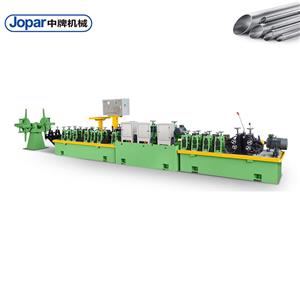
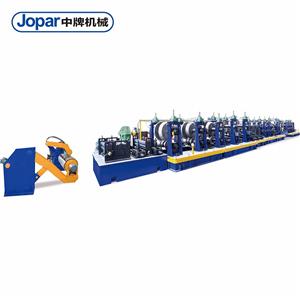
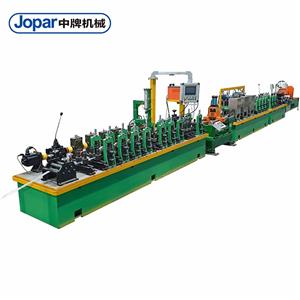
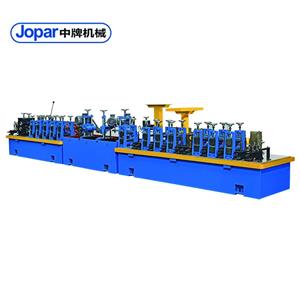
The answer lies in a holistic approach that combines cutting-edge technology with smart engineering. A modern pipe production line from a reputable manufacturer like Foshan Jopar Machinery Co.,Ltd is designed to address these challenges head-on.
Solution 1: Precision Cutting and Material Optimization
By integrating high-precision CNC cutting systems and real-time monitoring, modern lines reduce scrap to less than 3%. Advanced sensors and software optimize material usage by nesting cuts and adjusting parameters on the fly. For example, a line equipped with Jopar's proprietary optimization software can dynamically adjust cutting patterns based on pipe diameter and wall thickness, ensuring minimal waste. This alone can save 5-9% in material costs.
Solution 2: Predictive Maintenance and Smart Diagnostics
IoT-enabled sensors and AI-driven analytics predict component failures before they happen. The system monitors vibration, temperature, and current draw, alerting operators to potential issues. This reduces unplanned downtime by up to 70%. Additionally, modular design allows quick replacement of wear parts, minimizing mean time to repair (MTTR). With Jopar's lines, maintenance can be scheduled during planned breaks, ensuring continuous operation.
Solution 3: Automation and Robotics for Labor Reduction
From automatic loading and unloading to robotic welding and inspection, automation reduces the need for manual labor. A modern line requires only 3-5 operators per shift, cutting labor costs by 50-60%. Moreover, automated quality control systems, such as laser inspection and ultrasonic testing, ensure consistent quality, reducing defects to less than 1%.
Comparing Traditional vs. Modern Pipe Production Lines
| Aspect | Traditional Line | Modern Line (e.g., Jopar) |
|---|---|---|
| Scrap Rate | 8-12% | <3% |
| Unplanned Downtime | 15-20 hours/month | <5 hours/month |
| Operators per Shift | 10-15 | 3-5 |
| Defect Rate | 5% | <1% |
| Overall Cost per Ton | Baseline | 30% Lower |
Real-World Success Stories: How Companies Saved 30%
Let's look at some concrete examples of manufacturers who transformed their operations with advanced pipe production lines.
Case Study 1: Precision Pipes Inc., Houston, USA
Precision Pipes Inc., a leading supplier of oil and gas pipes, was struggling with high scrap rates and frequent downtime. After installing a Jopar pipe production line in 2021, they saw a 28% reduction in overall costs within six months. Scrap rate dropped from 10% to 2.5%, and downtime was cut by 75%. "The Jopar line has been a game-changer for us. The predictive maintenance feature alone saves us thousands each month," said John Smith, Production Manager.
Case Study 2: AquaFlow Systems, Melbourne, Australia
AquaFlow Systems, a manufacturer of water pipes, faced labor shortages and quality issues. They implemented a fully automated Jopar line in 2022. Labor costs decreased by 55%, and defect rates fell from 6% to 0.8%. "We now run three shifts with just four operators per shift. The consistency is remarkable," remarked Emily Chen, Operations Director.
Case Study 3: EuroPipe GmbH, Stuttgart, Germany
EuroPipe GmbH, a European leader in industrial pipes, needed to increase capacity without expanding their facility. Jopar designed a compact, high-speed line that increased output by 40% while reducing energy consumption by 15%. "The integration was seamless, and the ROI was achieved in just 14 months," said Klaus Weber, CEO.
Case Study 4: Andes Metalúrgica, Santiago, Chile
Andes Metalúrgica, a Chilean manufacturer, was losing market share due to high production costs. After upgrading to a Jopar line in 2020, they reduced cost per ton by 32% and increased export sales by 25%. "Jopar's engineering team worked closely with us to customize the line for our specific needs. It's been a fantastic partnership," noted Carlos Mendoza, General Manager.
Case Study 5: Sahara Steel, Cairo, Egypt
Sahara Steel, a major steel pipe producer, struggled with frequent breakdowns. Jopar's line, installed in 2019, incorporated robust components and remote monitoring. Downtime plummeted from 25 hours/month to 4 hours/month, and overall equipment effectiveness (OEE) improved from 65% to 85%. "The reliability is outstanding. We now plan maintenance proactively," said Ahmed Hassan, Maintenance Head.
Applications and Partnerships: Where Are These Lines Used?
Modern pipe production lines are versatile and can be found in various industries:
- Oil and Gas: High-pressure pipes for extraction and transportation.
- Water and Wastewater: Large-diameter pipes for infrastructure projects.
- Construction: Structural pipes and HVAC systems.
- Automotive: Exhaust pipes and fluid lines.
- Home Appliances: Solid brass fittings and components for plumbing and heating systems.
Foshan Jopar Machinery Co.,Ltd has established strategic partnerships with major distributors and OEMs worldwide. For instance, they supply lines to several Fortune 500 companies in the oil and gas sector, and their equipment is specified in large-scale infrastructure projects. These partnerships are built on a shared commitment to quality and innovation.
Frequently Asked Questions (FAQs)
1. What is the typical lead time for a custom pipe production line?
Lead time varies based on complexity and customization. Standard lines can be delivered in 4-6 months, while fully customized lines may take 8-12 months. Factors include design approval, component procurement, and testing. Jopar provides a detailed project timeline during the initial consultation.
2. How does the line handle different pipe materials, such as stainless steel and solid brass?
Modern lines are designed with flexibility in mind. Quick-change tooling and adjustable parameters allow processing of various materials. For solid brass, specific cutting speeds and cooling systems are employed to prevent deformation. Jopar's lines are equipped with recipe management systems that store material-specific settings for easy switching.
3. What are the power and utility requirements for a pipe production line?
Power requirements depend on line capacity and automation level. A typical line might require 200-500 kW, with compressed air and water for cooling. Jopar provides detailed utility specifications and can assist in infrastructure planning. Energy-efficient designs can reduce consumption by up to 20%.
4. How is quality assured throughout the production process?
Quality is integrated at every stage. In-line sensors monitor dimensions, wall thickness, and surface defects. Statistical process control (SPC) software analyzes data in real-time, triggering alerts for deviations. Additionally, destructive and non-destructive testing can be incorporated. Jopar's lines comply with ISO 9001 and other relevant standards.
5. What support and training are provided after installation?
Jopar offers comprehensive support, including on-site installation, operator training, and maintenance workshops. Remote diagnostics allow quick troubleshooting. A dedicated service team is available 24/7. Training programs cover operation, safety, and basic maintenance, ensuring your team can maximize the line's potential.
Conclusion: Take the Next Step Towards Cost Reduction
A modern pipe production line is not just an equipment upgrade; it's a strategic investment that can reduce costs by 30% or more. By addressing material waste, downtime, and labor costs, manufacturers can achieve unprecedented efficiency and quality. Foshan Jopar Machinery Co.,Ltd has helped numerous companies realize these benefits. If you're ready to transform your production, we invite you to download our technical whitepaper or contact our sales engineers for a personalized consultation. Discover how a tailored solution can propel your business forward.