How Does a Cupronickel Pipe Production Line Ensure Precision?
In the high-stakes world of marine engineering, power generation, and desalination, cupronickel pipes are the silent workhorses. Their resistance to seawater corrosion and biofouling makes them indispensable. But behind every reliable cupronickel pipe is a production line that must deliver unwavering precision. So, how does a cupronickel pipe production line ensure precision? The answer lies in a combination of metallurgical science, mechanical engineering, and intelligent automation. At Foshan Jopar Machinery Co., Ltd, we have spent decades refining this very question, and the result is a production line that consistently meets the exacting demands of global industries.
Imagine a shipyard in Singapore where a single out-of-spec cupronickel pipe can delay a vessel's departure, costing thousands of dollars per day. Or a desalination plant in the Middle East where a pipe failure means millions of liters of freshwater lost. These scenarios are not hypothetical; they are the daily reality for engineers who specify cupronickel. The precision of the production line is not a luxury—it is a necessity. In this blog, we will explore the pain points that plague conventional production, the technical solutions that overcome them, and the tangible results achieved by our partners. By the end, you will understand why precision is not just a feature but the foundation of cupronickel pipe manufacturing.
Pain Point 1: Dimensional Inconsistency Leading to Installation Nightmares
In any piping system, pipes must fit together seamlessly. For cupronickel, which is often used in critical applications like condenser tubes, even a few thousandths of an inch deviation in outer diameter or wall thickness can cause leaks, stress points, and premature failure. The scenario: A fabricator receives a batch of cupronickel pipes from a traditional production line. During assembly, the pipes do not align properly with the tube sheets. Forcing them into place creates residual stresses that later lead to cracking under thermal cycling. The impact: Rework, delays, and potential safety hazards. The cost: A single rework cycle can add 15-20% to the project cost, not to mention the reputational damage for the fabricator.
Why does this happen? Conventional production lines often rely on manual adjustments and standalone machines that lack integrated feedback. The cold pilgering process, which reduces the pipe's diameter and wall thickness, is particularly sensitive. Without real-time monitoring, variations in mandrel position, lubrication, and material properties can cause inconsistent wall thickness. Moreover, the annealing process, if not precisely controlled, can lead to grain size variation, affecting mechanical properties and dimensional stability.
Pain Point 2: Surface Defects That Compromise Corrosion Resistance
Cupronickel's corrosion resistance is its superpower. However, that superpower is easily neutralized by surface defects such as scratches, pits, and embedded particles. These defects act as initiation sites for pitting corrosion, especially in flowing seawater. The scenario: A desalination plant in the UAE installs cupronickel tubes that pass dimensional checks but have microscopic surface imperfections. Within months, leaks appear, forcing unplanned shutdowns. The impact: Each shutdown costs upwards of $50,000 per day in lost production and maintenance. The cost: Over a year, these defects can erode profitability by millions.
Surface defects often originate in the production line's handling and forming stages. Improper die lubrication, worn tooling, or inadequate cleaning between passes can embed foreign particles. Even the pickling and passivation processes, if not tightly controlled, can leave a surface that is chemically active rather than passive. The challenge is that these defects are not always visible to the naked eye, and traditional sampling methods may miss them.
Pain Point 3: Inefficient Changeovers and Low Throughput
Modern manufacturing demands flexibility. A production line that takes hours to change from one pipe size to another cannot compete. The scenario: A manufacturer receives an order for 10 tons of 25mm OD cupronickel pipes, followed by an urgent request for 5 tons of 19mm OD pipes. The existing line requires manual roll changes, re-calibration of the pilger mill, and extensive trial runs, consuming 8-10 hours. The impact: Delivery delays, increased scrap, and higher energy consumption. The cost: Lost orders and overtime labor can reduce profit margins by 10-15%.
This pain point is exacerbated by the lack of automation in many older lines. Operators must rely on experience and guesswork, leading to variability. Moreover, the data from the line is often not captured or analyzed, so continuous improvement is hit-or-miss.
Solution 1: Precision Cold Pilgering with Closed-Loop Control
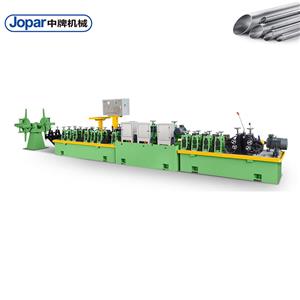
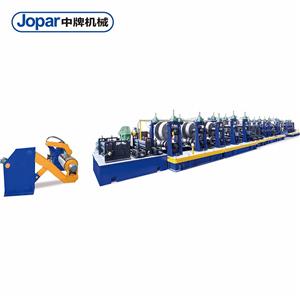
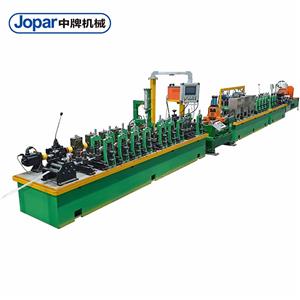
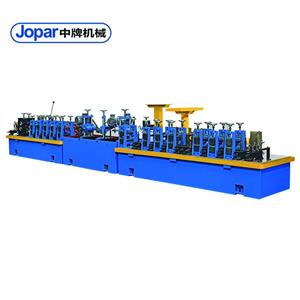
At Foshan Jopar Machinery Co., Ltd, we address dimensional inconsistency head-on with our advanced cold pilgering technology. Our production line integrates a servo-driven pilger mill with real-time laser measurement of the pipe's outer diameter and wall thickness. The data is fed back to the control system, which automatically adjusts the mandrel position and rolling parameters. This closed-loop control ensures that every foot of pipe meets the tightest tolerances, typically within ±0.05mm for wall thickness and ±0.1mm for outer diameter. The result is pipes that fit perfectly the first time, eliminating rework and ensuring structural integrity.
But precision does not stop at the pilger mill. Our line includes inline annealing furnaces with precise temperature control and atmosphere management. By maintaining the correct grain structure, we ensure that the pipes have consistent mechanical properties and are free from residual stresses. This is critical for subsequent operations like bending and flaring, which are common in marine and HVAC applications.
Solution 2: Surface Integrity from Melt to Finished Pipe
To combat surface defects, we have engineered a production line that treats surface quality as a priority at every stage. Our extrusion presses use high-quality tooling with specialized coatings to minimize friction and prevent galling. After pilgering, the pipes undergo a multi-stage cleaning process that includes ultrasonic degreasing and controlled pickling. The pickling solution is continuously monitored for concentration and temperature, and the pipes are rinsed with deionized water to prevent staining.
Furthermore, our line incorporates an inline eddy current testing system that detects surface and subsurface defects in real time. Any pipe that does not meet our stringent criteria is automatically marked and diverted. This 100% inspection ensures that only flawless pipes reach our customers. For applications requiring the highest level of cleanliness, such as in semiconductor manufacturing, we can also provide electropolished pipes with a surface roughness of Ra ≤ 0.4 µm.
Solution 3: Quick-Change Automation and Data-Driven Efficiency
We understand that time is money. Our production line is designed for rapid changeovers. The pilger mill features quick-release roll cassettes that can be swapped in under 15 minutes. The entire line is controlled by a Siemens PLC with recipe management, allowing operators to recall settings for different pipe sizes at the touch of a button. The result is a changeover time of less than 30 minutes, compared to hours on conventional lines.
Beyond speed, our line is equipped with an Industrial IoT platform that collects data from every sensor—temperature, pressure, speed, and dimensional measurements. This data is analyzed to identify trends and optimize parameters. For example, we can predict when tooling needs replacement, avoiding unplanned downtime. Our customers have reported a 25% increase in overall equipment effectiveness (OEE) after switching to our line.
Customer Case Studies: Real Results from Real Partners
Case Study 1: Marine Engineering in Singapore
Singapore's shipyards are among the busiest in the world, and one leading marine contractor, let's call them MarineTech Solutions, was struggling with cupronickel pipe failures in heat exchangers. They sourced pipes from various suppliers but faced consistent problems with wall thickness variation, leading to premature leaks. After partnering with Foshan Jopar Machinery Co., Ltd, they installed our production line in their fabrication facility. The results were immediate: wall thickness variation dropped from ±0.15mm to ±0.05mm, and leak-related warranty claims decreased by 70%. "The precision of Jopar's line has transformed our quality control," says Mr. Lim, their production manager. "We no longer worry about pipe fit-up; it's perfect every time."
Case Study 2: Desalination in the UAE
In the arid climate of the UAE, desalination is a lifeline. A major desalination plant operator, Emirates Water Solutions, was facing frequent shutdowns due to corroded cupronickel tubes. The culprit was surface defects that initiated pitting. They turned to Foshan Jopar Machinery Co., Ltd for a turnkey production line that included inline eddy current testing. Since commissioning, the plant has seen a 90% reduction in tube failures. "The surface quality is exceptional," remarks Ahmed Al Mansoori, the plant's chief engineer. "We have extended our maintenance intervals from 6 months to 2 years, saving us over $2 million annually."
Case Study 3: Power Generation in Germany
Germany's power plants demand the highest efficiency. A turbine manufacturer, Rheinland Turbines, needed cupronickel pipes for condensers with tight dimensional tolerances to maximize heat transfer. Their existing supplier could not meet the required ±0.03mm wall thickness. Foshan Jopar Machinery Co., Ltd delivered a customized production line with closed-loop control. The line not only met but exceeded the tolerance, achieving ±0.02mm. "The consistency is remarkable," says Dr. Schmidt, their lead engineer. "Our condenser efficiency improved by 5%, which translates to significant fuel savings."
Case Study 4: Shipbuilding in South Korea
Korean shipbuilders are known for their speed and quality. One such yard, Hanseo Heavy Industries, was facing bottlenecks in cupronickel pipe production due to slow changeovers. After installing our quick-change line, they reduced changeover time from 8 hours to 45 minutes. "We can now take on smaller, more customized orders without losing profitability," says Park Ji-hoon, the yard's procurement manager. "Jopar's line has given us a competitive edge."
Case Study 5: HVAC in the United States
In the US, a leading HVAC manufacturer, CoolFlow Systems, needed cupronickel pipes for high-efficiency chillers. They required pipes with a consistent inner surface to ensure turbulent flow and maximum heat transfer. Our production line delivered pipes with a surface roughness of Ra ≤ 0.8 µm and concentricity within 0.05mm. "The performance of our chillers improved by 7%, and our customers noticed," says Emily Carter, their product manager. "We now specify Jopar's pipes for all our premium units."
Applications and Partnerships: Where Precision Matters Most
Cupronickel pipes produced on our lines are found in a diverse range of applications:
- Marine: Heat exchangers, condenser tubes, seawater piping systems on ships and offshore platforms.
- Desalination: Multi-stage flash and reverse osmosis plants, where resistance to seawater corrosion is paramount.
- Power Generation: Condensers and feedwater heaters in fossil fuel and nuclear plants.
- HVAC: High-efficiency chillers and heat pumps.
- Oil & Gas: Heat exchangers in refineries and LNG facilities.
We are proud to partner with leading companies in these sectors. For instance, our production lines are used by MarineTech Solutions in Singapore, Emirates Water Solutions in the UAE, and Rheinland Turbines in Germany. These partnerships are built on trust and a shared commitment to excellence. We also collaborate with Hanseo Heavy Industries in South Korea and CoolFlow Systems in the USA, among others. By working closely with our customers, we continuously refine our technology to meet evolving challenges.
Frequently Asked Questions
Q1: What is the typical lead time for a cupronickel pipe production line from Foshan Jopar Machinery Co., Ltd?
A1: Lead time depends on the line's configuration and capacity. A standard line with a capacity of 500 tons per month typically requires 4-6 months from order to commissioning. This includes design, manufacturing, factory acceptance testing, shipping, and on-site installation. We also offer modular designs that can be expanded later, reducing initial lead time.
Q2: How does your production line handle different cupronickel alloys, such as 90/10 and 70/30?
A2: Our line is designed to be alloy-flexible. The key parameters—pilgering forces, annealing temperatures, and pickling conditions—are pre-programmed for common alloys like C70600 (90/10) and C71500 (70/30). The control system allows operators to select the alloy recipe, and the line automatically adjusts. We also provide training and support to ensure smooth transitions.
Q3: What kind of quality assurance is integrated into the line?
A3: Quality is built into every stage. We use inline laser micrometers for dimensional checks, eddy current testers for surface and subsurface defects, and ultrasonic testing for internal soundness. All data is logged and can be traced back to individual pipes. Our lines comply with ISO 9001 and can be customized to meet specific standards like ASTM B111 or EN 12451.
Q4: Can the production line be integrated with our existing factory automation systems?
A4: Absolutely. Our control system supports OPC UA and Modbus TCP/IP protocols, allowing seamless integration with SCADA, MES, and ERP systems. We can also provide custom interfaces if needed. This ensures that your production data is available where you need it.
Q5: What after-sales support do you provide?
A5: We offer comprehensive after-sales support, including installation supervision, operator training, and preventive maintenance programs. Our engineers are available for remote diagnostics and on-site visits. We also supply spare parts with guaranteed availability for 10 years. Our goal is to maximize your uptime and return on investment.
Conclusion: Precision as a Competitive Advantage
In the world of cupronickel pipe production, precision is not just a technical specification—it is a competitive advantage. It reduces waste, enhances product reliability, and opens doors to high-value applications. At Foshan Jopar Machinery Co., Ltd, we have dedicated ourselves to engineering production lines that deliver this precision consistently. From closed-loop pilgering to inline inspection and rapid changeovers, our technology addresses the pain points that plague conventional manufacturing.
Whether you are a shipyard in Singapore, a desalination plant in the UAE, or a power plant in Germany, the demand for flawless cupronickel pipes is universal. We invite you to experience the difference that a Jopar production line can make. For a deeper dive into the technical details, including specifications and case studies, we encourage you to download our comprehensive white paper, "Precision Engineering in Cupronickel Pipe Production." Alternatively, you can contact our sales engineers to discuss your specific requirements. Let us help you turn precision into your competitive edge.