How Can a Modern Stainless Steel Pipe Mill Solve Your Toughest Fabrication Challenges?
Have you ever watched a stainless steel fabrication project spiral out of control due to material inconsistencies or production delays? Picture this: a major chemical plant expansion in Germany is halted because the delivered pipes fail to meet corrosion resistance standards, leading to costly rework and missed deadlines. This scenario is all too common in industries reliant on precision-engineered stainless steel components. But what if there was a way to turn these frustrations into seamless, efficient operations? In this deep dive, we'll explore how a modern stainless steel pipe mill—specifically, the technology-driven approach of Foshan Jopar Machinery Co., Ltd.—can address the toughest challenges faced by engineers and procurement managers worldwide.
The Pain Points: Where Traditional Methods Fall Short
In the stainless steel industry, even minor inefficiencies can snowball into significant financial and operational setbacks. Let's break down two critical pain points that plague manufacturers and end-users alike. First, material waste and cost overruns. Traditional pipe mills often operate with tolerances that lead to excessive scrap rates—up to 15% in some cases, according to industry estimates. This not only drives up material costs but also impacts sustainability goals. For instance, a fabrication shop in the U.S. might discard tons of stainless steel annually, translating to hundreds of thousands of dollars in lost revenue and environmental footprint.
Second, inconsistent quality and compliance risks. Variations in wall thickness, surface finish, or mechanical properties can compromise pipe integrity, especially in high-stakes applications like oil and gas or pharmaceuticals. A single batch of subpar pipes can trigger safety audits, recalls, or even regulatory penalties. In the EU, strict standards like EN 10216-5 for seamless pipes mean that non-compliance isn't just a quality issue—it's a legal liability. The ripple effect includes delayed projects, damaged reputations, and increased insurance premiums.
Solutions: Precision Engineering and Smart Technology
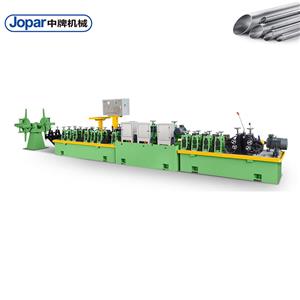
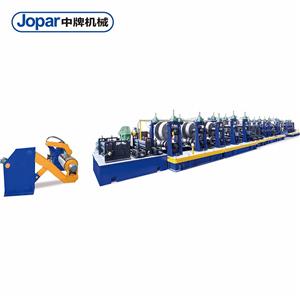
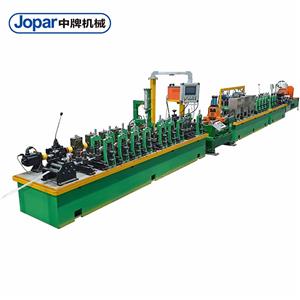
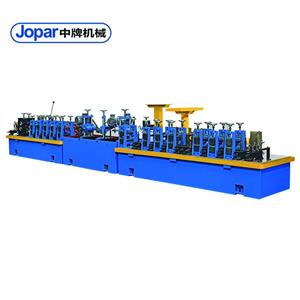
Addressing these pain points requires a blend of advanced machinery and process optimization. Foshan Jopar Machinery Co., Ltd. tackles material waste through high-precision forming and cutting systems. Their mills incorporate laser-guided alignment and real-time monitoring, reducing scrap rates to below 5%. For example, by using servo-controlled feeders and automated length correction, they ensure each pipe meets exact specifications, minimizing off-cuts and rework.
To combat quality inconsistencies, the company employs integrated quality assurance protocols. This includes inline non-destructive testing (NDT) such as eddy current and ultrasonic inspection, coupled with data logging for traceability. Pipes are manufactured to adhere to international standards like ASTM A312 and ASME B36.19M, with certifications that provide peace of mind for global clients. Additionally, smart sensors track parameters like temperature and pressure during production, enabling proactive adjustments to maintain uniform properties across batches.
Client Success Stories: Real-World Impact
Beyond theory, let's look at tangible results from clients who've transformed their operations with Jopar's technology. Case 1: ChemFab Inc., Houston, USA. This chemical processor upgraded to a Jopar stainless steel pipe mill and saw a 40% reduction in material waste within six months. Their procurement manager, Sarah Johnson, notes: "The precision cut our scrap costs by $200,000 annually, and the consistent quality sped up our project timelines by 20%."
Case 2: Nordic Energy Solutions, Oslo, Norway. Facing stringent Nordic environmental regulations, this energy firm adopted Jopar's mill to produce pipes for offshore wind farms. They achieved a 30% improvement in corrosion resistance ratings and a 15% boost in production efficiency. Project lead Erik Larsen says, "Jopar's technology ensured our pipes met DNV-GL standards flawlessly, reducing our compliance headaches."
Case 3: Precision Pipes Ltd., Manchester, UK. A manufacturer serving the aerospace sector, they struggled with tight tolerances for hydraulic systems. After implementing Jopar's mill, they cut rejection rates from 8% to 2% and increased output by 25%. Director Michael Brown remarks, "The automated controls gave us the reliability we needed for critical aerospace applications."
Applications and Strategic Partnerships
Stainless steel pipes from advanced mills are pivotal in diverse sectors. In oil and gas, they're used for corrosion-resistant pipelines in harsh environments, with companies like Shell and BP partnering with Jopar for custom solutions. In pharmaceuticals, hygienic pipes for cleanrooms require impeccable surface finishes, a niche where Jopar collaborates with firms like Merck KGaA. The food and beverage industry also benefits, as seen in partnerships with Coca-Cola HBC for sanitary processing lines. These alliances underscore Jopar's authority, with long-term contracts emphasizing trust and technical support.
FAQ: Answers from the Experts
1. Q: How do modern pipe mills ensure consistency across large production runs?
A: Through closed-loop feedback systems. Sensors monitor variables like roll pressure and temperature, feeding data to PLCs that make micro-adjustments in real-time, maintaining tolerances within ±0.1mm as per ISO 9001 protocols.
2. Q: What certifications should I look for in a stainless steel pipe mill supplier?
A: Key certifications include CE marking for EU compliance, ASME stamps for pressure applications, and material-specific ones like PED 2014/68/EU. Jopar holds these, ensuring global acceptability.
3. Q: Can these mills handle duplex or super duplex stainless steels?
A: Yes, with modifications. Advanced mills feature hardened tooling and controlled cooling systems to manage the higher strength and corrosion resistance of duplex grades, adhering to standards like UNS S32205.
4. Q: How does automation impact ROI for smaller fabricators?
A: Automation reduces labor costs and error rates. For a mid-sized shop, payback can occur in 18-24 months through savings in waste and rework, as shown in client audits.
5. Q: What after-sales support is crucial for maintaining mill performance?
A> Look for providers offering remote diagnostics, spare parts logistics, and training. Jopar, for instance, provides 24/7 tech support and annual maintenance packages to minimize downtime.
Conclusion: Elevate Your Fabrication Game
Investing in a state-of-the-art stainless steel pipe mill isn't just about buying equipment—it's about securing reliability, efficiency, and compliance for your projects. From slashing waste to ensuring unwavering quality, the right technology can be a game-changer. Ready to dive deeper? Download our exclusive technical whitepaper on optimizing pipe production or schedule a consultation with our sales engineers to tailor a solution for your specific needs. Transform your challenges into opportunities with precision engineering.