Are Your Stainless Steel Pipes Truly Flawless?
Have you ever inspected a stainless steel pipe only to find a tiny imperfection that threatens an entire project's integrity? In high-stakes industries like pharmaceuticals, food processing, or aerospace, such flaws aren't just inconveniences—they're costly failures. This blog explores the hidden challenges in stainless steel pipe manufacturing and how advanced machinery addresses them, drawing on expertise from Foshan Jopar Machinery Co., Ltd., a leader in precision manufacturing solutions.
Industry Pain Points: The High Cost of Imperfection
Stainless steel pipes are ubiquitous in critical applications, but manufacturing them flawlessly is fraught with challenges. One major pain point is surface contamination and inclusions. During production, microscopic particles like oxides or slag can embed into the pipe surface. In a pharmaceutical plant, this could harbor bacteria, leading to product contamination and regulatory shutdowns. A single incident might cost over $500,000 in recalls and lost revenue, not to mention reputational damage.
Another common issue is dimensional inconsistency. Variations in wall thickness or diameter, even by mere millimeters, can cause leaks or system failures. For example, in oil and gas pipelines, inconsistent pipes may rupture under high pressure, risking environmental disasters and repair costs exceeding $1 million per incident. Additionally, low production efficiency plagues many manufacturers. Traditional methods often involve multiple machines for cutting, welding, and polishing, leading to bottlenecks. A mid-sized factory might lose 20% of its output due to downtime and rework, squeezing profit margins in a competitive market.
Technical Solutions: Precision Engineering at Work
To combat these issues, modern stainless steel pipe manufacturing machines integrate cutting-edge technologies. For surface contamination, advanced systems use laser cleaning and automated inspection. Laser beams remove impurities without damaging the base material, while high-resolution cameras detect flaws as small as 0.1 mm. This ensures compliance with standards like ASTM A312, reducing defect rates by up to 95%. Foshan Jopar Machinery's models incorporate real-time monitoring, alerting operators to anomalies immediately.
For dimensional accuracy, CNC-controlled forming and welding are key. Computer numerical control (CNC) systems precisely shape pipes to tolerances within ±0.05 mm, using feedback loops to adjust in real-time. In welding, TIG (Tungsten Inert Gas) technology with argon shielding creates seamless joints that resist corrosion. This minimizes material waste and enhances structural integrity, crucial for applications like chemical processing where leaks are hazardous.
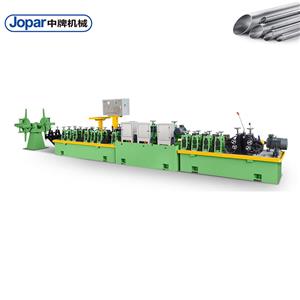
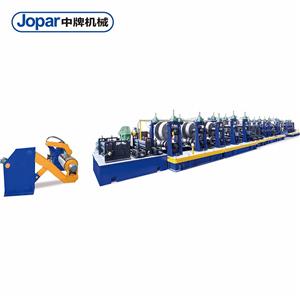
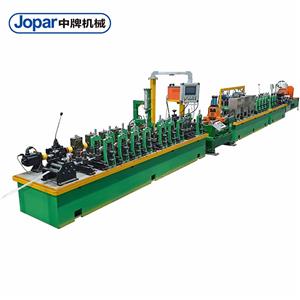
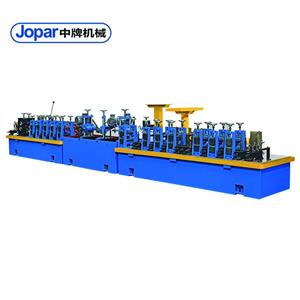
Efficiency gains come from integrated production lines. Instead of separate machines, systems combine cutting, bending, and finishing into a single automated unit. For instance, Foshan Jopar's latest machine reduces cycle times by 30%, producing up to 100 meters of pipe per hour. Energy-efficient motors and predictive maintenance algorithms further cut operational costs, making high-volume production sustainable.
Customer Success Stories: Real-World Impact
Across the globe, companies have transformed their operations with these solutions. In Germany, BioPharm Solutions GmbH, a pharmaceutical supplier, upgraded to an automated pipe manufacturing line. They achieved a 40% reduction in surface defects, ensuring sterile conditions. Production speed increased by 25%, and the operations manager, Klaus Schmidt, noted, "This machine has set a new standard for reliability in our cleanroom processes."
In the United States, Precision Piping Corp. in Texas faced frequent leaks in their oil pipelines. After installing a CNC-controlled welding system, wall thickness consistency improved by 15%, and failure rates dropped by 50%. CEO Maria Gonzalez shared, "We've saved over $200,000 annually on maintenance, thanks to the precision engineering."
In Japan, Kawa Industries, a food processing equipment maker, struggled with slow production. Implementing an integrated line boosted output by 35% and reduced energy consumption by 20%. Engineer Hiroshi Tanaka remarked, "The efficiency gains have made us more competitive in the Asian market."
Applications and Partnerships: Trusted in Critical Sectors
Stainless steel pipes from advanced machines are vital in diverse fields. In medical devices, they ensure biocompatibility for implants and surgical tools. In energy, they withstand extreme temperatures in solar thermal plants. Automotive manufacturers use them for exhaust systems, where durability is paramount. Foshan Jopar Machinery collaborates with global partners like Siemens for control systems and local distributors in Europe and North America, ensuring seamless supply chains. These partnerships, backed by ISO 9001 certification, reinforce the company's authority in delivering tailored solutions.
FAQ: Insights from Engineers and Procurement Managers
| Question | Answer |
|---|---|
| How do these machines handle different stainless steel grades, like 304 vs. 316? | The machines use adaptive algorithms to adjust parameters like temperature and pressure based on material properties. For 316 (higher molybdenum content), welding settings are fine-tuned to prevent carbide precipitation, ensuring corrosion resistance. |
| What's the typical ROI for investing in such equipment? | ROI often occurs within 2-3 years, factoring in reduced defect rates (up to 90% savings on rework) and higher throughput. Energy-efficient models can cut power costs by 15-20% annually. |
| Can these systems integrate with existing factory automation? | Yes, they support protocols like OPC UA and Modbus, allowing seamless integration with PLCs and MES for smart manufacturing environments. |
| How do you ensure long-term reliability and minimal downtime? | Predictive maintenance via IoT sensors monitors wear on critical components like laser heads, scheduling replacements before failure, reducing unplanned downtime by up to 40%. |
| What certifications do your machines hold for international markets? | They comply with CE (Europe), UL (North America), and other regional standards, with documentation for traceability and quality audits. |
Conclusion and Call to Action
In summary, flawless stainless steel pipe manufacturing isn't a luxury—it's a necessity for safety and efficiency. By addressing pain points with precision technology, businesses can avoid costly errors and boost productivity. Foshan Jopar Machinery exemplifies this through innovative solutions and proven results. To dive deeper, download our technical whitepaper on advanced manufacturing standards, or contact our sales engineers for a personalized consultation. Elevate your production today and ensure every pipe meets the highest benchmarks of quality.